The Soul Sand Valley is one of Minecraft’s most haunting and hostile Nether biomes. Filled with blue soul fire, massive ancient fossils, and endless ghast cries echoing through open caverns, this biome challenges even the most experienced players. But for those willing to brave its dangers, it offers rare resources, fast-travel opportunities, and unique building materials not found anywhere else.
This comprehensive guide covers everything you need to know about the Soul Sand Valley biome—including terrain, mobs, resources, survival strategies, and expert tips drawn from the latest online sources and wiki data.
What Is the Soul Sand Valley?
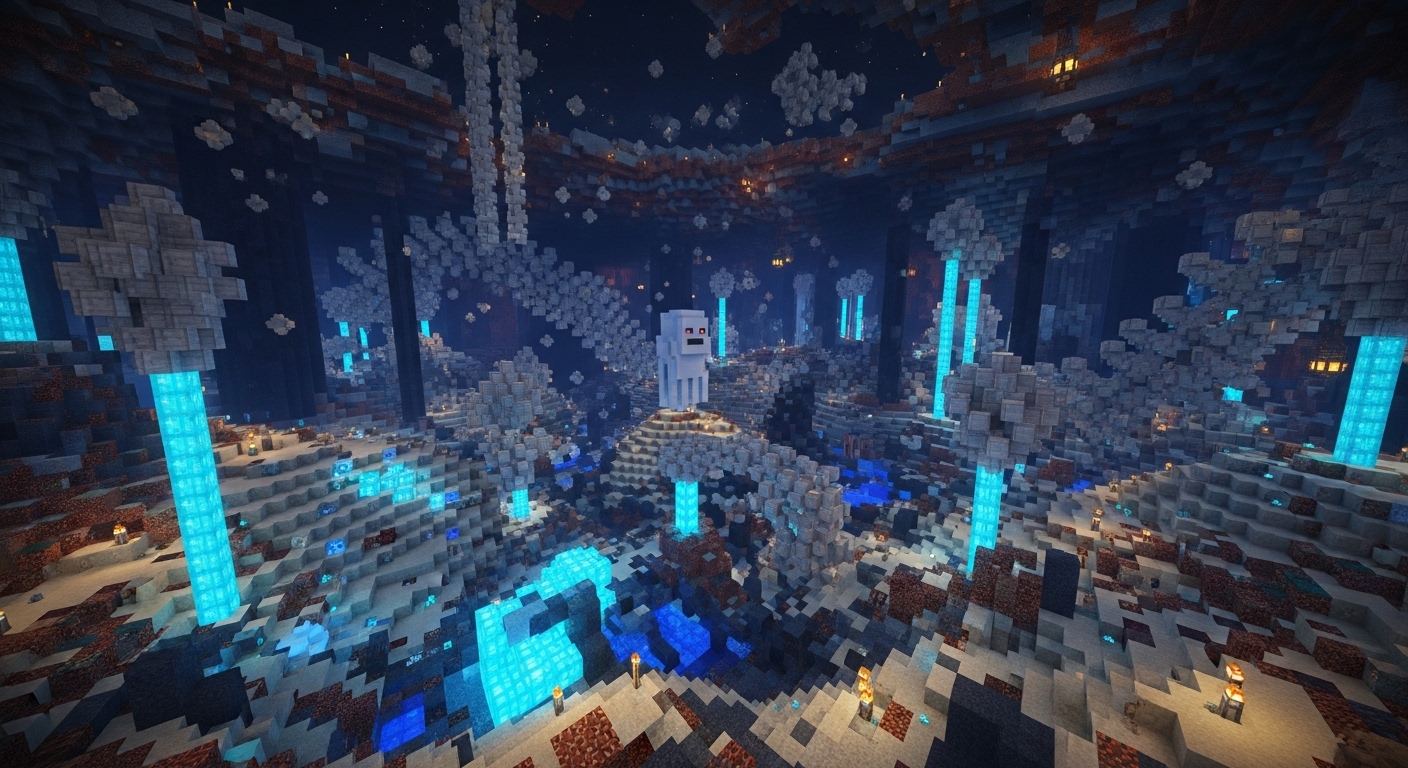
The Soul Sand Valley is a Nether biome composed primarily of soul sand and soul soil, forming vast, dry plains littered with huge bone fossils and towering basalt pillars. Blue soul fire flickers across the landscape, ash particles drift through the air, and eerie ambient sounds echo through the cavernous terrain.
Players come here for:
- Fossils and bone blocks
- Soul sand and soul soil
- High ghast tear and bone drop potential
- Soul Speed highway locations
But its open terrain makes survival a constant challenge.
How to Find a Soul Sand Valley
You’ll encounter this biome naturally while exploring the Nether, often forming wide, open regions between basalt deltas or crimson forests.
Visual and Audio Cues
- Bright blue soul fire visible from long distances
- Large fossil structures made of bone blocks
- Ash particles drifting through the air
- Unique “howling wind” ambience
Tips for Locating Safely
- Drink a Fire Resistance potion before long Nether trips
- Bring a bow or crossbow, as ghasts will attack almost instantly
- Build safe tunnels through dangerous areas
- Equip Feather Falling to reduce fall damage when navigating steep drops
Terrain and Environment
Block Palette
The Soul Sand Valley uses a distinct set of blocks:
- Soul Sand – slows movement, used for nether wart farms
- Soul Soil – fast travel with Soul Speed, doesn’t slow players
- Basalt Pillars – rise from the floor or descend from the ceiling
- Gravel Clusters – can collapse if disturbed
- Blue Soul Fire – unique, stronger fire
- Bone Blocks – generated as enormous fossils
Environmental Hazards
- Open areas leave you exposed to ghasts and skeletons
- Soul sand can slow you enough to get hit by arrows
- Gravel collapses can suffocate players or cause sudden falls
- Long sightlines make ranged combat unavoidable
Safe Navigation Tip
Place a strip of cobblestone, basalt, or blackstone for a stable path—these blocks are ghast-proof and resist fireball explosions.
Mobs in the Soul Sand Valley
Ghasts
The most common and deadly threat.
Spawn details:
- Spawn in light level 0
- Require a minimum of 4×4×4 space
- Spawn more frequently due to open terrain
Tips to survive:
- Use a bow or crossbow—don’t attempt melee
- Shoot fireballs back by timing your hits
- Build cobblestone pillars or tunnels as cover
Skeletons
Skeletons spawn instead of piglins in this biome, often in groups.
Challenges:
- They fire from long distances
- They can trigger gravel collapses
- Fighting them on soul sand is dangerous
Counterplay:
- Always keep a shield ready
- Use cover to block their line of sight
- Avoid getting stuck on soul sand
Endermen
While less common, Endermen offer valuable ender pearls.
Rare/Non-Spawning Mobs
- Piglins
- Hoglins
- Magma cubes
Their absence makes the valley quieter but far more reliant on ghasts and skeletons for danger.
Unique Biome Features
Soul Fire
Soul fire is more than just a pretty blue flame.
Soul Fire Mechanics:
- Deals 2 hearts per second (vs. 1 from normal fire)
- Cannot be extinguished by rain
- Burns longer on mobs
- Created by lighting soul sand or soul soil
Great for:
- Mob-proofing
- Nether-themed builds
- Decorative lighting
Fossils and Bone Structures
The Soul Sand Valley contains two types of massive fossil structures:
- Ribcages
- Skulls
These structures provide huge amounts of bone blocks, which break down into bone meal for:
- Crop farming
- Tree farms
- White dye production
Soul Speed Enchantment
Soul Speed lets you sprint across soul sand and soul soil at extreme speed.
Benefits:
- Ideal for Nether highways
- Stacks with Speed potions
- Makes the biome much easier to navigate
Downside:
- Damages boots quickly—bring Mending or backups
Resources and Loot
Blocks Worth Collecting
- Soul Sand: essential for nether wart
- Soul Soil: used for soul fire and highways
- Basalt: sturdy building block, explosion-resistant
- Bone Blocks: best source of large-scale bone meal
Renewability Breakdown
| Resource | Renewable? | Notes |
|---|---|---|
| Soul Sand | Yes | Generates naturally and regenerates in new chunks |
| Soul Soil | No | Only from world generation |
| Basalt | Yes | Farmable via lava + soul soil + blue ice |
| Bone Blocks | Semi-renewable | Fossils are finite, but skeletons provide bones |
Soul Sand vs. Soul Soil Comparison
| Feature | Soul Sand | Soul Soil |
|---|---|---|
| Slows Player? | Yes | No |
| Works With Soul Speed? | Yes | Yes |
| Grows Nether Wart? | Yes | No |
| Produces Soul Fire? | Yes | Yes |
| Causes Bubble Columns? | Yes | No |
How to Survive the Soul Sand Valley
Recommended Gear
- Bow or crossbow (critical)
- Plenty of arrows
- Fire Resistance potions
- Feather Falling boots
- Shield for skeletons
- Ghast-proof blocks (cobblestone, basalt, blackstone)
- Optional: Soul Speed boots for mobility
Terrain Navigation Strategies
- Build safe tunnels to avoid ghast fireballs
- Don’t dig into large gravel patches
- Place slabs or blocks over soul sand paths for safe movement
- Build railings or bridges across large gaps
Combat Tips
- Always engage ghasts from range
- Use terrain to break skeleton line of sight
- Never run across soul sand during combat
- Build emergency shelters every 30–50 blocks
Building and Farming Opportunities
Aesthetic Building
- Blue flames are ideal for Nether bases, haunted builds, or magical structures
- Fossils inspire ancient ruin or prehistoric builds
- Soul soil pairs well with basalt for darker, gritty builds
Farming Opportunities
- Bone Meal Farms: Fossils provide massive bone supplies
- Nether Wart Farms: Soul sand is renewable and abundant
- Ghast Tear Farming: High ghast spawn rates make this ideal for tears
Fast Travel Highways
The valley is perfect for Soul Speed highways, offering:
- Faster travel than ice roads
- Straight lines across open terrain
- Low maintenance paths
Nearby Biomes and Transitions
Soul Sand Valleys commonly border:
- Nether Wastes
- Crimson Forests
- Basalt Deltas
These transitions are useful for:
- Collecting safer resources nearby
- Controlling mob spawns for targeted farms
- Creating multi-biome bases
Java vs. Bedrock Differences
Java Edition
- Ghast spawn rates feel more controlled
- Mob pathfinding is slightly less aggressive
- Fossil shapes generate consistently
Bedrock Edition
- Ghasts have more aggressive target tracking
- Fireball knockback can be stronger
- Skeletons have slightly different strafing behavior
These differences impact combat difficulty and survival strategies.
Final Tips and Summary
The Soul Sand Valley is dangerous, eerie, and incredibly resource-rich. Its blue flames, massive fossils, and unforgiving terrain make it one of Minecraft’s most memorable biomes—and one of the most useful for mid- and late-game players.
Quick Survival Checklist
✔ Bring a bow and good ammo
✔ Use ghast-proof blocks for building
✔ Watch for gravel collapses
✔ Keep Fire Resistance ready
✔ Use Soul Speed for fast travel
✔ Build tunnels for long journeys
Master these strategies, and the Soul Sand Valley turns from a deadly wasteland into one of the most rewarding and efficient biomes in the Nether.