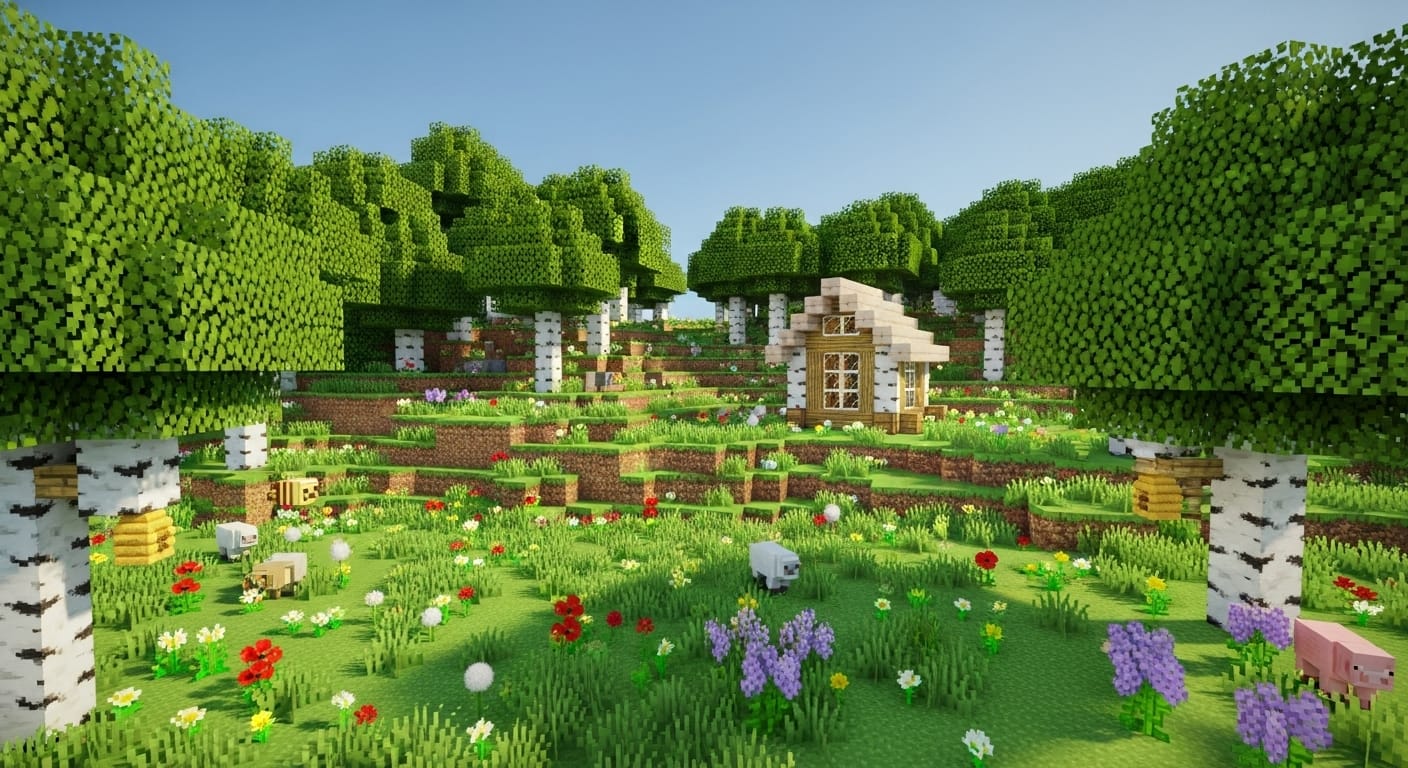
The Birch Forest biome in Minecraft is a lush, temperate forest biome characterized by its bright green grass, white-barked birch trees, and peaceful atmosphere. It’s one of the most serene Overworld biomes, perfect for players who value aesthetic landscapes, easy resource access, and balanced gameplay.
Birch Forests are most often found between plains, rivers, and other forested biomes, creating natural transitions between ecosystems. With abundant wood, animals, and flowers, it’s a great choice for both new players and seasoned builders.
Biome Features
Terrain and Environment
- Temperature: 0.6
- Elevation: 63–80 blocks
- Weather: Rain and thunderstorms (no snow)
- Color palette: Bright green grass and light leaves (foliage color:
#88BB67) - Ambience: Peaceful, birdsong-like ambient noises with standard Overworld sounds
The gentle hills and open terrain make navigation easy, while the lighter foliage tone gives the biome a fresh, lively appearance.
Vegetation and Blocks
- Trees: Birch trees (single-trunk only; 5–7 blocks tall)
- Ground Blocks: Grass block, dirt
- Flora: Dandelions, poppies, lilacs, and occasional peonies
- Other Natural Features: Mushrooms under shaded trees, bee nests (rare)
- Tree Density: Moderate; more open than a regular Forest biome
Bee nests have a 5% chance to generate on birch trees near flowers, adding value for players wanting to start bee farms or collect honey.
Variants
🌲 Birch Forest (Standard)
The default variant features average-height birch trees with gentle hills and wide clearings.
- Common Mobs: Sheep, pigs, chickens, cows, and bees
- Structures: Trail ruins (rare), caves, and small ponds
- Gameplay: Great starting biome due to easy access to wood, food, and flat terrain
🌳 Old Growth Birch Forest (formerly Tall Birch Forest)
The Old Growth Birch Forest (known as “Tall Birch Forest” before 1.18) contains towering birch trees reaching 14–15 blocks high.
- Rarity: Uncommon
- Elevation: Higher than standard Birch Forests, with steeper hills
- Structures: Trail ruins may generate here
- Visuals: Denser tree cover, taller canopy, and scenic landscapes
- Gameplay Tip: Excellent for exploration bases or vertical builds
Structures and Features
- Trail Ruins: May generate in Birch or Old Growth Birch Forests, buried partially underground.
- Contain archaeology loot such as pottery shards and suspicious gravel.
- Bee Nests: Spawn naturally on birch trees with nearby flowers.
- Caves and Ravines: Commonly intersect the terrain, especially in Old Growth variants.
- Surface Lakes and Rivers: Occasionally appear, adding natural beauty and fishing opportunities.
Mobs and Wildlife
| Type | Mob | Spawn Notes |
|---|---|---|
| 🐑 Passive | Sheep, Pigs, Chickens, Cows, Rabbits, Bees | Spawn in daylight |
| 👾 Hostile | Zombies, Skeletons, Spiders, Creepers, Endermen | Spawn at night or in dark areas |
| 🦇 Ambient | Bats | Found in nearby caves |
Wolves spawn less frequently here than in regular Forest biomes, and no unique mobs are exclusive to Birch Forests.
Resources and Loot
- Birch Logs: Renewable wood source with a distinct bright texture.
- Birch Saplings: Dropped from leaf decay; replantable.
- Flowers: Craft dyes and attract bees.
- Seeds: From grass for early farming.
- Mushrooms: Useful for food and brewing.
- Honeycombs & Honey: From bee nests that spawn on birch trees.
Survival and Building Tips
- 🌿 Beginner-Friendly: Plenty of food, open space, and renewable wood.
- 🏠 Base Building: Bright blocks and foliage make the biome great for cottages and scenic builds.
- 🐝 Beekeeping: Ideal place to locate natural bee nests for early honey collection.
- 💡 Defense: Light the area well; birch trees don’t block much light, so hostile mobs spawn freely at night.
- 🌾 Farming: Flat terrain makes this biome perfect for crops, flower farms, and small ranches.
- 🧭 Exploration Tip: Commonly borders Plains, Dark Forest, and Taiga—offering quick biome variety.
Generation and Location
- Dimension: Overworld
- Common Neighbors: Plains, Forest, Dark Forest, Taiga, River
- Generation Method: Natural terrain blending in temperate regions
- Rarity: Common (Old Growth variant is rare)
- Locate Command:
/locate biome minecraft:birch_forestor
/locate biome minecraft:old_growth_birch_forest
Comparison to Similar Biomes
| Biome | Key Feature | Main Tree Type | Lighting / Risk |
|---|---|---|---|
| Birch Forest | Bright and calm | Birch | Open, low risk |
| Forest | Mixed oak & birch | Oak / Birch | Moderate |
| Dark Forest | Dense canopy | Dark oak | Low light, high mob spawn |
| Taiga | Cold coniferous | Spruce | Moderate, snow-covered |
Technical Details
| Edition | Biome ID | Category | Precipitation |
|---|---|---|---|
| Java Edition | minecraft:birch_forest |
Forest | Yes |
| Bedrock Edition | birch_forest |
Forest | Yes |
| Old Growth Variant | minecraft:old_growth_birch_forest |
Forest | Yes |
History
| Version | Change |
|---|---|
| Java Edition 1.7 | Birch Forest biome introduced. |
| Java Edition 1.18 | “Tall Birch Forest” renamed to “Old Growth Birch Forest.” |
| Java Edition 1.20 | Trail Ruins structures can generate here. |
| Java Edition 1.21+ | No major changes, remains visually distinct and common. |
Trivia
- Birch trees are the only tree with white bark in the game.
- Birch trees cannot grow as 2×2 formations.
- The biome’s look is inspired by real-world temperate birch forests.
- Old Growth Birch Forests are considered one of the rarest forest variants.
- If flowers generate near birch trees, bees and hives almost always appear.
See Also
- Forest Biome
- Old Growth Birch Forest
- Dark Forest Biome
- Taiga Biome
- List of All Minecraft Biomes