What armor trims are
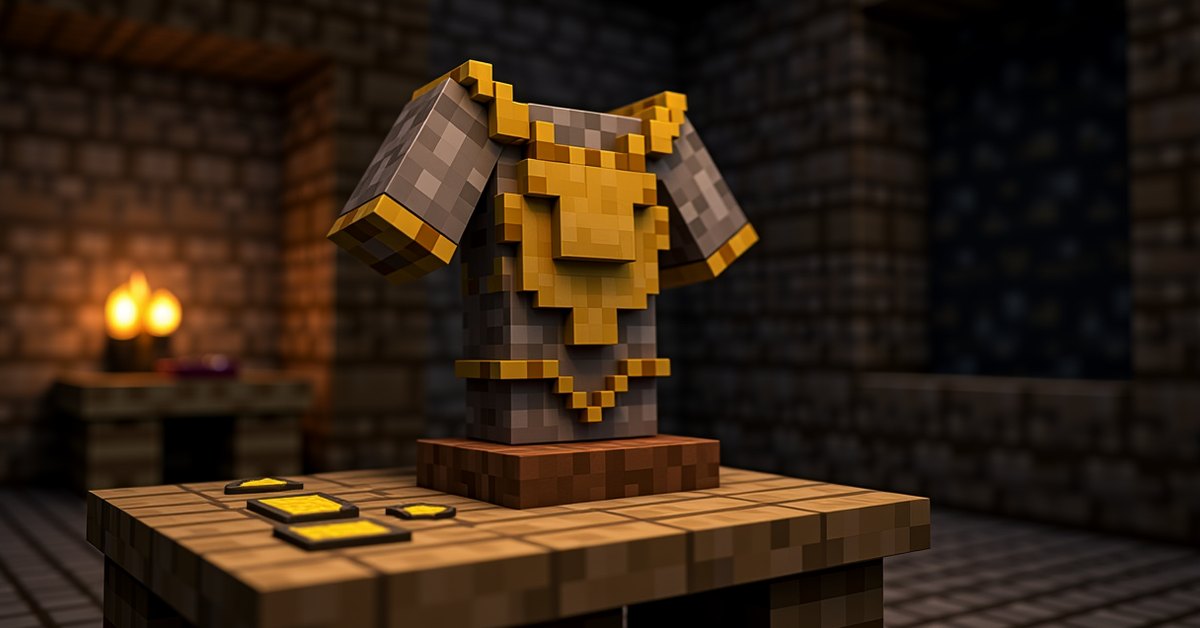
Armor trims are cosmetic patterns you apply to armor in Minecraft. They add a colored design to the surface of a helmet, chestplate, leggings, or boots without changing how the armor performs. A trim uses two ingredients: a smithing template, which sets the pattern, and a trim material, which sets the color.
Mojang added trims in version 1.20 (Trails & Tales). The system grew with 1.21 (Tricky Trials), which added two more patterns from Trial Chambers. Trims are purely visual, so they stack with enchantments and don’t change durability or any combat stat.
You apply a trim at a smithing table, the same block you already use for netherite upgrades. This guide covers every template, every material, how duplication works, and the small gotchas worth knowing before you spend a rare template on the wrong armor.
How to apply an armor trim
Open a smithing table and place three items into the input slots:
- The smithing template (left slot)
- The armor piece you want to decorate (middle slot)
- The trim material, like an iron ingot or redstone dust (right slot)
The result slot shows your armor with the trim baked in. Take it out and the smithing template is consumed in the process. The armor piece keeps every enchantment it had, plus its current durability.
You can re-trim a piece by running the recipe again with a different template and material. The new trim replaces the old one with no penalty to the armor.
The smithing table is the same block you craft with two iron ingots and four planks. If you have not built one yet, that recipe is the only setup cost for the entire trim system. Once you have the table down, you can apply trims as fast as you can collect templates and materials.
Trim materials and the colors they produce
Ten materials work as trim colors. Each one looks slightly different depending on the base armor, since the game shifts the trim palette to keep the pattern readable.
Iron ingot gives a near-silver gray that pops on darker armor like netherite. Copper ingot produces a warm rusty orange. Gold ingot is the brightest yellow in the set and looks great on diamond or iron. Lapis lazuli is a deep royal blue. Emerald is a saturated green. Diamond shows up as a pale cyan with a faint shimmer. Netherite ingot is dark gray, useful as a subtle outline on lighter armor. Redstone dust reads as a clean red. Amethyst shard is purple, slightly muted compared to lapis. Quartz is the whitest option in the game and reads sharply against dark base armor.
A trim made from the same material as the base armor (gold trim on a gold chestplate, for example) gets muted so the pattern stays visible. If you want maximum contrast, pair a light material with dark armor and vice versa.
Material cost varies wildly. Redstone dust and iron ingots are basically free at any midgame point. Diamond, emerald, and especially netherite ingot are expensive enough that you probably only want to use them on armor you plan to keep for a long time. Amethyst sits in the middle: a single geode trip gets you plenty of shards.
Smithing templates and where to find them
Each pattern comes from a specific structure. As of 1.21 there are 18 templates in total. The first 16 shipped with 1.20, and Bolt and Flow came with the Trial Chambers in 1.21.
The 1.20 templates and their sources:
- Sentry: Pillager Outposts
- Dune: Desert Pyramids
- Coast: Shipwrecks
- Wild: Jungle Temples
- Ward: Ancient Cities
- Eye: Strongholds (library chests)
- Vex: Woodland Mansions
- Tide: Elder Guardian drops at Ocean Monuments
- Snout: Bastion Remnants
- Rib: Nether Fortresses
- Spire: End Cities
- Wayfinder: Trail Ruins (brushed from suspicious gravel)
- Shaper: Trail Ruins
- Raiser: Trail Ruins
- Host: Trail Ruins
- Silence: Ancient Cities (very rare chest drop)
The two templates added in 1.21 both come from Trial Chambers. Bolt is found in the regular trial vaults that open after you clear a Trial Spawner. Flow drops from the rarer ominous vaults, which only open during an ominous trial run.
Tide is one of the harder templates to get, because Elder Guardians don’t respawn in vanilla. Once you’ve cleared a monument, that is your only chance at that monument for a Tide template. Silence is the rarest by drop rate, with very low odds per Ancient City chest. Players often run multiple cities before finding one.
Trail Ruins are worth a special note. Four of the templates (Wayfinder, Shaper, Raiser, Host) come from the suspicious gravel scattered through the ruins, which you have to brush with a brush. Bring stacks of brushes, expect them to break, and pack a shovel for the gravel layers between brushable spots.
Duplicating smithing templates
Most templates can be duplicated at a regular crafting table, which is the reason the system stays usable long-term. The recipe takes one copy of the template you want to duplicate, seven diamonds, and a block of the base material associated with that template. The output is the original template plus one new copy.
Base materials by template:
- Sentry, Coast, Vex: cobblestone
- Dune: sandstone
- Wild: mossy cobblestone
- Ward and Silence: cobbled deepslate
- Eye: end stone
- Tide: prismarine
- Snout: blackstone
- Rib: netherrack
- Spire: purpur block
- Wayfinder, Shaper, Raiser, Host: terracotta
The 1.21 templates (Bolt and Flow) have their own duplication recipes tied to Trial Chamber materials. The in-game recipe book will show the exact arrangement once you hold the template in your inventory.
The duplication pattern itself is straightforward: the template goes in the center of the 3×3 crafting grid, the base material blocks surround it in a fixed shape, and the seven diamonds fill the remaining slots. With one trip to a Pillager Outpost and seven diamonds, you can spin up as many Sentry templates as your diamond stockpile allows.
Plan your diamond budget around this. Seven diamonds per duplication adds up fast if you want a full set of trims across multiple armor pieces. Many players set up a diamond farm or run dedicated branch-mining sessions before going on a trim spree.
Tips and common mistakes
Templates are consumed every time you apply a trim, so duplicate before you trim. The biggest beginner mistake is applying a rare template to a piece of armor you’ll replace later that day. Save the duplications for armor you actually plan to keep, like an enchanted netherite kit.
Trims survive the netherite upgrade. If you trim a diamond chestplate and then run the netherite upgrade at the smithing table, the new netherite chestplate keeps the trim and the color. You don’t need to re-trim after the upgrade.
Some material and armor combinations look almost invisible. Iron trim on iron armor barely shows. Gold trim on gold armor blends in too. If you want a visible trim, pick a material with strong contrast against the base armor color.
Trims show up on the equipped armor in third-person view, on the inventory item icon, and on multiplayer servers (other players see them too). The trim has no effect on hitbox size, durability, enchantability, or any combat stat. It is cosmetic only.
Once a trim is applied, you can’t strip it back to plain armor in vanilla. You can overwrite it with a different trim by running the smithing recipe again, but there is no remove-trim option.
If you play with a resource pack, double check how that pack draws each trim. Some packs change the trim palette aggressively, and a color that looks great in vanilla can look completely different under a pack.
Java vs. Bedrock differences
The armor trim system works the same in both editions. The smithing recipe, the duplication recipe, the 18 patterns, and the 10 materials are identical across Java and Bedrock as of 1.21.
The real differences sit one layer up. Loot tables for some structures (Ancient Cities, Trial Chambers) sometimes weight chest pools slightly differently between editions, so drop rates can vary in small ways. Elder Guardian respawn behavior is the same on both editions in vanilla (they don’t respawn), so Tide is a one-time grab per Ocean Monument regardless of edition.
Frequently asked questions
Do armor trims do anything besides look cool?
No. Trims are purely cosmetic. They don’t change armor stats, durability, or enchantment slots.
Can I remove a trim from armor?
Not in vanilla. Once applied, a trim stays on that piece. You can overwrite it by applying a different trim, but you cannot strip a piece back to plain armor.
How many armor trims are in the game?
As of Minecraft 1.21, there are 18 smithing template patterns and 10 trim materials. That gives you 180 unique visual combinations per armor piece, available across every armor material from leather all the way up to netherite.
Do trims work on leather armor?
Yes. Trims work on every armor material, including leather and chainmail. The trim color shows on top of any leather dye you’ve applied.
What is the rarest smithing template?
Silence is the rarest by drop rate. It only appears in Ancient City chests at very low odds. Players running multiple Ancient Cities often go home without one.
Are trims permanent once applied?
The trim is permanent unless you overwrite it with another trim. The new application uses a different template and material, replaces the old trim, and leaves enchantments and durability untouched.
Do all trim materials look different on every armor type?
Yes. The game shifts the trim palette based on the base armor color so the pattern stays readable. That is why iron trim looks bright on netherite but almost vanishes on iron.
Worth the diamonds?
If you have finished the main progression and you are sitting on stacks of diamonds, trimming a netherite kit is a cheap way to give endgame gear some personality. The expensive part is the smithing templates themselves, which is why most players prioritize duplicating the ones from easier structures (Sentry, Dune, Coast) before going after the rare ones like Silence or Spire. Start with the patterns you can grind, save your favorite combos for armor you plan to keep, and skip trimming a piece you are about to replace.