Frogs are passive mobs that hop around swamps and mangrove swamps in Minecraft. They were added in the 1.19 Wild Update, and most players hunt them down for one reason: froglights, the brightest decorative blocks in the game.
A frog will not attack you, and you cannot tame one. What you can do is breed them, raise their tadpoles into a color you want, and feed them small magma cubes to produce light blocks you can build with. This guide covers how all of that works.
What is a frog?
A frog is a small passive mob with 10 health (5 hearts). It hops instead of walking, clears tall jumps with ease, and takes no fall damage. Frogs spend their time near water and will climb onto lily pads and big dripleaf to sit.
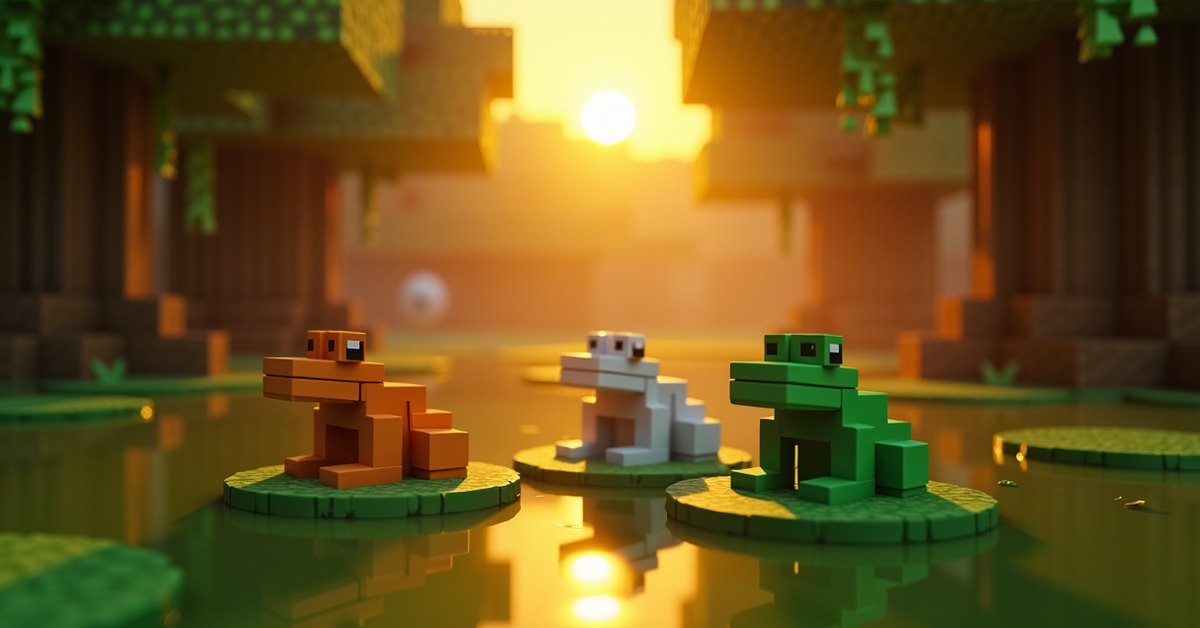
Frogs come in three colors, and the color is set by the biome where the frog grew up as a tadpole, not by its parents. That detail is the whole basis of froglight farming, so it is worth remembering before you start breeding.
Unlike most animals, frogs hunt. They eat small slimes and small magma cubes by flicking out their tongue and pulling the target in. Eating a small magma cube is what produces a froglight.
Where frogs spawn
Frogs spawn naturally in swamps and mangrove swamps. Because the swamp is a temperate biome and the mangrove swamp counts as a warm one, the frogs you find in each look different: swamp frogs are orange, mangrove swamp frogs are white.
If you do not live near either biome, you can still get frogs anywhere. Carry a tadpole home in a water bucket, drop it into a pond, and let it grow up. The biome it matures in decides its color, which is exactly what you want when you are after a specific froglight.
The three frog variants
Each variant matches one froglight. The color a tadpole becomes depends on the temperature of the biome where it finishes growing.
| Variant | Color | Grows up in | Froglight produced |
|---|---|---|---|
| Temperate | Orange | Mild biomes (plains, forest, swamp, taiga) | Ochre froglight |
| Warm | White | Hot biomes (desert, jungle, savanna, badlands, mangrove swamp) | Pearlescent froglight |
| Cold | Green | Cold and snowy biomes | Verdant froglight |
The variant locks in the moment the tadpole becomes a frog. After that, moving the frog to a different biome does nothing. So if you want green frogs, the tadpole has to finish growing while it is sitting in a snowy biome.
How to breed frogs
Frogs breed with slimeballs. Hold a slimeball and feed one to each of two frogs, and they enter love mode the same way cows and pigs do. Instead of a baby appearing on the spot, one of the frogs hops to the nearest water and lays a block of frogspawn on the surface.
Slimeballs come from killing slimes in swamps or from a slime farm, and baby pandas occasionally sneeze them out. Keep a stack on hand if you plan to run a froglight farm, because each light block costs you a magma cube and the frogs to eat them.
Frogspawn looks like a patch of dark eggs floating on the water. It sits on top of a water block and cannot be pushed by pistons. After about ten minutes it hatches into tadpoles.
Raising tadpoles
Tadpoles are tiny fish-like babies that can only survive in water. Out of water they flop and take damage, so never leave one stranded on land. You can scoop a tadpole into a bucket just like a fish, which is the easiest way to move it to the biome you want.
A tadpole grows into a frog after roughly twenty minutes. Feeding it slimeballs speeds that up, the same trick that ages baby animals faster. Bigger fish and even axolotls will attack tadpoles, so a small enclosed pond is safer than an open lake.
This is the step where you control the outcome. Raise the tadpole in a desert pond and it becomes a white frog. Raise it on a snowy mountain and it becomes a green one. The parents’ colors do not matter at all.
Froglights and how to farm them
A froglight is a solid block that gives off light level 15, the maximum in the game. It is the strongest full-block light source available, brighter and cleaner than a glowstone or a sea lantern, and it comes in three colors that match the three frogs.
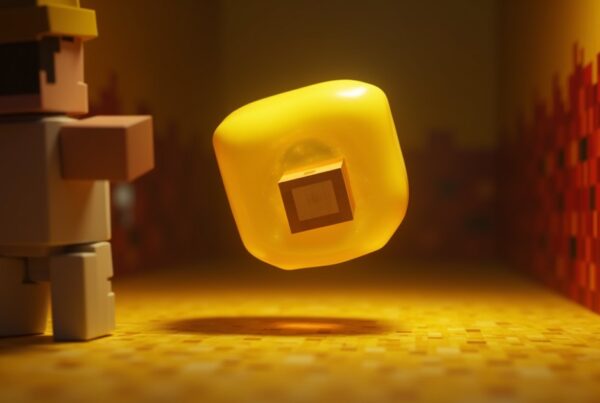
To get one, a frog has to eat a small magma cube. Magma cubes spawn in the Nether and split into smaller ones when hit, so reduce them to the smallest size first. When a frog tongues a small magma cube, the cube dies and a froglight pops out where it stood.
The froglight color depends on the frog, not the magma cube. An orange frog drops ochre froglight, a white frog drops pearlescent froglight, and a green frog drops verdant froglight. A common farm design pens frogs over a drop chute that feeds small magma cubes to them one at a time, with the froglights collecting below.
One quirk worth planning around: magma cubes are a Nether mob, but the froglight farm itself can run anywhere you can deliver the cubes. Most players build the pen in the Overworld and pipe small cubes in from a Nether spawner.
What frogs eat
Frogs only target small slimes and small magma cubes. They ignore the medium and large sizes, so any farm has to deliver the smallest version. Eating a small slime gives nothing extra, but eating a small magma cube is what makes a froglight.
Frogs do not eat fireflies. Fireflies were shown in early previews as frog food, then cut before release over real-world safety concerns, so any guide claiming frogs eat them is out of date.
Frog behavior and quirks
Frogs croak, stick out their tongue at random, and puff their throats while they sit. The sounds are loud and easy to hear, which makes a frog the kind of mob you notice before you see it. None of this affects gameplay, but it does make a swamp base feel alive.
A frog can sit on top of lily pads, big dripleaf, and other small surfaces over water, and it will hop between them rather than swim across. Because frogs take no fall damage, they survive drops that would hurt most mobs, so a tall pen will not injure them.
There is no separate baby frog. The tadpole is the juvenile stage, and a frog is always full size once it grows up. Frog spawn eggs exist in Creative mode and the colors are random when you place them, so the biome rule only applies to tadpoles that grow up naturally.
Tips and common mistakes
Match the biome to the froglight before you let a tadpole grow up, not after. Once a frog has a color, you are stuck with it for that frog.
Keep tadpoles in water at all times and fence them off from larger fish and axolotls. A bucketed tadpole is the safest way to transport one across the map.
Frogs can hop out of low pens, so build walls at least two blocks high or add an overhang. They also wander toward water, which makes a pond with a fence the simplest holding area.
If you only want light and not the farm, remember that froglights cannot be crafted. The frog-and-magma-cube loop is the only way to make them, so set up at least one frog of each color you plan to build with.
Frequently asked questions
What do frogs eat in Minecraft?
To breed, frogs eat slimeballs. In the wild they hunt small slimes and small magma cubes, flicking out their tongue to pull them in. They will not touch medium or large ones.
How do you get froglights?
Let a frog eat a small magma cube. The cube is destroyed and a froglight appears in its place. The color matches the frog: ochre from orange, pearlescent from white, verdant from green.
How do you make a frog a certain color?
Raise its tadpole in the matching biome. A tadpole that grows up in a warm biome becomes a white frog, a cold biome makes a green frog, and anything in between makes an orange frog. Carry the tadpole in a water bucket to set this up.
How do you breed frogs?
Feed a slimeball to each of two frogs. One will lay frogspawn on nearby water, and after about ten minutes the spawn hatches into tadpoles that grow into frogs.
Do frogs eat fireflies?
No. Fireflies were planned as frog food during development but were removed before the update shipped. Frogs eat slimeballs, small slimes, and small magma cubes instead.
Can frogs be tamed or put on a lead?
You cannot tame a frog, but you can attach a lead to one and pull it along. That is handy for moving an adult frog without a bucket.
Do tadpoles die out of water?
Yes. Tadpoles take damage on land and will die if left there, so keep them in water or in a bucket until they grow up.
The short version
If you came for froglights, the path is simple: catch a few tadpoles, raise each one in the biome that matches the color you want, then feed the grown frogs small magma cubes. Set up one frog of each color and you can light an entire base in ochre, pearlescent, and verdant without ever crafting a single block.