What is glowstone?
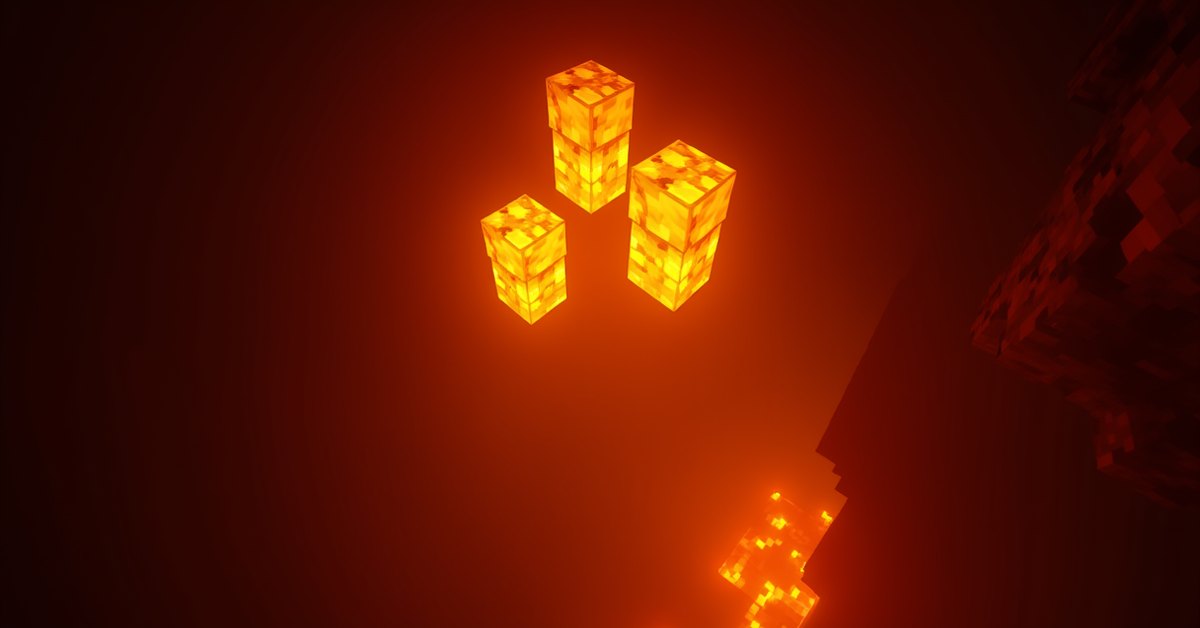
Glowstone is a bright yellow block that gives off the maximum light level in Minecraft. You find it hanging from the ceilings of the Nether, and it’s one of the most reliable light sources in the game once you can reach it.
The block produces a light level of 15, the brightest value in the game, so a single block lights up a wide area. It’s classed as transparent for lighting, which means light passes through its edges the way it does with glass rather than being cut off like solid stone. It’s still a full cube you can walk on and build with.
Glowstone forms in blobs on the underside of Nether ceilings and along the tops of walls. You’ll often see it glowing from across a cavern before you can reach it, which is part of what makes it tricky to collect. Unlike torches, it keeps working underwater and never burns out, so it’s useful for everything from lighting a base to brewing stronger potions.
Where to find glowstone
Glowstone only spawns in the Nether. It clusters on ceilings and the upper parts of walls throughout most Nether biomes, including the nether wastes, crimson forests, and warped forests. The clusters hang down like stalactites made of light, and they’re easy to spot against the dark netherrack around them.
The hard part is reaching it. Glowstone usually sits high up, often over a drop or a lava ocean. Bring blocks to pillar up, or a way to bridge across. Falling into lava while chasing a glowstone blob is one of the most common ways players lose their gear in the Nether, so it pays to set up safe footing before you start breaking blocks.
If you don’t want to mine it yourself, you have two other sources. Witches drop glowstone dust when killed, and piglins sometimes hand over glowstone dust when you barter gold ingots with them. Four dust crafts back into one block, so both routes can supply glowstone without a trip to a Nether ceiling.
How to mine glowstone
Glowstone breaks quickly with any tool or with your bare hand, so you don’t need a specific pickaxe for it. What matters is which enchantment you use, because that decides what drops.
Mined normally, a glowstone block drops 2 to 4 glowstone dust at random. Since it takes 4 dust to craft one block back, a plain break often leaves you with less dust than the block was worth. On average you lose about a quarter of your glowstone to that drop math.
There are two ways to fix that:
- Silk Touch drops the glowstone block itself, exactly as it was. This is the best choice when you want the blocks for lighting or building.
- Fortune raises the dust yield and caps it at 4 per block, so Fortune III effectively guarantees a full block’s worth of dust every time.
Pick Silk Touch when you want blocks, and Fortune when you want dust for brewing or crafting. Without either enchantment, expect to come home with fewer blocks’ worth of material than you actually broke.
What glowstone dust is used for
Glowstone dust is the item you get from breaking the block, and it feeds into several recipes. The simplest is turning it back into a block: four dust in a 2×2 square makes one glowstone block.
Beyond that, dust goes into brewing, redstone lamps, spectral arrows, and firework stars. Each of those is worth knowing if you spend time in the Nether stocking up on dust.
Brewing stronger potions
In a brewing stand, glowstone dust upgrades a potion to its level II version. Adding it to a Potion of Strength turns it into Potion of Strength II, which hits harder but lasts a shorter time. The same works for other potions that have a stronger tier, such as Healing and Regeneration.
This is the opposite of redstone dust, which extends a potion’s duration but keeps it at level I. You can’t use both on the same potion at once, so the choice comes down to stronger versus longer.
Redstone lamps
A redstone lamp is one glowstone block surrounded by four redstone dust in a crafting grid. The lamp stays dark until it receives a redstone signal, then lights up to level 15, the same brightness as raw glowstone. Lamps are the standard way to build switchable lighting, day-night sensors wired to a daylight detector, and lit-up redstone displays.
Spectral arrows and fireworks
Four glowstone dust around a single arrow makes two spectral arrows. Hitting a mob or player with one gives them the Glowing effect, outlining them in white so you can see them through walls for a short time. This recipe is Java Edition only; spectral arrows aren’t craftable in Bedrock.
Glowstone dust also adds the twinkle effect to a firework star, giving the firework a flickering sparkle when it bursts. Drop the dust into the crafting grid along with gunpowder and a dye to build the star.
Light and placement
Glowstone’s light level of 15 stops hostile mobs from spawning nearby, so it doubles as area lighting and mob prevention. One block covers a useful radius, and a few spread across a base keep the whole space lit and safe.
The block works underwater without any change, which torches can’t do. That makes glowstone a go-to light for ocean monuments, underwater bases, and lighting a shoreline against drowned. It also stays lit in the rain and in every dimension, so a block you place in the Overworld, the Nether, or the End behaves exactly the same way.
Glowstone can be moved by pistons, so it fits into redstone builds and hidden lighting that slides in and out of view. You can place other blocks against it and walk across it like any full cube.
Glowstone compared to other light sources
Glowstone isn’t the only block that gives off light level 15. Sea lanterns, shroomlights, and froglights all match its brightness, and each has its own look and source.
Sea lanterns come from ocean monuments and give a cool white glow. Shroomlights grow in the crimson and warped forests of the Nether and give a warm orange light, and they’re often easier to reach than glowstone because they grow lower down. Froglights come in three colors and drop when a frog eats a small magma cube, which makes them the hardest of the group to farm.
Glowstone’s advantage is supply. Once you can reach a Nether ceiling, it’s available in bulk, and its dust doubles as brewing and crafting material that the other light blocks don’t provide.
Tips and common mistakes
Bring Silk Touch if you can. The single biggest mistake with glowstone is mining a ceiling full of it with a plain pickaxe and walking away with far less dust than the blocks were worth. Silk Touch removes that loss entirely and gives you the blocks back whole.
Watch the lava below. Glowstone almost always hangs over open space in the Nether, and the block breaks so fast that it’s easy to fall through the gap you just made. Pillar up underneath the cluster so you have solid footing when the last block pops.
If you only need light and don’t care about dust, remember you can craft blocks from witch and piglin drops instead of climbing Nether ceilings at all. A stretch of bartering can hand you a stack of dust with no lava risk.
Frequently asked questions
Do you need Silk Touch to get glowstone blocks?
Yes. Without Silk Touch, a glowstone block breaks into 2 to 4 glowstone dust instead of dropping the block. To get the block back, either use a Silk Touch tool or craft four dust into one block.
How much glowstone dust does one block give?
A plain break gives 2 to 4 dust at random. Fortune raises the average and caps the yield at 4, so Fortune III reliably returns a full block’s worth of dust.
What does glowstone do in brewing?
It upgrades a potion to level II, making the effect stronger but shorter. Redstone dust does the opposite by extending the duration at level I.
Does glowstone work underwater?
Yes. Glowstone keeps its full light level of 15 underwater and never goes out, which is why it’s a common pick for underwater builds where torches won’t stay.
Can glowstone be pushed by pistons?
Yes. A piston can push and pull glowstone, so it works in moving redstone contraptions and hidden lighting.
Can you make glowstone without going to the Nether?
In a way, yes. The block only generates in the Nether, but you can craft it from glowstone dust anywhere. Dust drops from witches and comes up in piglin bartering, so four of those pieces on a crafting grid gives you a block without ever touching a Nether ceiling.
Where does glowstone spawn?
Only in the Nether. It generates in clusters on ceilings and high walls across most Nether biomes.
Pack a Silk Touch pickaxe and a stack of blocks to pillar with before you head to the Nether for glowstone. That combination turns a risky ceiling grab into a clean haul of the brightest light source in the game.