What is a mangrove propagule?
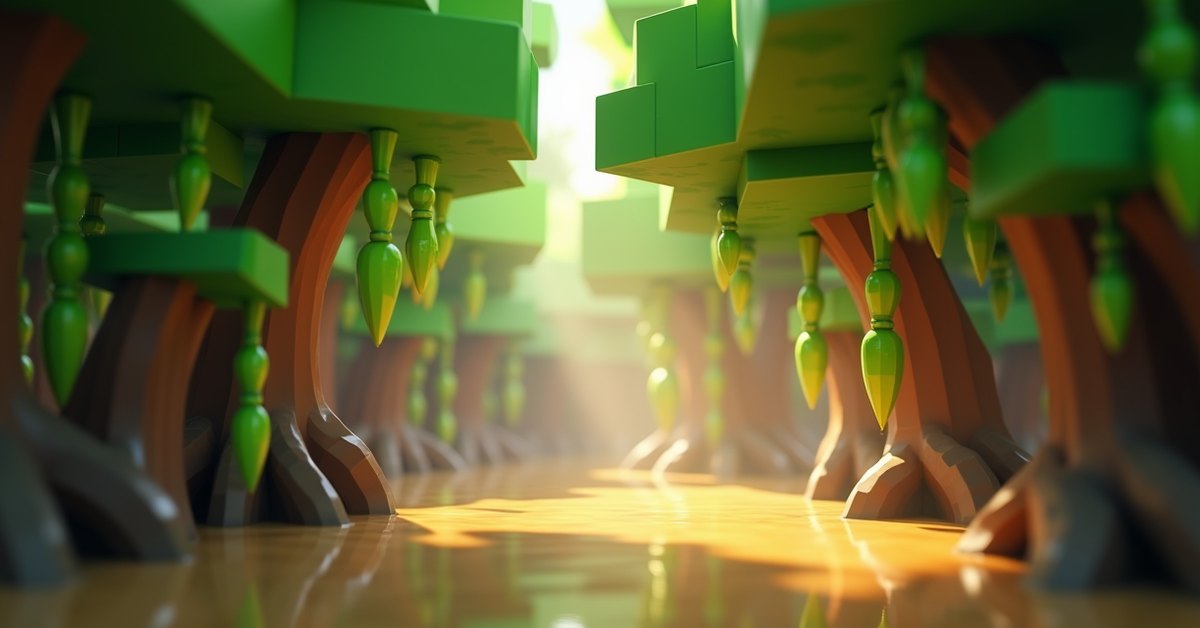
A mangrove propagule is the seed of a mangrove tree, and it works a little differently from every other sapling in Minecraft. Instead of dropping from grass or sitting in a chest, it grows hanging from the bottom of mangrove leaves, dangling like a bean pod until it is ready to fall.
Plant one and it grows into a mangrove tree, which gives you mangrove logs, mangrove leaves, and the tangled root blocks that make the swamp look the way it does. The item itself is small and green, and you can hold it, store it, and replant it like any other seed.
One detail sets it apart from every other sapling: a propagule spends its early life hanging under the leaves, passing through four growth stages before it is ready. Only a fully grown propagule can be planted or will drop on its own.
Where to find mangrove propagules
Propagules only come from mangrove trees, and mangrove trees only generate naturally in the mangrove swamp biome. This is a warm, waterlogged version of the swamp, filled with mangroves standing on their roots above shallow muddy water.
Look up at the leaves. Mature propagules hang from the bottom of the leaf blocks as thin green shoots. A single tree can have several hanging at once, and a whole swamp gives you more than you will ever need.
There is no other source. You will not find propagules in village chests, shipwrecks, or wandering trader stock, so a trip to the swamp is the only way to get your first one.
How to get propagules
There are two reliable ways to collect propagules once you have found a mangrove swamp.
Harvest hanging propagules
A hanging propagule moves through four growth stages before it is ready, and you can read them off the shape: a young one is a short stub, and a mature one hangs down as a long, clearly formed shoot. Only that final stage counts, so it is worth a quick look up before you start breaking blocks.
When a propagule reaches its final growth stage, it hangs fully formed under the leaves. Break it and it drops as an item you can pick up. A fully grown one also falls on its own after a while if you leave it, so you can wait it out or break it yourself to speed things along. If you are gathering in bulk, walk the swamp and grab every long shoot you see, since a single biome usually holds dozens.
You can point bone meal at a hanging propagule to push it toward maturity faster. Aim at the propagule itself, not the leaf, and each use nudges it forward a stage. This is the quickest way to turn a young shoot you spotted into a harvestable one without standing around waiting.
Break mangrove leaves
Mangrove leaves have a chance to drop a propagule when you break them, the same way oak leaves sometimes drop apples or saplings. A plain break works, and shears let you keep the leaf block itself if you want it. If you use bone meal on a mangrove leaf block, a propagule sprouts underneath it, which is the fastest way to farm them once you have a tree at home.
How to plant a mangrove propagule
A propagule plants on most of the blocks that accept other saplings, plus a couple that are unique to it. Valid ground includes dirt, coarse dirt, grass blocks, podzol, mycelium, rooted dirt, farmland, clay, moss, mud, and muddy mangrove roots.
Place it the way you place any sapling: hold the propagule and use it on the top of a valid block. It stands upright as a small shoot and starts its growth timer.
Planting underwater
Here is the trick that sets propagules apart. You can plant one underwater. Put a valid ground block under a water source, then place the propagule on top, and it grows while submerged. No other tree in the game can be started underwater, which is why mangroves fit the flooded look of the swamp so well.
This matters for builds. If you want a tree rising straight out of a pond or a moat, a propagule is the only sapling that will cooperate.
Growing it into a mangrove tree
Once planted, a propagule grows on its own over time, or you can rush it with bone meal. A few applications will usually pop the full tree into place.
Mangrove trees grow tall and thin, with a canopy of leaves and a set of roots that spread out from the base. When the tree generates over dirt or mud, the roots weave down into the ground. When it grows over water, the roots create air pockets, and the parts that pass through mud turn into muddy mangrove roots.
Give the tree room. Mangroves need vertical space and a bit of clearance around the trunk for their roots and leaves. A propagule crammed under a low ceiling will refuse to grow until it has space, and this is the single most common reason a planted propagule seems stuck. If yours has not sprouted after plenty of bone meal, clear the blocks above and beside it and try again.
You can grow several at once. Plant a row of propagules with a couple of blocks between them and bone-meal the lot, and you get a small mangrove grove instead of a single tree. Because the roots spread outward as the trees form, leaving that gap keeps them from crowding each other into stunted shapes.
Once your tree is established, it produces its own hanging propagules, so a single trip to the swamp is enough to set up a renewable supply back home.
What a grown mangrove tree gives you
Growing a propagule is worth the effort for what the tree produces. Mangrove logs strip into mangrove wood and craft into a full set of planks, stairs, slabs, doors, fences, and signs, all in a deep reddish-brown color you cannot get from other wood types. Mangrove also crafts into a boat, and the leaves keep dropping fresh propagules so the supply never runs dry.
The roots are the other prize. Mangrove roots and muddy mangrove roots are decorative blocks that suit swamp builds, overgrown bases, and treehouse projects. You only get them by growing the tree, so a propagule is the start of that whole chain.
Other uses for propagules
Beyond planting, propagules have a couple of practical jobs. You can drop them into a composter, where each one has a modest chance to raise the compost level, so a stack of spares turns into bone meal instead of clutter in a chest.
They also work as decoration. A propagule placed on the ground or left hanging under leaves reads as swamp foliage, which helps if you are dressing up a pond or building a themed base.
Tips and common mistakes
A few things trip players up with propagules:
- Only fully grown propagules can be planted. If yours will not place, it is probably still in an early hanging stage. Wait for it to mature or grow it out with bone meal.
- Bone meal aimed at the leaf grows a new propagule; bone meal aimed at a hanging propagule matures the one already there. Point at the right target for the result you want.
- Give a planted propagule headroom. A low ceiling stops growth entirely.
- Mud is not required. Propagules grow fine on plain dirt or grass, so you do not need to haul mud home to start a tree.
Frequently asked questions
Can you plant a mangrove propagule underwater?
Yes. Place a valid ground block beneath a water source and put the propagule on top. It is the only sapling in Minecraft that grows underwater.
How do you speed up a mangrove propagule?
Use bone meal. On a hanging propagule it advances the growth stage. On a planted one it can grow the full tree in a few uses.
Do mangrove propagules need mud to grow?
No. They grow on dirt, grass, podzol, clay, moss, farmland, mud, and several other blocks. Mud is common in the swamp but not a requirement.
Where do mangrove propagules come from?
They grow hanging under mangrove leaves in the mangrove swamp biome, and they can drop when you break mangrove leaves. There is no other natural source.
Can you eat a mangrove propagule?
No. It is a plant block, not a food item. For food from the swamp, look to other sources.
How many propagules do you need to grow a tree?
One. A single planted propagule grows into a full mangrove tree with roots and leaves.
Keep a few in your pack
Once you have a mangrove tree at home, propagules become nearly free, so it is worth keeping a small stack on hand. They plant where nothing else will, including straight into water, which makes them one of the more flexible building tools in the game for anyone who likes the look of trees rising out of a pond.