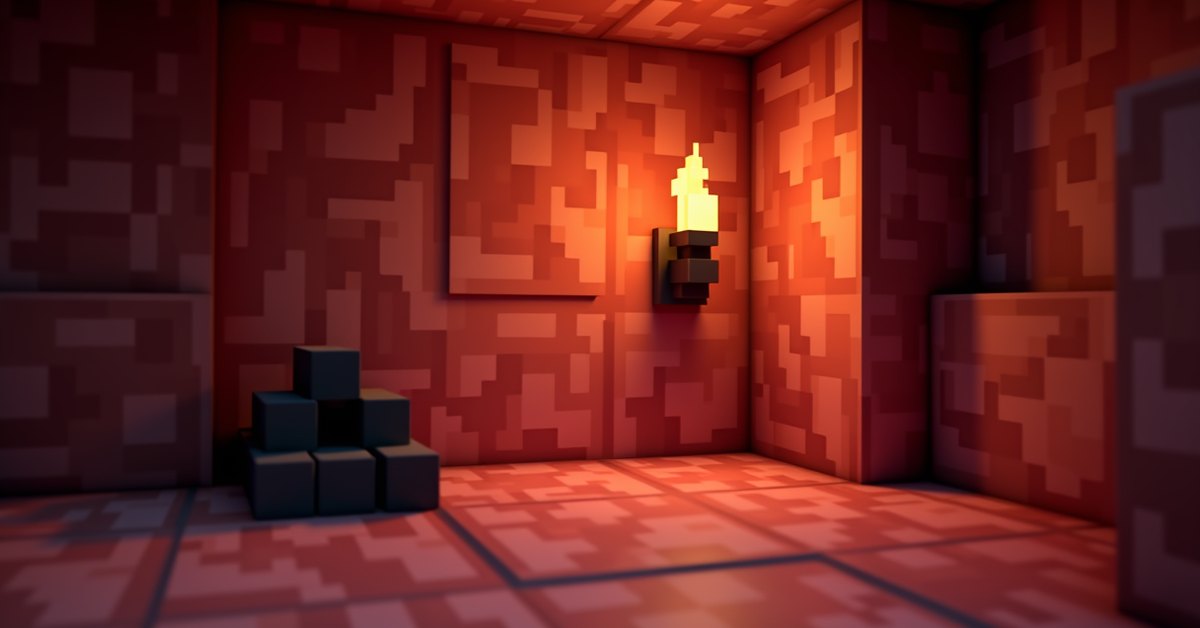
What granite is in Minecraft
Granite is one of three stone variants in Minecraft, alongside diorite and andesite. It has a pinkish, slightly orange tint that sets it apart from the gray of regular stone, and most players use it as a building material rather than for any mechanical purpose.
Mojang added granite in the 1.8 Bountiful Update, along with the other two stone variants. The point of the addition was to give caves more visual variety after years of plain gray stone. Polished granite came in the same update, and the rest of the granite block family (slabs, stairs, walls) showed up in 1.14 Village & Pillage.
You’ll see granite generate in patches inside the overworld’s stone areas. It’s not rare, but it’s also not the kind of block you stumble onto in every cave, which is why a lot of new players go looking for it specifically when they want a warmer color in a build.
Where to find granite
Granite generates as blobs (called “ore blobs” in the game’s code, even though granite isn’t an ore) inside stone in the overworld. The blobs are the same shape as iron or coal blobs, just bigger.
It spawns at most overworld Y levels where stone exists, with the highest density between Y -16 and Y 60. You can find granite in:
- Cave systems in any biome
- Mountain interiors when you tunnel into a peak
- Cliff faces near the surface in stony shore biomes
- Dripstone caves, which often expose large amounts of it
- Windswept hills, where natural erosion can bring granite right to the surface
If you want a steady supply, dig a strip mine between Y 0 and Y 40. You’ll hit granite blobs alongside iron, coal, and copper.
The 1.18 Caves and Cliffs update made granite more visible at deeper levels. The wide cheese caves and noodle caves below Y 0 often cut right through granite blobs, so you’ll see exposed walls of it without having to mine. Lush caves and dripstone caves both expose granite regularly.
You won’t find granite in the Nether or the End. It only generates in the overworld. The Nether has its own stone variants (basalt and blackstone), and the End is mostly end stone.
How to mine granite
You need at least a wooden pickaxe to mine granite. Hitting it with your fist or any non-pickaxe tool destroys the block but drops nothing.
With any pickaxe, granite drops itself as an item. There’s no special drop and no XP reward. Hardness is 1.5 and blast resistance is 6, so it mines a touch faster than cobblestone and resists creeper blasts about as well.
Silk Touch isn’t required since granite already drops itself. Fortune doesn’t do anything either, because there’s no random drop to multiply. A plain Efficiency pickaxe is the best tool if you’re trying to clear a lot of it quickly.
If you’re using TNT or letting creepers do the work, granite breaks instantly but only drops occasionally (the same chance as cobblestone in an explosion). For controlled clearing, a pickaxe is more reliable. For raw speed when you’re going to recycle anyway, explosions still pull their weight.
How to craft granite
If you don’t want to mine for it, you can craft granite from diorite and nether quartz. Place 1 diorite and 1 nether quartz anywhere in a crafting grid and you’ll get 2 granite back.
That recipe makes granite a renewable resource, since both diorite and quartz can be farmed. Quartz comes from nether quartz ore in the Nether, and diorite generates the same way granite does in the overworld. A single trip to the Nether can give you enough quartz to convert hundreds of diorite blocks into granite.
This crafting path is what most builders use when they need a large supply for a project. Mining hundreds of granite blocks by hand is slower than running a quick Nether trip and crafting it from diorite, especially if you’re already swimming in diorite from cave exploration.
Polished granite and other variants
Granite has a small family of decorative blocks built from it. You can craft polished granite by placing 4 granite in a 2×2 square in a crafting grid, which gives you 4 polished granite back. The smoother, lighter look fits modern builds.
From there, you can make granite slabs, granite stairs, and granite walls using the standard slab, stair, and wall recipes. The same recipes work for polished granite slabs and polished granite stairs. Polished granite doesn’t have a wall variant in vanilla Minecraft, only the rough version does.
The stonecutter is more efficient. One granite block in a stonecutter produces one slab, one stair, one wall, or one polished granite, with no waste. If you’ve got a stonecutter at your base, use that instead of the crafting grid. The crafting grid loses you blocks because of the input ratios; the stonecutter is always 1-for-1.
Building with granite
Granite’s pinkish-orange color is useful when you want a warmer base than gray stone. Common uses include:
- Floors and pathways inside builds where you want a less industrial look
- Accent stripes between blocks of stone, deepslate, or cobblestone
- Fireplaces and chimneys, since granite doesn’t burn
- Castle and fortress walls when you want a more rustic feel than polished stone
- Mountain bases that blend into a stony shore or windswept hills biome
A common trick is mixing granite, diorite, and andesite as a single textured pattern. The three blocks share a similar shape and contrast nicely without clashing. Polished granite reads cleaner in modern interior builds, while rough granite suits exteriors.
For palette pairings, granite plays well with dark oak, spruce, and stripped jungle wood thanks to the warm undertones in all four. It also pairs cleanly with deepslate for high contrast and with terracotta if you want to lean into the desert/southwestern color range. Avoid pairing it with bright cool blues unless you’re going for a deliberate clash.
Granite in game mechanics
Granite behaves like other stone blocks for almost every mechanic in the game:
- Hostile mobs can spawn on top of granite in the dark, the same as on stone or cobblestone
- Note blocks placed on top of granite play the “bass” sound, the standard sound for stone-type blocks
- Pistons can push granite, and sticky pistons can pull it; there’s no quirk like obsidian’s immovability
- Granite is not a beacon base material; only iron, gold, emerald, diamond, netherite, and copper blocks count
- Granite is fully opaque and blocks light, the same as stone
- Lava placed next to granite won’t set it on fire, since granite isn’t flammable
Internally, granite uses the block ID minecraft:granite in modern versions of the game. Polished granite is minecraft:polished_granite. You can use these in commands like /setblock or /give if you’re building with command blocks or running creative-mode tests.
Java and Bedrock differences
Granite behaves the same in Java Edition and Bedrock Edition for almost everything that matters. Generation, mining, crafting recipes, stonecutter output, and use as a decorative block are identical across both versions.
The only quirk worth knowing is that exact world-generation patterns differ between editions because the underlying noise generators differ. You might find more granite at the same coordinates in one edition than the other, but the rules for where it can spawn are the same.
One small UI difference: in Bedrock, granite shows up in the “Nature” creative inventory tab; in Java, it’s in the “Building Blocks” tab. Functionally the block is identical.
Frequently asked questions
Can plants grow on granite?
No. Granite is a stone-type block, not dirt or grass, so saplings, crops, and most flowers won’t survive on top of it. Mushrooms can grow on it under the right light conditions.
Does granite burn?
No. Granite is fire-resistant like other stone variants, which is why it works well around campfires, lava, and netherrack-based fireplaces.
What’s the difference between granite and polished granite?
Visual texture only. Polished granite has a smooth, even surface and a slightly lighter color. Both blocks have identical hardness, blast resistance, and tool requirements.
Can you make tools or armor from granite?
No. Granite isn’t a tool material. There’s no granite pickaxe, sword, or armor in vanilla Minecraft.
Where does granite generate the most?
In stony layers between Y -16 and Y 60, with high density in dripstone caves. Mountain interiors and stony shore cliff faces are also reliable sources at the surface.
Is granite renewable?
Yes. Crafting 1 diorite plus 1 nether quartz makes 2 granite, and both diorite and quartz can be farmed in unlimited quantities. That makes granite functionally infinite, even if you mine through every natural deposit.
What’s the best tool for mining granite?
An iron pickaxe with Efficiency 4 or 5 is the sweet spot for clearing large amounts. Diamond and netherite go faster, but the speed difference on a hardness-1.5 block is small enough that iron does fine.
Can you smelt granite into anything?
No. Granite has no smelting recipe. Stone variants can’t be turned into any other material in the furnace, and unlike cobblestone, granite doesn’t smelt back into a smoother version of itself.
Does granite spawn in the Nether or the End?
No. Granite only generates in the overworld. If you want stone variants in the Nether, look at basalt, blackstone, and their polished forms instead.
Worth a try
If you’ve never built with it, run a project using mostly granite and polished granite with deepslate accents. The pinkish granite next to the dark deepslate produces a high-contrast look that hides the fact that you used three of the simplest blocks in the game.