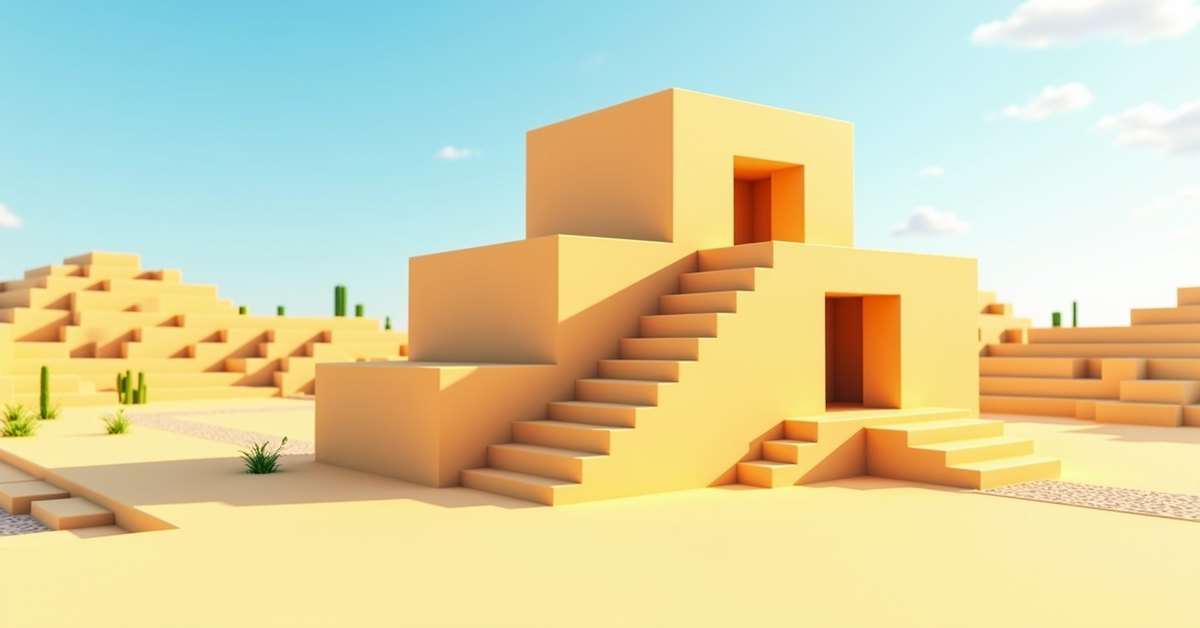
What is smooth sandstone?
Smooth sandstone is a decorative building block with a clean, flat surface and no panels, bands, or carving. It is the plainest member of the sandstone family, and that plainness is the whole appeal. When a build needs a smooth desert-colored wall, floor, or roof with nothing busy in the texture, this is the block for it.
You will not dig smooth sandstone out of the ground. It is a furnace product. Smelt one regular sandstone block and you get one smooth sandstone back. That single extra step is the only thing standing between you and a stack of it.
Smooth sandstone also has a red version, smooth red sandstone, made the same way from red sandstone. The crafting, mining, and behavior are identical, so everything here applies to both colors.
How to make smooth sandstone
Smooth sandstone comes from a furnace. Place a regular sandstone block in the top slot, put any fuel in the bottom slot, and the furnace returns one smooth sandstone. The smelt takes the standard ten seconds, the same as cooking a steak or smelting an iron ore.
Only regular sandstone works. Cut sandstone and chiseled sandstone do not smelt into anything at all, so do not waste them in a furnace expecting smooth sandstone out the other side.
Starting from scratch, the chain is short. Place four sand in a 2×2 square on a crafting table to make one sandstone, then smelt that sandstone into smooth sandstone. Sand is one of the most common blocks in the game, covering deserts, beaches, and riverbeds, so the real costs are fuel and time rather than rare materials.
Big builds need a lot of blocks, and smelting them one at a time is slow. The fix is volume: a row of furnaces, or a few furnaces left running while you mine or build elsewhere, will convert a full stack of sandstone without much attention. Collecting each finished block also hands you a little experience.
The sandstone family at a glance
Smooth sandstone is one of four sandstone blocks, and they are easy to mix up. Here is how they compare.
| Block | How to make it | Surface look | Stairs and slabs |
|---|---|---|---|
| Sandstone | Four sand in a 2×2 square | Banded sides with a separate top | Both stairs and slabs |
| Chiseled sandstone | Two sandstone slabs stacked | A carved decorative pattern | Neither |
| Cut sandstone | Four sandstone in a 2×2 square | A framed square panel per face | Slabs only |
| Smooth sandstone | Smelt sandstone in a furnace | Flat and plain on every face | Both stairs and slabs |
The takeaway: smooth sandstone is the only sandstone variant besides plain sandstone that you can shape into stairs. That fact decides a lot of desert builds.
Smooth sandstone vs. cut sandstone
These two get confused constantly, and the game’s own history is partly to blame. In older versions, the block now called cut sandstone was named “smooth sandstone.” The 1.14 update renamed the old block to cut sandstone and added a brand new smooth sandstone, the flat one this guide covers. Players who learned Minecraft before that change often still picture the wrong block when they hear the name.
By sight they are simple to separate. Cut sandstone has a recessed square panel on each face, like a tile set inside a frame. Smooth sandstone has no frame and no panel. Every side is the same even texture, pulled from the top face of a regular sandstone block.
The difference that matters most for building is shape variety. Smooth sandstone makes stairs and slabs. Cut sandstone makes slabs only. If a plan calls for sandstone stairs with a clean face, smooth sandstone is the answer, because cut sandstone has no stair recipe and never has.
Crafting smooth sandstone stairs and slabs
Smooth sandstone shapes into two building pieces: stairs and slabs.
For stairs, place six smooth sandstone on a crafting table in the staircase pattern, stepping diagonally from one bottom corner up to the far side. The recipe yields four smooth sandstone stairs.
For slabs, place three smooth sandstone in a single horizontal row. That yields six smooth sandstone slabs.
A stonecutter handles both shapes with less material. Drop one smooth sandstone into a stonecutter and it offers slab and stair cuts directly. The stonecutter is the better deal for stairs, since the crafting table wants six blocks for four stairs while the stonecutter works block by block with nothing lost. For slabs the two methods come out about even, so use whichever is closer to hand.
How smooth sandstone stairs and slabs behave
Smooth sandstone slabs can sit in the lower or upper half of a block space, depending on where you aim when you place them. Put two slabs in the same space and they merge into a full block. Slabs are handy for half-height steps, thin tabletops, and ceilings that need a little headroom.
Stairs auto-shape as you build. Place stairs next to each other at an angle and the game forms inner and outer corner pieces on its own, which keeps staircases and rooflines tidy. Aim at the top of a block face to place stairs upside down for an overhang.
Both slabs and stairs can be waterlogged. Place one in a water source, or add water to it, and it holds the water while keeping its shape. The full smooth sandstone block cannot be waterlogged; that only applies to the slab and stair forms.
Where smooth sandstone appears in the world
Smooth sandstone is mainly a crafted block, but it does generate in one spot: desert villages. The buildings there use a blend of sandstone types, and smooth sandstone turns up in several of the house and structure designs.
If you pass through a desert village, you can mine smooth sandstone straight from the buildings instead of smelting your own. Tearing apart village houses can unsettle the villagers and change how they move around home, so take what you need with that in mind.
Nowhere else will you find smooth sandstone occurring on its own. It does not appear in open terrain, in caves, or under the desert surface. The stone packed beneath desert sand is regular sandstone, not the smooth kind.
Mining smooth sandstone and block stats
Smooth sandstone breaks quickly and needs a pickaxe. Every tier works, from wood up to netherite, and better materials only make it faster. Even a wooden pickaxe brings the block down in a fraction of a second.
One rule trips players up: break smooth sandstone with your hand, an axe, a shovel, or anything that is not a pickaxe, and the block vanishes without dropping an item. Check that a pickaxe is in your hand before mining a wall you want to reuse.
For toughness, smooth sandstone is on the weak end. It carries the low blast resistance shared by the whole sandstone family, so a creeper or a stick of TNT will punch through a smooth sandstone wall with ease. Build with it for looks, not for defense. When you need a blast-proof shell, obsidian is the gold standard, and even plain cobblestone holds up far better than sandstone.
Building with smooth sandstone
Smooth sandstone is at its best in desert and ancient-Egyptian builds: pyramids, temples, flat-roofed houses, courtyards, and long boundary walls. Its even surface reads as polished stone from a distance, which suits large flat areas where a busier block would look noisy and restless.
The sharpest desert builds usually mix sandstone types instead of leaning on one. Use smooth sandstone for the main walls and floors, cut sandstone for framed accents, chiseled sandstone for a decorative band, and regular sandstone to break up the surface. Smooth sandstone slabs and stairs carry that same color into roofs, steps, and trim so the whole structure stays consistent.
A frequent slip is grabbing cut sandstone when the plan needs stairs. Cut sandstone has no stair recipe, so smelt your sandstone into smooth sandstone first if you want smooth-faced steps. Regular sandstone makes stairs too, if you would rather have the banded look than the plain one.
Since sand is cheap and everywhere, smooth sandstone scales well to large projects. The slow part is always the smelting, so start your furnaces early and let them grind through the supply while you gather and build.
Frequently asked questions
What is the difference between smooth sandstone and cut sandstone?
Cut sandstone has a square recessed panel on each face, while smooth sandstone is flat and plain everywhere. They are made differently too: smooth sandstone is smelted from sandstone in a furnace, and cut sandstone is crafted from regular sandstone. Smooth sandstone can become stairs and slabs; cut sandstone only becomes slabs.
How do you get smooth sandstone in Minecraft?
Smelt a regular sandstone block in a furnace with any fuel. Each sandstone block gives one smooth sandstone. You can also collect it from the buildings in desert villages.
Can you make stairs out of smooth sandstone?
Yes. Six smooth sandstone in the staircase pattern on a crafting table make four smooth sandstone stairs, or a stonecutter will cut them one block at a time for a better rate. Smooth sandstone and regular sandstone both have stair recipes; cut sandstone does not.
Does smooth sandstone spawn naturally?
Only in desert villages, where it shows up in some of the buildings. It does not generate in open terrain or underground. The sandstone you dig from beneath desert sand is regular sandstone, not smooth.
Can you turn smooth sandstone back into sand?
No. Nothing converts smooth sandstone, or any sandstone, back into sand. The sand-to-sandstone craft only runs one direction.
Is smooth sandstone blast resistant?
No. Smooth sandstone has low blast resistance, the same as every other sandstone block, so explosions break through it easily. Use obsidian or cobblestone if you need a wall that survives a creeper or TNT.
Smooth sandstone is the quiet workhorse of desert building. It costs one furnace step more than plain sandstone, and in return you get a clean, even surface plus the stairs and slabs that cut sandstone can never provide. Keep a couple of furnaces running in the background and you will always have a stack ready the moment a build calls for it.