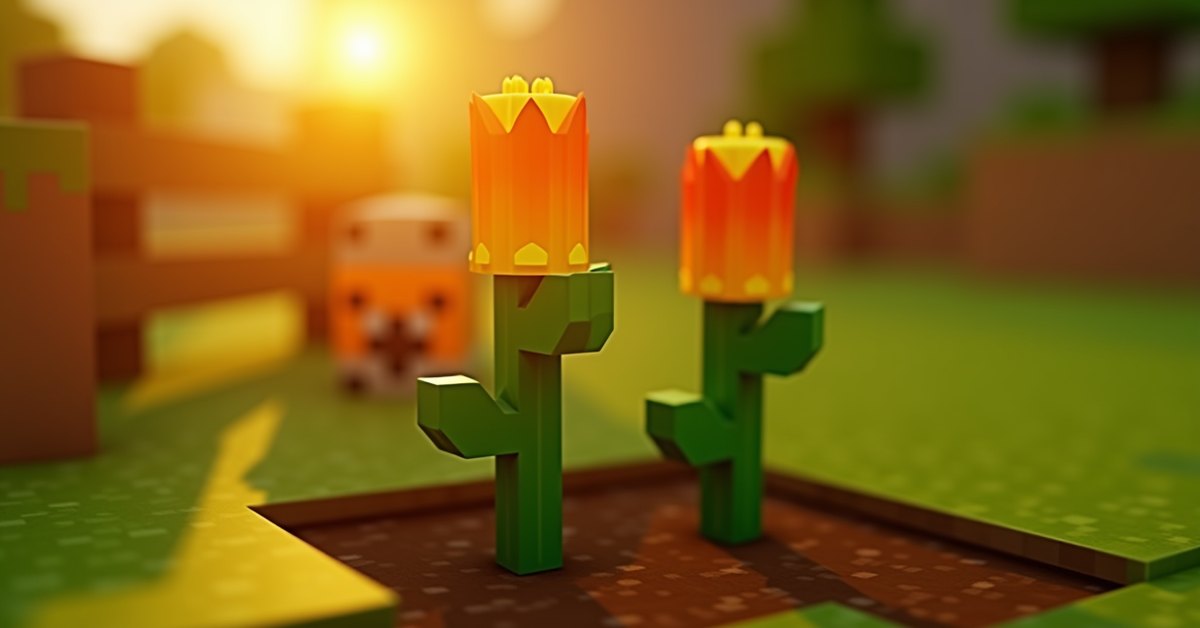
Torchflower is one of the two ancient plants the sniffer can dig up in Minecraft, and it’s the first flower in the game that you actually have to grow from a seed. It was added in the 1.20 Trails and Tales update along with the sniffer mob, and it’s now the easiest source of orange dye if you have a sniffer farm running.
If you searched for this article, you probably want one of three things: to know what torchflower does, to know how to grow it, or to find out why your seeds aren’t sprouting. This guide covers all three, plus the suspicious stew recipe, the sniffer breeding loop, and the small mistakes that waste seeds.
What is torchflower?
Torchflower is a small yellow-and-orange flower that grows on farmland from a torchflower seed. The fully grown plant looks like a tiny lit torch poking out of the ground, which is where the name comes from. It behaves like a regular small flower once it’s mature, so you can pick it, replant it on grass or dirt, and use it as decoration.
The plant has three growth stages on farmland:
- Seedling (a sprout with two small leaves)
- Crop stage (taller stem, no bloom yet)
- Fully grown torchflower (the flower you can harvest and use)
Only the third stage drops a torchflower item when you break it. The first two stages drop the seed back so you can replant.
Where torchflower seeds come from
You can’t craft a torchflower seed, and you won’t find one in a structure chest. The only source is the sniffer, a passive mob you have to hatch yourself.
The full path from zero to your first torchflower:
- Find a warm ocean ruin (the small or large sandstone ruins underwater in warm ocean biomes).
- Brush the suspicious sand blocks inside the ruin with a brush. Sniffer eggs only drop from suspicious sand in warm ocean ruins, so don’t waste time brushing desert temples for them.
- Place the sniffer egg on a moss block to hatch it faster (about 20 minutes), or on any other block (about 40 minutes).
- Once the baby sniffer grows into an adult, lead it onto grass blocks, podzol, coarse dirt, rooted dirt, moss block, mycelium, or mud.
- Wait. The sniffer will lower its nose into the ground and dig. After a successful dig it drops either a torchflower seed or a pitcher pod.
Sniffers have an internal cooldown between digs, so don’t crowd one sniffer and expect a steady stream. If you want a real seed farm, hatch a second sniffer egg from a separate warm ocean ruin, breed the two adults with torchflowers, and keep a small group rotating on a patch of moss or grass.
Why brushing in the wrong place doesn’t work
Suspicious sand and suspicious gravel show up in a few different structures, but sniffer eggs are warm-ocean-ruin only. Desert temples and trail ruins give pottery sherds, emeralds, candles, and other loot, not sniffer eggs. If you’ve been brushing for an hour with no egg, check the biome you’re in.
How to grow torchflower
Once you have a seed, growing the flower is short:
- Till a dirt or grass block with any hoe to make farmland.
- Make sure water is within four blocks horizontally of the farmland, or the farmland will dry out and slow growth.
- Right-click (or use item, depending on platform) the farmland with the torchflower seed to plant it.
- Wait for it to advance through its three stages. You can use bone meal to push it forward one stage per use.
Light matters. Like other crops, torchflower needs a light level of 9 or higher to grow at a reasonable pace. Daylight is fine. Indoor farms need a torch, lantern, or other light source close enough to the plot.
When the flower is fully grown, break it with bare hands or any tool to pick it up. Don’t use a hoe on the block itself once it’s tilled, because tilling already-tilled farmland does nothing useful. Just place and harvest.
Replanting the mature flower
This is where torchflower diverges from a normal crop. After you harvest the grown plant, it becomes a regular small flower item. You can plant it on grass, dirt, podzol, coarse dirt, rooted dirt, mycelium, moss block, mud, muddy mangrove roots, or farmland, the same blocks any other small flower accepts. The replanted flower won’t drop a seed when broken; it just acts like a decorative bloom from that point on.
So the loop is: seed goes on farmland, grows into a torchflower, gets harvested as the flower item, and then either gets used (dye, suspicious stew, sniffer breeding) or replanted as decoration somewhere else.
What torchflower is used for
There are four real uses for the mature flower, plus one extra for the seed.
1. Orange dye
One torchflower in a crafting grid makes one orange dye. It’s the cheapest renewable source of orange dye in the game if you have a sniffer farm, because you don’t need a flower forest to find it and you don’t have to combine red and yellow dyes. The recipe doesn’t need any other ingredient and it works in the 2×2 inventory grid.
2. Breeding sniffers
Adult sniffers go into love mode when you feed them a torchflower. Two adults plus two torchflowers makes a sniffer egg, which you place down to hatch the next sniffer. This is the only way to expand a sniffer breeding setup without going back out to warm ocean ruins. Save a few torchflowers for breeding instead of dyeing all of them.
3. Suspicious stew (Night Vision)
Combine a torchflower with a bowl, a red mushroom, and a brown mushroom in a 2×2 crafting grid to make suspicious stew that gives the Night Vision effect for about 4 seconds (per spoon) when eaten. The buff is short, but stacking a few stews can be useful in caves or while exploring at night without burning through golden carrots and brewing setups.
The suspicious stew recipe slot for the flower works with any small flower, but each flower gives a different effect. Torchflower is the one that maps to Night Vision.
4. Decoration
The mature flower works in any small-flower spot. Drop one into a flower pot for a lit-torch look without an actual light source, place a row in a garden, or use them along a path. They don’t emit light, so they’re decoration only.
5. Bonus: bonemealing the seed
Bone meal works on every stage of the planted seed, so a stack of bone meal turns a sniffer farm into an orange-dye factory fast. Each use advances the plant one growth stage. Three uses on a fresh seed gives you a harvestable flower.
Common mistakes that waste seeds
A few things trip up new players the first time they try to grow torchflower:
- Planting on grass or dirt instead of farmland. The seed needs tilled farmland. Grass and dirt won’t accept it. The mature flower is what plants on grass and dirt, not the seed.
- No water nearby. Farmland dries out without water within four blocks horizontally. Dry farmland slows growth significantly, and if you trample it (by jumping on it), it reverts to dirt and the seed pops out.
- Low light. If the farm is in a cave and the nearest light is across the room, the plant will sit at the same stage forever. Light level 9 minimum on the block above the crop.
- Brushing the wrong sand. Sniffer eggs come from suspicious sand in warm ocean ruins. Trail ruins give other loot.
- Trampling. Mobs and players jumping on farmland will revert it. Fence off the plot or use full blocks around the edges.
Java vs. Bedrock
Torchflower behaves the same way in both editions in the ways most players care about: same seed source, same growth stages, same crafting recipes, same Night Vision suspicious stew. The growth times and tick mechanics differ slightly under the hood, but for normal play you can treat them as identical. Bone meal works the same in both. Sniffer breeding works the same in both.
Frequently asked questions
Can you craft torchflower seeds?
No. Seeds only come from sniffers digging in valid blocks (grass, podzol, coarse dirt, rooted dirt, moss block, mycelium, or mud). There’s no recipe, no trade, and no chest loot.
Do torchflowers spawn naturally?
No. Unlike dandelions, poppies, or cornflowers, torchflowers don’t generate in any biome. The only way to get one is to grow it from a seed.
Does the torchflower give off light?
No, despite the name and the look. It’s a decorative block with no light level. If you want a flower-shaped light source, the closest options are placing the torchflower next to an actual light block.
How long does it take to grow?
Without bone meal, expect a few in-game days for natural growth, depending on light and farmland conditions. With bone meal, three uses takes a seed from fresh-planted to ready-to-harvest in seconds.
Can you breed sniffers with anything else?
No. Torchflower is the only breeding food for sniffers. Pitcher pods don’t work for breeding; they grow into pitcher plants instead.
What’s the best block to plant the harvested flower on?
Any block that supports small flowers, which includes grass, dirt, podzol, coarse dirt, rooted dirt, mycelium, moss block, mud, muddy mangrove roots, and farmland. Pick whatever matches your build.
Do bees pollinate torchflower?
Yes. The fully grown flower counts as a flower for bee pollination purposes, so a beehive nearby will treat it the same as any other small flower for honey production.
A practical setup
If you want an efficient torchflower loop, build a small enclosed pen with grass blocks and moss inside, water-tilled farmland on one side for planting, and a fence on the other to hold two adult sniffers. Keep a stack of torchflowers reserved for breeding so the population doesn’t crash, and feed the rest through a crafting table for orange dye or into bowls and mushrooms for suspicious stew. With one sniffer egg from a single warm ocean ruin, you can bootstrap the whole system within an in-game week.