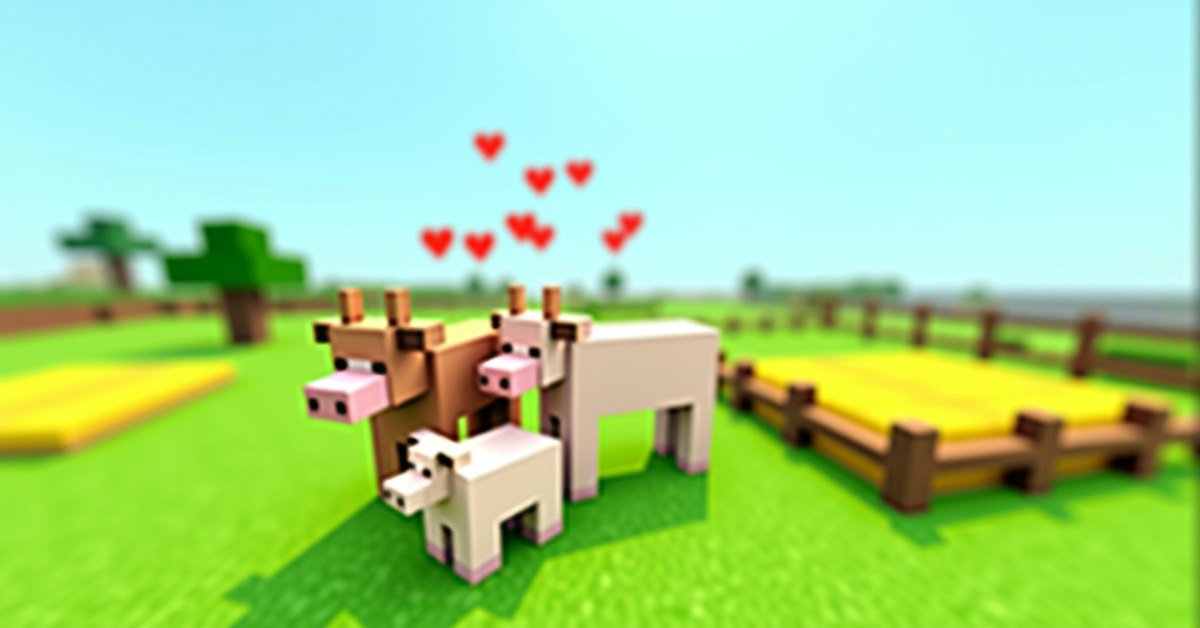
Animal breeding is how you turn a couple of penned-up cows into a steady supply of beef, leather, wool, or whatever else a mob gives you. Instead of hunting animals across the world, you keep a small group and let them produce babies on demand. It also keeps friendly species from disappearing, since passive mobs do not respawn the way hostile ones do.
The basic loop is simple. Feed two adult animals of the same kind the right food, watch them produce a baby, and wait out a short cooldown before they can do it again. The details that trip people up are which food each animal wants, why some animals refuse to breed, and how to make babies grow up faster.
What animal breeding is
Most passive mobs in Minecraft can be bred. When you feed two adults of the same species their breeding food, red hearts appear above their heads and they enter what the game calls love mode. The two animals walk toward each other, and a baby version spawns between them. Each breeding also drops a small amount of experience, usually between 1 and 7 points.
Breeding only works between two adults of the same species. You cannot cross a cow with a pig, and you cannot breed a baby animal. The one big exception is villagers, who do not use a held food item at all. They reproduce on their own when they have enough food and free beds, so they sit outside the normal feeding rules described here.
How to breed animals
The steps are the same for almost every animal:
- Get two adults of the same species close together. A fenced pen or a small pasture works best so they do not wander off.
- Hold the correct food in your hand and right-click (or use the feed button on Bedrock) on the first animal, then the second.
- Hearts appear over both animals. They move together and a baby spawns.
- Wait about five minutes before you can feed and breed the same two animals again.
If hearts do not appear when you feed an animal, one of a few things is usually wrong: the animal is still a baby, it is on its breeding cooldown, or you are holding the wrong food. Hunger and health do not block breeding for most farm animals, but tamed animals like horses and wolves have extra conditions covered below.
What to feed each animal
Every breedable animal has its own food. Using the wrong item does nothing, so this is the part worth memorizing or keeping on a sign near your farm.
| Animal | Breeding food |
|---|---|
| Cow, Mooshroom | Wheat |
| Sheep | Wheat |
| Goat | Wheat |
| Pig | Carrot, potato, or beetroot |
| Chicken | Any seeds (wheat, beetroot, melon, pumpkin, torchflower, or pitcher pods) |
| Rabbit | Dandelion, carrot, or golden carrot |
| Horse, Donkey | Golden apple or golden carrot |
| Llama | Hay bale |
| Wolf | Any meat, including rotten flesh |
| Cat, Ocelot | Raw cod or raw salmon |
| Fox | Sweet berries or glow berries |
| Panda | Bamboo (with bamboo growing nearby) |
| Bee | Any flower |
| Turtle | Seagrass |
| Axolotl | Bucket of tropical fish |
| Frog | Slimeball |
| Strider | Warped fungus |
| Hoglin | Crimson fungus |
| Camel | Cactus |
| Sniffer | Torchflower seeds |
| Armadillo | Spider eye |
Love mode, cooldown, and baby growth
When an animal enters love mode, the hearts last for a few seconds while it looks for a partner. If two animals are in love mode near each other, they pair up and a baby appears. The food is consumed whether or not a partner is found, so feeding one lonely cow just wastes wheat.
After a successful breeding, both parents go on a cooldown of about five minutes. During that window they ignore food and will not show hearts again. This cooldown is per animal, so a large herd can still produce babies steadily as different pairs come off cooldown at different times.
A baby takes about 20 minutes of real time to grow into an adult. You can speed this up by feeding the baby the same food its species breeds with. Each feed cuts the remaining growth time by 10 percent, so a handful of wheat will turn a calf into a full cow much sooner. Babies always follow the nearest adult of their kind, which makes it easy to herd a family into a pen.
Animals you have to tame first
Some animals will not breed until you have tamed them. Horses and donkeys need to be tamed by mounting them repeatedly until they stop bucking you off. Only then will a golden apple or golden carrot put them in love mode. Wolves must be tamed with bones before they will accept meat for breeding, and a wolf also needs full health to breed. Cats have to be tamed with raw fish before they will pair up.
Llamas are a milder case. A llama has to be tamed before it will breed, but you do not need a saddle or any special gear, just the hay bale once it trusts you. If an animal that should breed is refusing food, check whether it belongs to this tamed-first group.
Breeding that works differently
A few species do not just pop out a baby on the spot.
Turtles breed with seagrass, but instead of a live baby, one of the two turtles swims back to the sand where it first hatched and lays a clutch of eggs. The eggs need time and a light source to hatch into baby turtles, and they can be trampled, so protect them.
Frogs breed with slimeballs. After breeding, one frog lays frogspawn on the surface of nearby water. The frogspawn hatches into tadpoles, and the tadpoles grow into frogs. The frog variant (temperate, warm, or cold) depends on the biome where the tadpole grows up, not on the parents.
Pandas have an extra requirement. They will only enter love mode if there are at least eight bamboo blocks growing within range, so a panda pen needs a live bamboo grove, not just bamboo in your hand. Pandas also carry hidden genes, so a baby can turn out to be a brown or weak variant even if both parents look normal.
Horses pass their stats to their foals. Speed, jump height, and health are each averaged from the two parents with a bit of randomness added, so breeding two strong horses tends to give you a stronger foal. Crossing a horse with a donkey produces a mule, and mules cannot breed with each other.
Tips and common mistakes
The most common reason a farm stops producing babies is the mob cap. If too many animals are packed into one area, the game stops new babies from spawning. Keep your herd trimmed and your pens from getting overcrowded.
Stock up on the right food before you start. A wheat farm pairs naturally with cows, sheep, and goats, while a carrot or potato farm keeps pigs going. For animals that eat meat or fish, you will need a steady supply, so plan the food source alongside the pen.
Light your pens. Babies and adults are passive and will not fight back, so a dark pen invites hostile mobs at night. Fences, walls, and a few torches keep the herd safe and stop animals from wandering into danger.
Finally, remember the five-minute cooldown. If you feed a whole herd at once and nothing happens after the first round, you are probably trying to breed animals that are still on cooldown. Give them a few minutes and try again.
Frequently asked questions
How long until I can breed the same animals again?
About five minutes. After a pair produces a baby, both parents go on a breeding cooldown and ignore food until it ends.
How do I make a baby grow up faster?
Feed the baby the same food its species uses to breed. Each feed reduces the remaining growth time by 10 percent, so several feeds can cut a 20-minute wait down to a couple of minutes.
Why won’t my animals breed?
Check four things: both animals are adults, you are holding the correct food, neither one is on cooldown, and the area is not over the mob cap. For horses, wolves, and cats, make sure they are tamed first.
Can two different animals breed together?
No. Breeding only works between two adults of the same species. The one near-exception is the horse and donkey pairing, which produces a mule.
Do baby animals follow their parents?
Yes. A baby follows the nearest adult of its own kind, which makes it easy to lead a family into a pen by leading an adult.
How much experience does breeding give?
Each successful breeding drops a small amount of experience, usually between 1 and 7 points, which collects near the parents.
Once you have a fenced pen, a food source, and a pair of adults, breeding more or less runs itself. The smart move early on is to set up one or two animals you actually need, like cows for leather and food, before branching out into the more particular species like pandas or turtles.