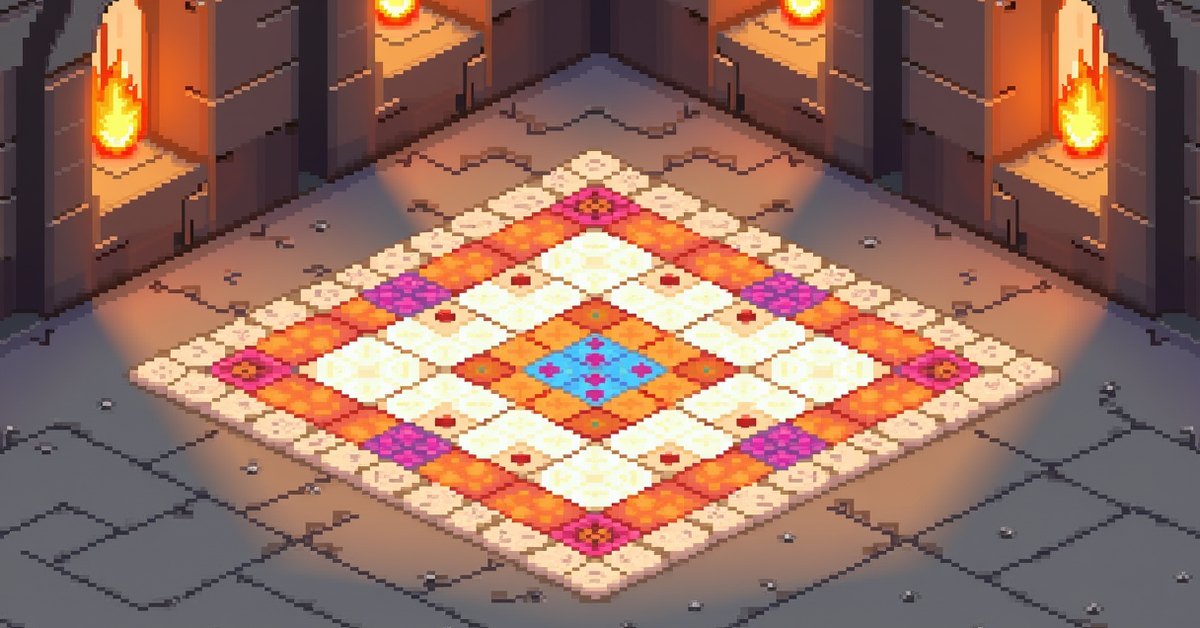
What glazed terracotta is
Glazed terracotta is a decorative block made by smelting dyed terracotta. It comes in 16 colors, one for each dye, and every color has its own painted pattern stamped on each face. That pattern is the whole point of the block: a single glazed terracotta block looks busy on its own, but four or sixteen of them placed in the right orientation form a larger mosaic or design.
Glazed terracotta is one of the more recognizable building blocks in Minecraft because the patterns are unmistakable. Players use it for floors, accent walls, banner-style murals, and pixel-art compositions where the existing pattern does most of the visual work.
It is not a structural block. It is decoration with a couple of unusual mechanical rules, and once you understand those rules it becomes one of the most flexible art blocks in the game.
A short history
Glazed terracotta first appeared in Bedrock Edition with the 1.2 update in 2017. Java Edition got it later that year in the 1.12 World of Color update. Each version uses the same patterns, the same recipe, and the same rules, so anything you build with glazed terracotta translates between platforms.
How to make glazed terracotta
The recipe is simple. You smelt dyed terracotta in any smelting block.
- Mine plain terracotta (the brown, undyed kind) or craft it from clay by smelting clay balls or clay blocks.
- Surround a block of dye with eight pieces of terracotta on a crafting table to dye it. That craft gives you eight pieces of dyed terracotta.
- Put the dyed terracotta into a furnace, blast furnace, or smoker with any fuel. After it smelts, you get glazed terracotta of the matching color and a small amount of experience.
A blast furnace cuts the smelting time roughly in half, so if you are making glazed terracotta in bulk for a build, a blast furnace is the faster option.
You cannot craft glazed terracotta directly on a crafting table. Smelting is the only way to make it.
Fuel and time
One regular furnace burns one item every 10 seconds, so smelting a full stack of 64 dyed terracotta in a regular furnace takes about 10 minutes and burns through roughly seven pieces of coal or one bucket of lava. A blast furnace doubles that throughput. If you are tiling a large floor, a row of three or four blast furnaces will keep up with your build pace and free you up to mine clay and place blocks.
Lava buckets are the cheapest fuel by far if you have a lava source nearby and a bucket. Coal blocks are the runner-up. Sticks and saplings work but are usually a waste of inventory space for a job this big.
Patterns and orientation
Each of the 16 colors has its own design that wraps across the block’s faces. When you place a glazed terracotta block, the pattern orients based on the direction you are facing. Rotate yourself 90 degrees and the placed block will show a different slice of the pattern.
That orientation rule is what makes glazed terracotta interesting to build with. Place a 2×2 grid of the same color with each block rotated correctly, and the four faces combine into a single larger image. White glazed terracotta forms a green clover-like medallion. Magenta forms a curling vine motif. Light blue forms a four-pointed star. Most colors have an obvious tiled image; a few are subtler and read better in larger 4×4 layouts.
If you want to lay a floor or wall and have the patterns tile cleanly, pay attention to your facing direction every time you place a block. The fastest way to learn the layout is to build a 4×4 test patch in a creative world and rotate yourself between placements to see how each square fits.
How to rotate the pattern
The pattern on the top face of a glazed terracotta block depends on which compass direction you are facing when you place it. Turn 90 degrees clockwise and place another, and the pattern will be a 90-degree rotation of the first. There are four possible orientations per color. For floors and ceilings, only the top face matters; for walls, the relevant face is the one pointing outward toward the viewer.
How the colors feel visually
If you have never used them, here is a rough cheat sheet for what to expect from each color family:
- White, light gray, and gray glazed terracotta lean clean and geometric, with flowing curves that work for temples, palaces, and formal interiors.
- Red, orange, and yellow glazed terracotta carry warm tones and bold shapes that suit shrines, dojo-style builds, and accent walls.
- Lime, green, and light blue glazed terracotta have lighter, sharper patterns that read well in modern builds and pool surrounds.
- Cyan, blue, magenta, purple, and pink glazed terracotta lean ornamental, with looping vines and abstract shapes that work in fantasy interiors.
- Brown and black glazed terracotta are the quietest of the set, with darker base colors that work as neutral framing for the louder ones.
Look at all 16 placed in a test row before you commit to a build. The visual character of each color is hard to predict from the dye alone.
Mining and drops
Glazed terracotta has a hardness of 1.4 and a blast resistance of 1.4, in line with regular terracotta. A pickaxe of any tier will break it and drop the block. Without a pickaxe, it breaks slowly and yields nothing.
The block is opaque and solid, so mobs can spawn on top of it the same as any other full block. It does not transmit Redstone signals and does not power anything.
The piston rule
Here is the mechanic most builders learn the hard way. Pistons cannot push glazed terracotta. A piston extending into a glazed terracotta block stops at the block, and the block does not move. Sticky pistons cannot pull it either.
That makes glazed terracotta useful as a piston barrier in Redstone builds where you want a piston to extend up to a fixed wall and stop cleanly. It also means you cannot use it inside flying machines or moving block contraptions; if a glazed terracotta block sits in the path of a moving structure, the contraption breaks.
Where it fits in your builds
Glazed terracotta works best when the pattern is the star, not the background. A few ways it shows up in real builds:
- Floor inlays in temples, museums, and large halls, where a 4×4 medallion sits in the center of a stone or wood floor.
- Spawner room markers, where a single 2×2 patch of bright pattern signals that a room is finished and looted.
- Banner-style wall art in throne rooms and shrines, especially using red, black, or white.
- Pixel-art canvases for logos and small mosaics, since the existing patterns can substitute for hand-placed pixels.
- Roof accents, when used sparingly. The patterns read well from a distance.
- Trim around windows and doorways in builds that need a splash of color without painting an entire wall.
Avoid covering an entire wall with the same color of glazed terracotta unless you have laid out the orientations beforehand. The repeating pattern can read as busy or unintentional if the tiling is off.
Pairing with other blocks
Plain terracotta in matching or complementary colors makes the best neutral around a glazed terracotta accent. Concrete is often too saturated and can fight the pattern. Stone, deepslate, and oak planks work well as a frame because they are visually quiet and let the glazed pattern carry the design. Smooth stone and polished diorite also pair cleanly because their textures are subtle.
Tips and common mistakes
A few things that trip people up:
- Forgetting that you smelt dyed terracotta, not plain terracotta. Putting brown terracotta in a furnace gives you nothing useful.
- Trying to use a stonecutter. Glazed terracotta does not have stonecutter recipes; you cannot make slabs, stairs, or walls from it.
- Placing a 4×4 medallion without watching your facing direction, then wondering why the design looks fragmented. Test in creative first.
- Building with glazed terracotta inside a piston-driven door or elevator. The block will jam the contraption.
- Confusing glazed terracotta with concrete or plain terracotta. Concrete is uniform color, plain terracotta is muted with no pattern, and glazed terracotta is the one with the printed design.
- Running out of clay halfway through a build. A medallion floor in a large hall can need hundreds of blocks; mine and smelt the full supply before you start placing.
Frequently asked questions
Can you craft glazed terracotta on a crafting table?
No. Smelting dyed terracotta is the only way to make it. The crafting table will not accept a glazed terracotta recipe.
Can pistons push glazed terracotta?
No. Pistons cannot push glazed terracotta, and sticky pistons cannot pull it. This is a built-in game rule.
Does glazed terracotta come in all 16 dye colors?
Yes. There is one variant per dye color. The full set is white, light gray, gray, black, brown, red, orange, yellow, lime, green, light blue, cyan, blue, magenta, purple, and pink. Each color has its own design.
Can you make stairs or slabs from glazed terracotta?
No. Glazed terracotta exists only as full blocks. The stonecutter does not offer recipes for it.
How do you line up glazed terracotta patterns?
Stand facing the same compass direction for each block in a row, and the pattern will tile consistently across that row. To form a 2×2 image, rotate yourself 90 degrees clockwise as you move around the four positions, placing each block while facing the center of the medallion.
Is glazed terracotta blast resistant?
No. It has a blast resistance of 1.4, the same as regular terracotta. Creepers, TNT, and end crystals will destroy it without much effort. It is not a defensive block.
Can mobs spawn on glazed terracotta?
Yes. It is a full opaque solid block, so hostile mobs can spawn on top of it at night or in dark areas, the same as on stone or wood planks. Cover or light the surface if you want to prevent spawns.
What is the difference between glazed terracotta and plain terracotta?
Plain terracotta is the muted, earthy block you mine in badlands biomes or craft from clay. Dyed terracotta is the same block in a chosen color, still muted. Glazed terracotta is what you get when you smelt dyed terracotta; it has a glossier finish and the printed pattern on every face.
Worth knowing
Glazed terracotta sits in a strange spot in the block roster. It is harder to mass-produce than concrete, less flexible than wool, and offers no Redstone function. The patterns are what justify it. If you have never built with all 16 colors laid out in a test row, do it once in creative; you will start seeing places to use it in your survival builds that were not obvious before.