What gravel is in Minecraft
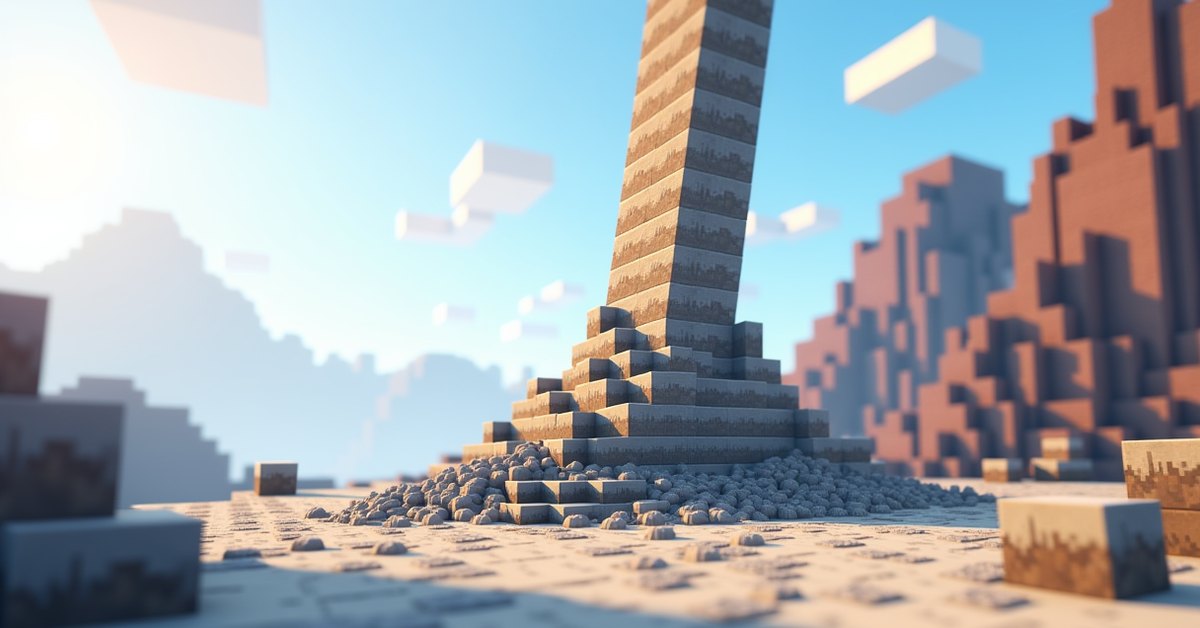
Gravel is a loose, gray block made of small stones. It is one of the easiest textures to recognize in the game. Functionally, gravel does two things almost every player ends up using. It falls when the block under it is broken, which gives it real weight as a building material, and it can drop flint when you mine it, which feeds into arrows, flint and steel, and a few other recipes.
It is not a rare block. You will pass through it almost any time you travel a beach, a river, or a cave. The interesting part is what you do with it once you have a stack.
Where to find gravel
Gravel generates in patches all over the Overworld. The most reliable places to look:
- Riverbeds and beaches, where it often replaces sand near the water’s edge.
- Ocean floors, especially in cold and frozen ocean biomes.
- Mountain slopes and stony peaks, where it shows up in exposed patches.
- Caves and ravines, mixed in with stone, dirt, and andesite.
- Windswept hills and gravelly hills, which can have large surface deposits.
You will also see gravel inside generated structures. Trail ruins use suspicious gravel as part of their floors, which is its own thing covered further down. Some villages place small gravel paths or use it inside mason houses.
How to mine gravel
Any tool works on gravel. A shovel is the fastest. With a wooden shovel, gravel pops within a fraction of a second; with an iron or diamond shovel, it is nearly instant. You can break it by hand too, and it only takes a moment, which is why a lot of players never bother bringing a shovel to a gravel pit unless they also plan to dig dirt or sand.
The thing to watch is that gravel obeys gravity. If you mine a block out from under a column of gravel, the column drops. That is great when you want to collect a lot of it fast (mine the bottom block and the rest falls onto your head, ready to be scooped), and bad when you are tunneling under a ceiling that turns out to be 30 blocks of gravel.
The gravel suffocation trap
If gravel falls on your head and there is no room for it to settle as a block, it lands as an item and you are fine. If it falls and has room to occupy your head space, it can suffocate you. The classic mistake is digging straight up while standing under unsupported gravel. Mine sideways out from under a deposit instead, or place a torch under the falling column. Torches break the falling block on impact, leaving the gravel as a pile of items you can collect safely.
Getting flint from gravel
Flint is the main reason most players mine gravel. It comes from gravel as a random drop when the block is broken.
Drop chances
With no enchantments, each broken gravel block has a 10 percent chance to drop a single piece of flint instead of the gravel itself. Most of the time you get gravel back; roughly once every ten blocks, you get flint.
Fortune raises the flint odds. Rough numbers from the game’s loot tables:
- Fortune I: about a 14 percent chance.
- Fortune II: about a 25 percent chance.
- Fortune III: 100 percent chance of flint, every block.
If you need a stack of flint for arrows or trading, a Fortune III shovel turns one stack of gravel into one stack of flint. Without Fortune, plan on mining about ten times as much gravel as the flint you want.
Silk Touch
Silk Touch does the opposite. A shovel with Silk Touch will always return the gravel block itself and never the flint. That is what you want when you are collecting gravel as a building material and do not want flint cluttering up your inventory.
Crafting with gravel
Coarse dirt
Place two gravel and two dirt in a 2×2 pattern in the crafting grid (or in your inventory’s 2×2 square) and you get four coarse dirt. Coarse dirt does not spread grass, which is the whole point. Use it for paths, village floors, or anywhere you want exposed dirt to stay exposed.
Concrete powder
Concrete powder hardens into concrete when it touches water. The recipe is four gravel, four sand, and one dye in a 3×3 crafting grid. The dye determines the color, and you get eight concrete powder per craft.
Concrete powder is also a falling block, so it shares gravel’s gravity behavior. If you stack a tower of concrete powder and break the bottom, the rest comes down the same way gravel does.
What gravel does not craft into
Gravel cannot be smelted into anything in a furnace in current versions. It is also not the input for cobblestone, stone, or any rock recipe. Its direct crafting use is limited to coarse dirt and concrete powder, plus its sub-ingredient role via flint.
Using flint
Flint is small and unassuming, but it sits in the recipes for two everyday items. Flint and steel takes one flint plus one iron ingot in a crafting grid, and it is the standard way to light fires, nether portals, and TNT. Arrows take one flint, one stick, and one feather stacked vertically in the crafting grid, and you get four arrows per craft. Until you set up a skeleton farm or a fletcher villager, arrows from flint are the cheapest reliable source.
Flint is also a trade item for fletcher villagers at the apprentice level. The exact numbers have shifted across versions, but a fletcher will generally take flint or gravel for emeralds at some point in the trade tree.
Suspicious gravel
Suspicious gravel looks like normal gravel with visible cracks in the surface. It only generates in two structures: trail ruins and cold ocean ruins. Walk up close and the texture difference is easy to spot.
You interact with it using a brush. Hold a brush in your hand, aim at the suspicious gravel, and hold right click (or the use-item button on console and mobile). After a couple of seconds, the block reveals an item and drops it. Once brushed, the block disappears or turns into normal gravel depending on the structure.
Trail ruins suspicious gravel can drop archaeology items like pottery sherds with various patterns, raw copper, emeralds, wheat, and a small rotating list of other items. Cold ocean ruins suspicious gravel can drop iron ingots, emeralds, wheat, gold ingots, and similar small loot.
If you do not have a brush yet, the recipe is one feather, one copper ingot, and one stick stacked vertically. Brushes have low durability, so plan on carrying a few if you are clearing a full ruin.
Falling block mechanics in detail
Gravel, sand, concrete powder, and a few other blocks all share the same falling behavior. When the block under them is broken or air, they enter a falling state and drop as a moving block entity until they hit a solid block, where they land and become a normal block again.
A few specifics matter when you are building or mining:
- Non-full blocks below gravel do not catch it. If a torch, a sign, a slab on the lower half, or a fence is in the way, the gravel breaks into an item instead of landing as a block. That is the torch trick mentioned earlier, and it is the safest way to clear a tall falling column.
- Gravel can fall on a mob’s head and suffocate it. Some old iron golem and pillager traps used this on purpose, though there are usually better tools for the job today.
- If a block update fires under your gravel (a redstone signal, a piston, an explosion), the gravel will start falling. Keep that in mind if you are using gravel as a load-bearing decorative element in a build.
Java vs. Bedrock differences
The block, its drops, and its crafting recipes are the same on both editions. Brush durability and the exact loot inside suspicious gravel can differ slightly between Java and Bedrock at any given moment because the editions update on different schedules. If you are playing on a newer or older patch, expect minor numerical drift rather than a feature gap.
Tips and common mistakes
- Bring a Fortune III shovel before mining gravel for flint. The gap between zero enchantments and Fortune III is the difference between a slow grind and a fast harvest.
- Use the torch trick under any tall gravel column you want to clear. Place a torch on the wall at the bottom and break the lowest block. The gravel falls onto the torch and breaks into items.
- If you want a lot of gravel in one place, head to a cold ocean or a stony peaks mountain. River shorelines are common but the deposits are thin.
- Carry a brush when traveling through trail ruins or cold ocean ruins. Suspicious gravel can disappear once a player wanders past and triggers the structure, so brushing on the spot is the best way to get the loot.
- Do not stand under unsupported gravel while looking up. It is the number one way new players die in caves.
Frequently asked questions
Does gravel always drop flint?
No. Without Fortune, the chance is about 10 percent per block. With Fortune III, every gravel block drops one flint instead of gravel.
Can you smelt gravel?
Not in current vanilla Minecraft. Gravel has no smelting recipe. If you want flint, mine more gravel or use a Fortune III shovel.
What blocks fall like gravel?
Sand, red sand, concrete powder, and anvils all fall. Sand is the cheapest. Concrete powder is the most decorative because it hardens on water contact and lets you place colored falling blocks for theming.
Why did my gravel fall when I was nowhere near it?
Falling blocks update when the block underneath changes state. A piston firing nearby, a redstone update, a mob breaking the block below, or a chunk reload can all trigger gravel to start falling. If you build with gravel, leave a real solid block beneath it.
How do I get the most flint per hour?
Find a large gravel deposit (cold ocean floors and mountain slopes are best), then mine with a Fortune III diamond or netherite shovel. You will get one flint per block, and the shovel speed makes the gathering fast.
Is suspicious gravel renewable?
No. Each piece of suspicious gravel is part of a generated structure and can only be brushed once. New trail ruins and cold ocean ruins generate in new chunks, so the loot is renewable in that sense, but you cannot regrow suspicious gravel in a single area.
Does gravel work as a villager workstation?
Gravel is not a workstation block. Masons use a stonecutter, and fletchers use a fletching table. Gravel is only useful to villagers indirectly, as a trade item for fletchers.
If you take one habit away from this guide, let it be the Fortune III shovel for flint runs. Mining gravel without it is one of the most thankless jobs in early survival, and a Fortune III shovel costs almost nothing once you have a librarian or a decent fishing setup.