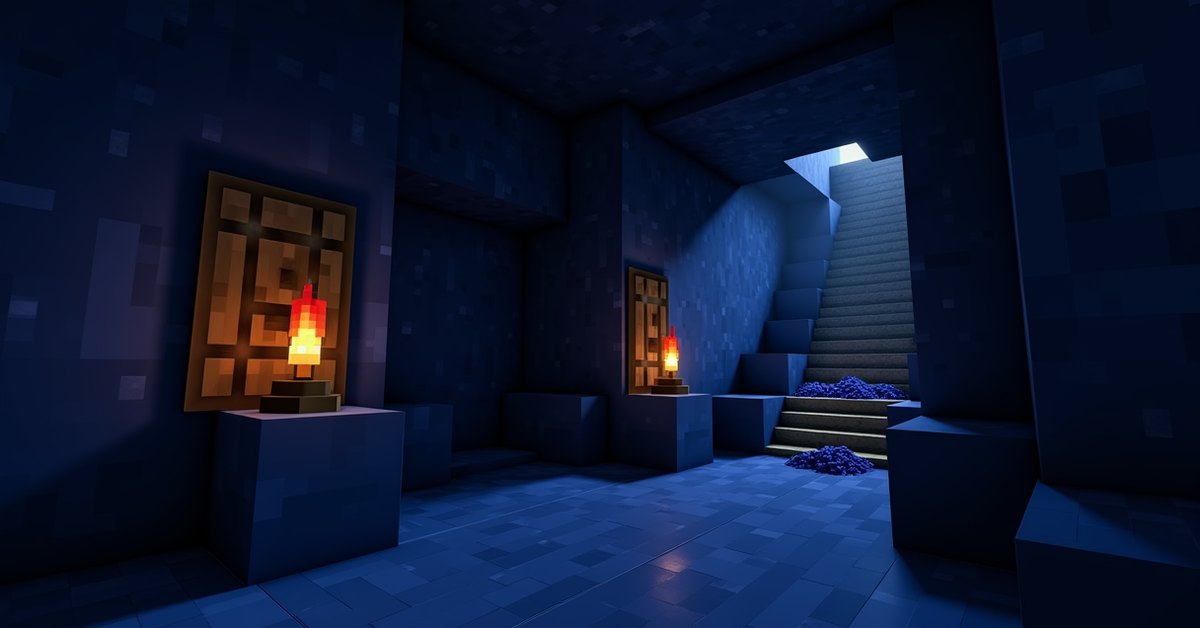
What lapis lazuli ore is
Lapis lazuli ore is a stone block speckled with blue. Mine it and it drops handfuls of lapis lazuli, the blue mineral the game uses for two main jobs: paying for enchantments at the enchanting table and dyeing things blue. There are two versions of the ore, one that spawns inside ordinary stone and one that spawns inside deepslate at lower depths.
If you’re hunting for it, the short answer is: dig down. Lapis ore turns up most often in the lower half of the world, with the highest concentrations a little below sea level. Bring at least a stone pickaxe, because anything weaker will break the block without giving you a single piece of lapis.
Compared to most other ores, lapis has an unusually generous drop count per block. A single vein in deepslate can fill a stack of lapis in one short trip, especially with the right enchantment on your pickaxe.
Where to find lapis lazuli ore
Lapis lazuli ore generates across a wide vertical range in modern versions of the game. It can appear from roughly y=64 down to y=-64, with the sweet spot for finding it sitting at around y=0. Concentration tapers off as you move up or down from that band, so a strip mine right at sea floor depth or a bit below it tends to be the most productive setup.
The two variants of the ore split along the stone-to-deepslate border:
- Regular lapis lazuli ore spawns inside stone, mostly from y=64 down to about y=0.
- Deepslate lapis lazuli ore spawns inside deepslate, mostly from y=0 down to y=-64.
Both versions drop the same item: plain lapis lazuli. The deepslate version takes slightly longer to mine and gives a little more experience when you break it. That’s the only meaningful difference for most players.
Lapis lazuli ore is not biome-restricted in the current game, so you’ll see it in any cave system at the right depth. Branch mining at y=0 in deepslate, strip mining with stairs at y=-1 to y=-10, or just exploring deep cave biomes all work. Lush caves, dripstone caves, and ordinary deepslate caves all produce lapis.
The ore spawns in small clusters, usually 1 to 7 blocks per vein. Veins tend to be tucked into walls and ceilings, so glance up and down as you walk through a tunnel rather than only scanning ahead.
How to mine lapis lazuli ore
You need a stone pickaxe or better to mine lapis lazuli ore. A wooden pickaxe will break the block but drop nothing usable. Stone, iron, diamond, and netherite pickaxes all work, with netherite being the fastest, especially against the tougher deepslate variant.
Mining a single ore block drops between 4 and 9 pieces of lapis lazuli by default. That’s a much higher per-block return than coal, iron, gold, or diamond ore, which is the reason a single trip can leave you sitting on hundreds of lapis. The XP drop is 2 to 5 per block, with the deepslate version on the higher end.
Three enchantments change what happens when you mine the ore:
Fortune IIIcan multiply the drop. With Fortune III, a single block can drop up to about 36 lapis lazuli on a good roll.Silk Touchdrops the ore block itself instead of the mineral. That’s useful if you want to move the ore somewhere else, save it as decoration, or smelt it later through a furnace setup that gives extra XP per block.Efficiencyspeeds up the actual mining, which matters when you’re working through a long vein in deepslate. Efficiency V on a netherite pickaxe with Haste II will let you chew through deepslate ore almost as fast as you can walk past it.
If you’re farming lapis for enchanting, Fortune III on a netherite pickaxe is the standard setup. You will come out of a single trip with more lapis than you’ll ever use at the enchanting table.
What lapis lazuli is used for
Lapis lazuli itself is more useful than most players assume the first time they pick it up. It has four main uses, and each one is worth knowing if you want to get full value out of a mining run.
Enchanting
The enchanting table costs lapis lazuli for every enchantment. You pay 1 to 3 pieces of lapis depending on which slot you pick: the lower-level slot costs 1, the middle slot 2, and the highest 3. Experience levels are spent regardless, but the lapis is the gating resource that controls how often you can use the table.
Without lapis in the inventory, the enchanting table won’t do anything at all. This is the main reason most players go looking for the ore in the first place.
Blue dye
One lapis lazuli crafts into one blue dye on the crafting grid. Blue dye is the base for cyan dye, light blue dye, magenta dye, and a few other colors when you mix it with white, green, or red. You can apply it to wool, terracotta, glass, beds, banners, candles, leather armor, shulker boxes, and concrete powder.
For decoration projects with a lot of blue, a single shaft of lapis ore can supply dye for a whole build.
Lapis lazuli block
Nine lapis lazuli arranged in a crafting grid make one block of lapis lazuli. It’s a solid blue decoration block that you can mine back into 9 lapis at any time with a stone pickaxe or better. People mostly use it as a storage solid (the same way iron blocks store iron) or as bold blue in builds. The block also makes a clean color contrast against oak planks, smooth stone, and oxidized copper.
Trading with cleric villagers
Cleric villagers buy lapis lazuli for emeralds at their journeyman tier. The exact ratio varies by edition and trade refresh, but trading lapis to a cleric is a reliable way to convert excess lapis into emeralds without much setup. If you build a cleric trading hall, lapis becomes a soft emerald source on top of its enchanting use.
Tips for farming lapis lazuli ore
A few practical things that save time once you start running mining trips for lapis:
- Strip mine at y=-1 with a 1-by-2 corridor and branches every 3 blocks. You’ll catch both stone and deepslate veins from the same tunnel.
- Bring torches. Lapis ore in caves is easy to miss in the dark, and the blue is hard to read by torchlight at a distance.
- Use Fortune III. The drop multiplier on lapis is the largest single efficiency gain you can get.
- Skip Silk Touch for farming. Silk Touch is for collectors or builders who want the ore block intact, not for players topping up their enchanting supply.
- Carry shears. Lush caves and dripstone caves often hide lapis veins behind moss carpet and pointed dripstone, and shears clear the moss without losing it.
- Bring a water bucket. Lapis veins frequently sit next to lava pockets at y=-1 to y=-15, and a quick water pour saves your inventory and your trip.
A side note: lapis and diamond spawn in overlapping depth bands, so a strip mine aimed at lapis usually finds diamond along the way. Don’t skip a diamond ore just because you came down here for blue.
Java vs. Bedrock differences
The basics are the same on both editions: same depth range, same drop count, same uses, same pickaxe requirement. Two small differences are worth knowing.
- Experience drops are calculated slightly differently per block on each edition. On Java, lapis ore drops 2 to 5 XP per block; on Bedrock, the values land in the same range but the rolling math is a little different, so the long-run average can shift.
- Cleric trading rates are balanced separately between editions, so the rate of lapis-to-emerald conversion is not identical. Both editions still treat lapis as a cleric trade item at journeyman level.
For most play, you can ignore the differences. Mine the ore, get the lapis, use it the same way.
Frequently asked questions
Can you mine lapis lazuli ore with a wooden pickaxe?
No. A wooden pickaxe breaks the block but drops nothing. You need a stone pickaxe or better for the lapis to drop.
What’s the best Y-level for lapis lazuli?
Around y=0. The ore spawns from y=64 down to y=-64, but the highest concentration sits in the band just above and below sea floor depth, with y=0 as the peak.
Does Fortune work on lapis lazuli ore?
Yes, and it is the most useful enchantment for lapis farming. Fortune III can take the drop count from 4 to 9 per block up to as much as 36 on a top roll.
Why does the enchanting table need lapis lazuli?
Mojang added the lapis cost in version 1.8 to slow down how fast players could roll for enchantments. Before that, enchanting only cost XP, which made it possible to spam-enchant. Lapis acts as a soft cap on how often you can use the table.
Can lapis lazuli ore be smelted?
You can smelt the ore block (obtained with Silk Touch) for the same lapis drop plus extra XP per smelted block. There’s no separate smelted item, just the same lapis lazuli mineral.
What does deepslate lapis lazuli ore look like?
It’s a darker block, the same speckled blue pattern but on a deepslate base instead of stone. The blue spots tend to look a little cooler in tone and a little more visible against the dark gray background.
Can I store lapis as a block and break it back into pieces?
Yes. Crafting 9 lapis into a lapis block stores them compactly, and breaking the block gives all 9 back. There’s no loss in the round trip, which makes the block a clean storage option for a chest of mining supplies.
Closing
If you are mining for enchanting fuel, a single afternoon at y=0 with a Fortune III pickaxe will leave you with enough lapis for hundreds of enchantments. Save the rest for cleric trades or a feature wall in your base. The blue holds up well next to oak planks, oxidized copper, and warped wood, and a lapis block tucked into a build is one of the few ways to get a true cobalt blue without painting it on with dye.