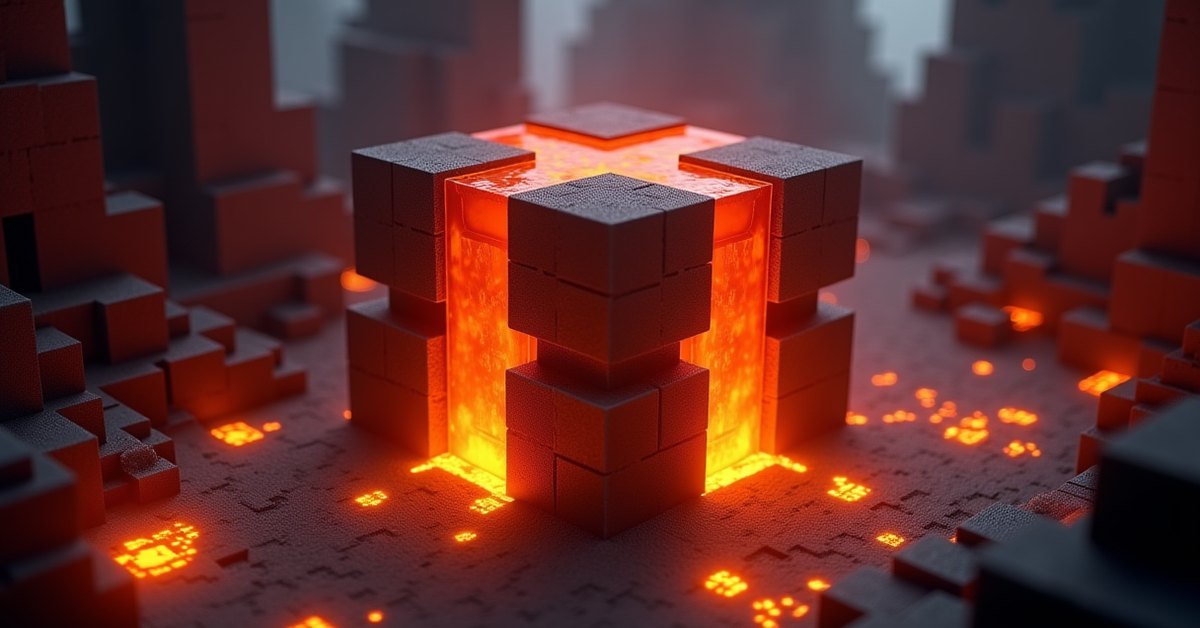
The magma cube is a hostile mob that lives in the Nether. It looks like a chunk of cooled lava, with glowing orange seams that pull apart every time it hops. If you have spent any time in the Nether, you have almost certainly bounced into one.
Magma cubes come in three sizes, and the big ones break into smaller copies when you hurt them. That single trick is what makes them annoying to fight and handy to farm. Kill one big cube and you can end up surrounded by a small swarm of tiny ones.
This guide covers where magma cubes spawn, how their splitting works, what they drop, and how to turn that drop into fire resistance potions.
What is a magma cube?
A magma cube is the Nether’s version of the slime. Both mobs bounce instead of walk, and both split into smaller versions when killed. The difference is the terrain. Slimes belong to swamps and deep caves in the Overworld, while magma cubes only spawn in the Nether.
Each cube is built from stacked segments that separate when it jumps, showing the molten core inside. The bigger the cube, the more health it has and the harder it hits. A big magma cube has 16 health (8 hearts), a small one has 4 health (2 hearts), and a tiny one has a single point of health (half a heart).
Magma cubes are immune to fire and lava, so the usual Nether hazards do nothing to them. They also take no fall damage, which matters when you fight them on the uneven basalt terrain where they like to spawn.
Where magma cubes spawn
Magma cubes spawn naturally across the Nether, but a few places concentrate them:
- Basalt deltas. This biome has the highest magma cube spawn rate in the game. If you want to find them fast, go here.
- Nether wastes. The classic red Nether biome spawns them at a lower rate alongside other mobs.
- Nether fortresses. Magma cubes spawn on the fortress structure itself, which makes fortresses a reliable spot.
Like other Nether mobs, magma cubes ignore light level. A torch will not stop them from appearing, because Nether spawning does not care how bright the area is. Big magma cubes also need open space to fit, so they show up more often in the wide, flat sections of a biome than in tight tunnels.
One practical result of this is that you rarely have to go looking for magma cubes. Spend enough time in basalt deltas and they come to you, often several at once. That can be a problem if you are just trying to cross the biome, and an opportunity if you came to collect magma cream.
How magma cubes behave
Splitting
When you deal enough damage to kill a big or small magma cube, it does not simply die. It splits into 2 to 4 smaller cubes that scatter in different directions. A big cube breaks into small cubes, and each small cube breaks again into tiny cubes. Only tiny cubes die for good without splitting.
This means one big magma cube can turn into a crowd if you are not ready for it. The upside is that every split is another chance at loot, because both big and small cubes can drop magma cream when they die.
Movement and immunities
Magma cubes move by hopping, and they jump higher and more often than slimes do. Bigger cubes cover more ground per jump, while tiny ones are slower and easy to outrun. They can travel across lava without taking damage and float on top of it instead of sinking, so a lava moat does not keep them away the way it stops most mobs.
A magma cube notices you within about 16 blocks and starts hopping toward you. Break line of sight or put enough distance between you and it, and it loses interest and goes back to bouncing around at random. Because the cubes shrug off fire, lava, and falls, the environment that kills almost everything else in the Nether does nothing to slow them down.
What magma cubes drop
The reason to hunt magma cubes is magma cream. Big and small cubes each drop 0 to 1 magma cream when killed. Tiny cubes drop no items, though they still give a little experience. A Looting enchantment raises the maximum magma cream a cube can drop, so a Looting sword is worth using if you are farming for cream.
Magma cream has two main uses. The first is brewing. Add magma cream to an awkward potion to make a Potion of Fire Resistance, which is close to mandatory for serious Nether trips and for fighting in and around lava. The second is crafting magma blocks, the bubbling blocks that deal damage when stepped on and power bubble columns in elevators and item sorters.
You can also craft magma cream by hand from a slimeball and blaze powder. That gives you two supply routes: trade or hunt slimes for slimeballs and kill blazes for powder, or skip both and farm magma cubes directly for the finished cream.
How to fight a magma cube
The trick to fighting magma cubes is to manage the splitting instead of getting buried by it. A few habits help:
- Fight in an open area. If you are cornered, the smaller cubes surround you and chip away from every side at once.
- Hit big cubes hard. A sword with enough damage can sometimes knock a small cube straight to dead without leaving a tiny-cube split behind.
- Watch your footing. Magma cubes spawn near lava, and backing up while you fight one is an easy way to walk off an edge or into a lava pool.
- Bring Knockback if you have it. Pushing the cubes away buys you time between their hops and keeps a swarm from stacking on top of you.
Tiny magma cubes still bite, which is the one place they differ sharply from tiny slimes. A tiny slime cannot hurt you at all, but a tiny magma cube deals a small amount of contact damage. One is barely a scratch. Five or six bouncing into you at the same time is enough to be dangerous, especially with no fire resistance and lava nearby.
How to build a magma cube farm
A magma cube farm gives you magma cream on tap, which means fire resistance potions whenever you want them. The simplest version is built in a nether fortress or in a basalt deltas biome, where spawn rates are already high before you do anything.
The basic idea matches a slime or general mob farm. You light up or wall off the area around your build so cubes can only spawn inside your collection chamber, give them a clear floor to spawn on, and then move them to a spot where you can kill them safely. Magma cubes take no fall damage, so a pure drop farm will not finish them off the way it kills zombies or skeletons. Most designs flush the cubes with water or push them to a platform where you, or a Looting sword on a timer, deal the final blow.
If you build in basalt deltas, expect a strong spawn rate but heavy competition from other mobs, since the biome is crowded. A fortress-based farm tends to be steadier, because the spawning rules tied to the fortress structure keep producing magma cubes as long as the rest of the area is dark and walled off.
Tips and common mistakes
The most common mistake new players make is treating a magma cube like a normal mob and standing still to trade hits. The moment the big cube dies, the fight is not over. The smaller cubes appear right where the big one was, so holding your ground puts you in the middle of them. Step back into open space as the cube breaks apart.
Another mistake is relying on lava or fire to do the work. Those are your best tools against most Nether threats and your worst against this one. Stick to a melee weapon or a bow.
If you only want magma cream and not a fight, remember that small cubes drop cream too. You do not always need to chase down a big cube. Picking off the smaller ones that wander near you in basalt deltas adds up over a session without much risk.
Frequently asked questions
Do magma cubes burn in lava?
No. Magma cubes are immune to both fire and lava. You cannot use lava or flint and steel to deal with them, and a Fire Aspect sword does no extra damage to them.
What do magma cubes drop?
Big and small magma cubes drop 0 to 1 magma cream each. Tiny magma cubes drop no items, but every size gives a small amount of experience when killed.
Are magma cubes the same as slimes?
They share the bouncing movement and the splitting mechanic, but they are separate mobs. Slimes spawn in Overworld swamps and caves and drop slimeballs. Magma cubes spawn in the Nether and drop magma cream.
Where is the best place to find magma cubes?
Basalt deltas have the highest spawn rate, so that biome is the fastest place to find them. Nether fortresses are a solid second option when you want a fixed structure to farm.
Do tiny magma cubes deal damage?
Yes. Unlike tiny slimes, which cannot hurt you, tiny magma cubes still deal a small amount of contact damage. A single one is no threat, but several at once will wear down your health.
Can a torch stop magma cubes from spawning?
No. Nether mobs ignore light level, so lighting up an area does not prevent magma cubes from appearing. To stop spawns you have to block off the space or remove the surfaces they spawn on.
If you are heading into the Nether for the first time, treat the magma cube as your earliest source of fire resistance. A few magma cream and a brewing stand will keep you alive in the places where lava, not mobs, is the real danger, and the cubes practically hand you the ingredient every time you cross a basalt deltas biome.