What a husk is
A husk is the desert version of the zombie. It looks like a zombie that dried out in the sun: cracked brown skin instead of green, and torn grey clothes hanging off its frame. If you have spent any time in a Minecraft desert at night, you have already met one.
Husks have the same 20 health points (10 hearts) as a normal zombie and shamble at the same slow pace. The big difference, and the reason they matter, is that a husk does not catch fire in daylight. A regular zombie burns up when the sun comes up. A husk just keeps walking. That single trait changes how dangerous a desert feels in the morning.
Husks also hit harder in a sneaky way. Their melee attack applies the Hunger effect, which drains your food meter and can leave you unable to sprint or regenerate when you most need to.
Where husks spawn
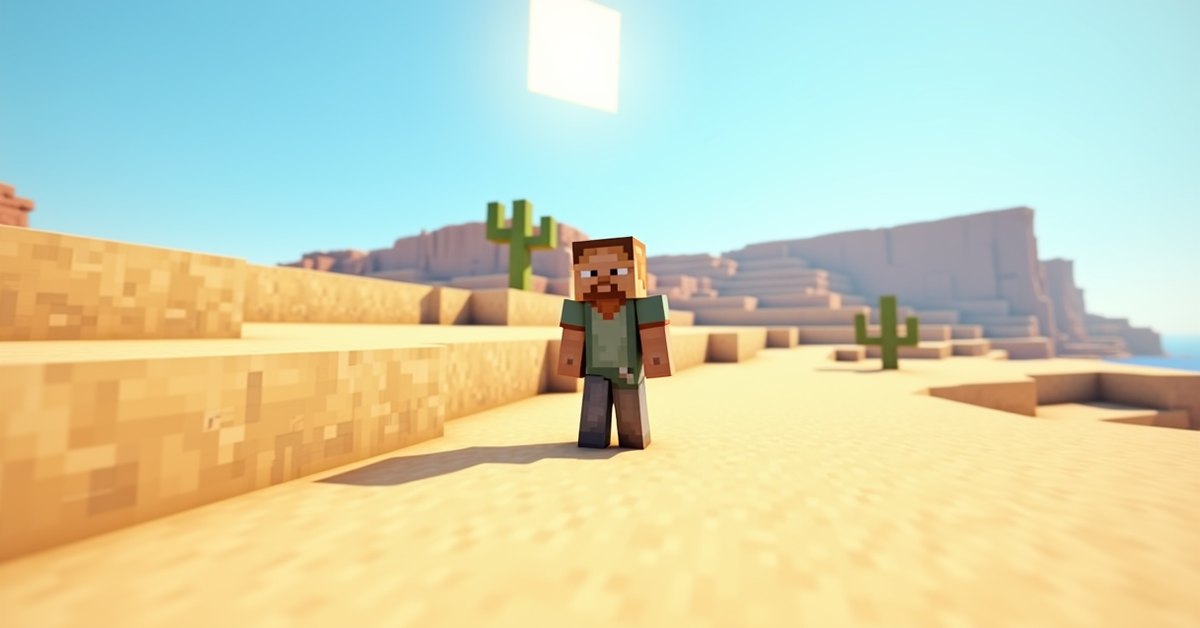
Husks spawn in desert biomes. They appear on the surface in the dark, at light level 0, the same conditions that let any hostile mob spawn at night. Deserts have almost no trees and very little natural cover, so once the sun sets the open sand fills up with mobs fast, and a good share of them are husks.
In Java Edition, husks take the place of 80% of the zombies that would otherwise spawn in desert biomes. So in a desert you will see far more husks than green zombies. Bedrock Edition handles the split a little differently, but the result is the same: deserts are husk country.
Because husks ignore sunlight, a group that spawned overnight will still be roaming around hours after dawn. New players often relax once the sky brightens and then walk straight into a husk that should, by zombie logic, already be ash. Stay alert in the desert during the day.
You can also get a husk from a spawn egg in Creative mode, which is handy if you want to test a mob farm or a trap design.
How husks behave
A husk behaves like a zombie in most ways, with a few twists worth knowing.
It hunts you, villagers, and golems
Husks go after players, villagers, wandering traders, baby turtles, and iron golems. Left alone near a village at night, husks will batter the residents and the defenses. On Hard difficulty a husk can also break down wooden doors, so a flimsy shelter is not always safe.
When a husk kills a villager, that villager can turn into a zombie villager instead of simply dying. The chance depends on difficulty: it never happens on Easy, sometimes happens on Normal, and always happens on Hard. A cured zombie villager keeps its profession and gives strong trade discounts afterward, so a husk attack on a village is not always pure loss if you are ready to step in with a Splash Potion of Weakness and a golden apple.
It inflicts Hunger
When a husk lands a hit, it gives you the Hunger effect on top of the damage. Hunger eats away at your food bar over several seconds. The duration scales with difficulty, lasting longer on Hard than on Normal. The damage alone is survivable, but a drained food bar stops natural health regeneration, which is what actually gets careless players killed.
It can call for backup
On Normal and Hard difficulty, attacking a husk can summon reinforcements. Nearby husks or zombies are pulled into the fight, and sometimes a brand new one spawns to join in. Swinging wildly at one husk in the open can turn into a crowd very quickly.
It picks up gear
Husks can grab items off the ground and even put on armor and hold weapons. A husk wearing armor takes less damage, and one holding a sword hits harder. Armor on a husk also has a chance to drop when you kill it, though usually in poor condition.
Baby husks are worse
A small fraction of husks spawn as babies. Baby husks move much faster than adults, are harder to hit, and never grow up. They can also climb onto a chicken to become a chicken jockey, which is exactly as annoying as it sounds. A baby husk gives more experience than an adult, so there is at least a small reward for catching one.
Turning a husk into a zombie, then a drowned
Water changes a husk. If a husk’s head stays underwater for 30 seconds, it converts into an ordinary zombie. The husk shakes during the conversion, then surfaces as a green zombie with full health.
That zombie follows the normal rules from there. Keep it underwater and after another stretch of time it converts again, this time into a drowned, the underwater mob that can carry a trident or a nautilus shell. So a desert husk is the first link in a chain that can end with a trident farm if you are patient and have the right setup. It is a niche trick, but a real one.
Drops and experience
When you kill a husk, it drops 0 to 2 rotten flesh. Rotten flesh feeds tamed wolves and, in a pinch, yourself, with the risk of food poisoning. With a Looting sword you can pull more from each kill.
Husks also have a small chance, around 2.5%, to drop one of three rare items: an iron ingot, a carrot, or a potato. Looting raises that chance. If a husk picked up gear or spawned wearing it, that equipment can drop too.
Killing an adult husk gives 5 experience, the same as a zombie. A baby husk gives 12. Any armor or weapon the husk carried adds a little extra experience on death.
How to fight husks
The fight itself is simple. A husk is slow and has no ranged attack, so you can back-pedal and strike, or use a shield to block its blows and counter. The trouble comes from numbers and from the Hunger effect, not from any single husk.
A few habits help in the desert:
- Keep your food bar topped up before you travel, since a Hunger hit hurts more when you are already low.
- Carry a shield. Blocking a husk’s swing also blocks the Hunger effect entirely.
- Fight in open ground where you can see other husks coming, rather than in a tight spot where reinforcements can box you in.
- Bring a bow or crossbow for baby husks. They are fast and small, and picking them off at range beats chasing them across the dunes.
- Light up any base you build in a desert so husks cannot spawn right outside your door at night.
If you want rotten flesh, iron, or experience in bulk, a desert is a natural spot for a mob farm. Because husks do not burn at dawn, a desert farm keeps working through the day instead of clearing itself out at sunrise like a grassland zombie farm would.
Java and Bedrock differences
The core husk is the same in both editions. It dries out in the sun without burning, inflicts Hunger, and converts to a zombie in water. The main gap is in spawning. Java Edition uses the flat 80% replacement rate in deserts described above. Bedrock Edition folds husks into its own desert spawn rules, so the exact ratio you see on the sand can differ between the two. Either way, expect husks to dominate desert nights.
Frequently asked questions
Do husks burn in sunlight?
No. This is the headline difference between a husk and a zombie. Husks walk around in full daylight without catching fire, which is why deserts stay dangerous after dawn.
What does the husk’s attack do?
Besides regular melee damage, a husk’s hit applies the Hunger effect, which drains your food bar. A drained food bar stops you from regenerating health, so the real risk is the slow bleed rather than the hit itself.
How do you turn a husk into a zombie?
Keep its head underwater for 30 seconds. It converts into a normal zombie. If you then keep that zombie submerged, it eventually becomes a drowned.
Where can I find husks?
In desert biomes, on the surface, in the dark. They spawn at night like other hostile mobs but stick around during the day because sunlight does not hurt them.
Are baby husks a thing?
Yes. A small percentage of husks spawn as babies. They are faster than adults, never grow up, can ride chickens as jockeys, and drop more experience when killed.
What do husks drop?
Mostly rotten flesh, up to 2 per kill. They have a roughly 2.5% chance to drop an iron ingot, a carrot, or a potato, plus any gear they were carrying. Looting improves these odds.
Worth knowing
The one fact to keep in your head about husks is that the desert does not get safe at sunrise. Treat the sand like permanent zombie territory, carry a shield to shut down the Hunger effect, and keep your base lit. Do that and husks go from a nasty surprise to a steady source of rotten flesh, iron, and experience.