What are nether sprouts?
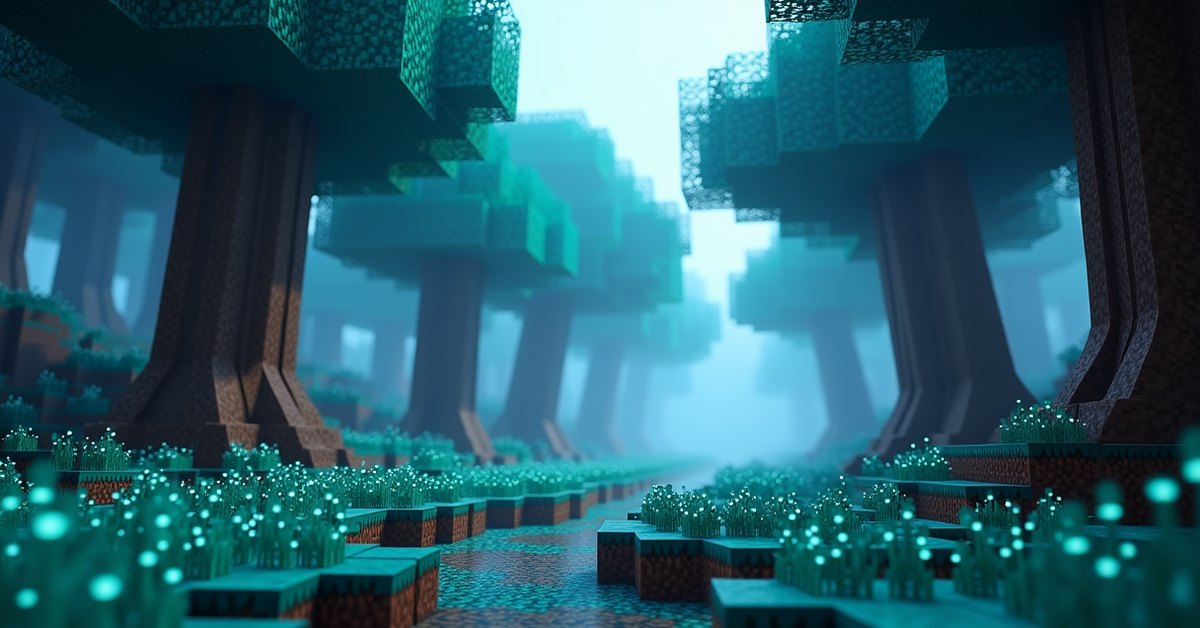
Nether sprouts are small, turquoise plants that grow on warped nylium in the Nether. They look like tiny teal tufts, similar to short grass, and they only appear in the warped forest biome. They were added to Minecraft in the 1.16 Nether Update, alongside the rest of the warped forest ecosystem.
They have no crafting recipe and no use in the brewing stand or furnace. Their job is decorative. If you are building anything in the Nether or trying to recreate a warped forest look in the Overworld, nether sprouts give you a splash of cyan ground cover that does not exist anywhere else in the game.
Where to find nether sprouts
Nether sprouts only generate naturally in one place: the warped forest biome in the Nether. This biome is one of the easier Nether biomes to recognize because of the bright cyan trees, the warped nylium covering the ground, and the small plants scattered across that nylium. Nether sprouts are one of those plants. The others are warped roots and twisting vines, with the occasional warped fungus poking up between them.
If you do not have a warped forest near your portal, you can usually reach one by walking, flying with elytra, or boating along a Nether lava lake until the terrain shifts. The biome stands out at a distance because the cyan color is unlike anything in the crimson forest or the basalt deltas.
Making more grow
Once you find some warped nylium, you can spread the plant cover by using bone meal on it. Bone meal applied to warped nylium produces a patch of mixed plants: nether sprouts, warped roots, twisting vines, and warped fungi. The exact mix is random, but with enough bone meal you can carpet a section of nylium in dense sprout coverage.
This is the only practical way to farm them. Bone meal does not work on a placed nether sprout to grow it taller or spread it like grass, so the cycle goes: bone meal on warped nylium, harvest the sprouts with shears, repeat.
How to get nether sprouts
To pick up a nether sprout, you need shears. Breaking a sprout with your hand, a sword, or any other tool destroys it and drops nothing. Shears guarantee the drop and let you carry sprouts back to base.
Iron shears craft from two iron ingots:
- Place one iron ingot in the top-right slot of a 3×3 crafting grid.
- Place a second iron ingot in the middle-left slot.
- The output is one pair of shears.
Shears used on nether sprouts wear down their durability by one point per cut, the same as cutting grass or vines. A single pair of shears can harvest hundreds of sprouts before breaking.
If you are in Creative mode, you can pull nether sprouts directly from the inventory. The item lives under Decoration in Bedrock and under Natural Blocks in Java.
Where you can place nether sprouts
Nether sprouts will sit on a wider range of blocks than their natural spawn point of warped nylium. You can place them on any of the following:
- Warped nylium
- Crimson nylium
- Netherrack
- Soul soil
- Soul sand
- Dirt
- Coarse Dirt
- Rooted Dirt
- Grass block
- Podzol
- Mycelium
- Farmland
- Mud
- Moss block
That means you can use them as decoration far outside their natural habitat. A nether sprout placed on a grass block in the Overworld stays exactly where you put it and never spreads or dies on its own.
One detail worth knowing: nether sprouts are waterloggable. You can place one and then run water over it, or place it directly into water with a water bucket, and the sprout stays put. This makes them useful for underwater builds where you want a tuft of cyan vegetation that does not float away.
How nether sprouts behave
Nether sprouts are non-solid, so mobs walk through them without collision. They do not slow down movement, they do not suffocate anything, and they do not block redstone signals. They also do not block light, so you can place them on top of redstone wire or pressure plates if you want plant cover without disabling the mechanism underneath.
Fire passes through them harmlessly. Lava or fire above warped nylium can burn out the surrounding plants, but the sprout itself does not catch fire and spread flames the way some plants do.
Pistons cannot push nether sprouts, which is true of most plants. If a piston tries, the sprout breaks with no drop, even if you used shears to harvest the original block. If you are building a contraption that uses pistons near plant decoration, plan around that.
Bone meal does not work on the sprout
This is the most common point of confusion. Bone meal on grass blocks in the Overworld grows taller grass and flowers. Bone meal on dirt next to a sapling helps the tree grow. But bone meal on a placed nether sprout does nothing. The sprout stays the same size, no taller plant appears, and you waste the bone meal.
The only way to use bone meal to get more sprouts is the warped nylium method described above.
Practical uses for nether sprouts
Since nether sprouts have no crafting recipe and no functional purpose, every use is decorative or aesthetic. A few work well.
For warped forest builds, scatter extra sprouts around the ground after you flatten or shape the terrain. It keeps the natural look intact and makes a cleared area feel less industrial.
For Overworld accents, cyan is rare in Minecraft. A handful of nether sprouts in a flower garden or rock garden gives you a color that no other plant provides. They pair well with allium for a purple and cyan combination, or with glow lichen for a softer palette.
For underwater builds, waterlogged sprouts on sand or moss blocks work as a kelp substitute when you want something shorter than seagrass and with a different color cast.
For composter fuel, nether sprouts have a 50% chance of advancing the composter by one level. That is the same rate as wheat seeds. If you are running a large warped nylium farm, the bonus output is a slow source of bone meal.
What they are not good for: practical farming, food, brewing, or anything mechanical. Do not expect them to do more than fill space.
Tips and common mistakes
- Carry shears any time you visit a warped forest. Nether sprouts only drop when sheared, and the warped forest is usually the same trip where you want to collect warped wart blocks and twisting vines, both of which also benefit from shears.
- Do not torch a warped forest with lava buckets or flint and steel near a nylium patch. Fire on warped nylium destroys your potential sprout supply, and the warped forest is one of the safer Nether biomes to spend time in.
- If you only see warped roots and no sprouts, walk a bit further. Sprout density varies from chunk to chunk. Some sections of warped forest are heavy on the taller warped roots and light on the short sprouts, so wandering a chunk or two often turns up a denser patch.
- Bone meal is more valuable than you think. Each bone meal use only spreads plants in a small radius around the nylium block you targeted, so plan how many shots you actually need before emptying your stack.
- Do not confuse them with seagrass. Underwater nether sprouts look superficially similar to short seagrass at a distance, especially in low light. The cyan color and the fact that they do not sway in water tells them apart.
Java vs. Bedrock
Nether sprouts behave the same way in both editions. The drop chance with shears is 100%, the composter chance is 50%, and the placement rules match. The one cosmetic difference is the Creative inventory tab: nether sprouts live under Decoration in Bedrock and under Natural Blocks in Java. The actual gameplay around them is identical, so any guide that works in one edition works in the other.
Frequently asked questions
Can you eat nether sprouts?
No. Nether sprouts have no food value and cannot be eaten, brewed, or smelted. They are a placement-only block.
Do nether sprouts spread on their own?
No. A placed sprout stays exactly where you put it. The only way to get more sprouts is to apply bone meal to warped nylium, which generates new sprouts randomly in the surrounding area.
Are nether sprouts the same as warped roots?
No, though they grow side by side in the warped forest. Nether sprouts are the small, grass-like teal tufts, while warped roots are taller, vine-like cyan plants that look more like miniature trees. Both drop with shears.
Can I grow nether sprouts in the Overworld?
You can place them in the Overworld on any of the blocks listed above, but they will not spread. Bone meal on warped nylium is the only way to multiply them, and warped nylium does not spread outside the Nether. If you want a steady supply, you will need to keep returning to the Nether or maintain a warped nylium patch you have brought back.
Do nether sprouts emit light?
No. Despite being a Nether plant, nether sprouts have a light level of 0. If you want a glowing accent in a warped forest build, look at shroomlights or sea lanterns instead.
Will nether sprouts despawn or die?
Placed sprouts persist as long as the block under them stays valid. If you break the block under the sprout, the sprout breaks too with no drop. If a piston pushes a sprout, the sprout breaks with no drop. Otherwise they last as long as the chunk does.
Can nether sprouts be placed on slabs or stairs?
Only on top-half slabs and the top of stairs, and only if the slab or stair is made of one of the supported placement blocks (such as a moss block slab). In practice this is fiddly. Most builders lay a full moss block or grass block down and place the sprout directly on that for clean placement.
Final thought
Nether sprouts are one of the small details that make the warped forest feel like a complete biome. They do not do anything mechanically, but they are the only cyan ground cover in the game and they place cleanly on more surfaces than most decorative plants. Grab a pair of shears, drop into a warped forest, and bring a stack back. They earn their slot in your decoration chest.