What is the peony?
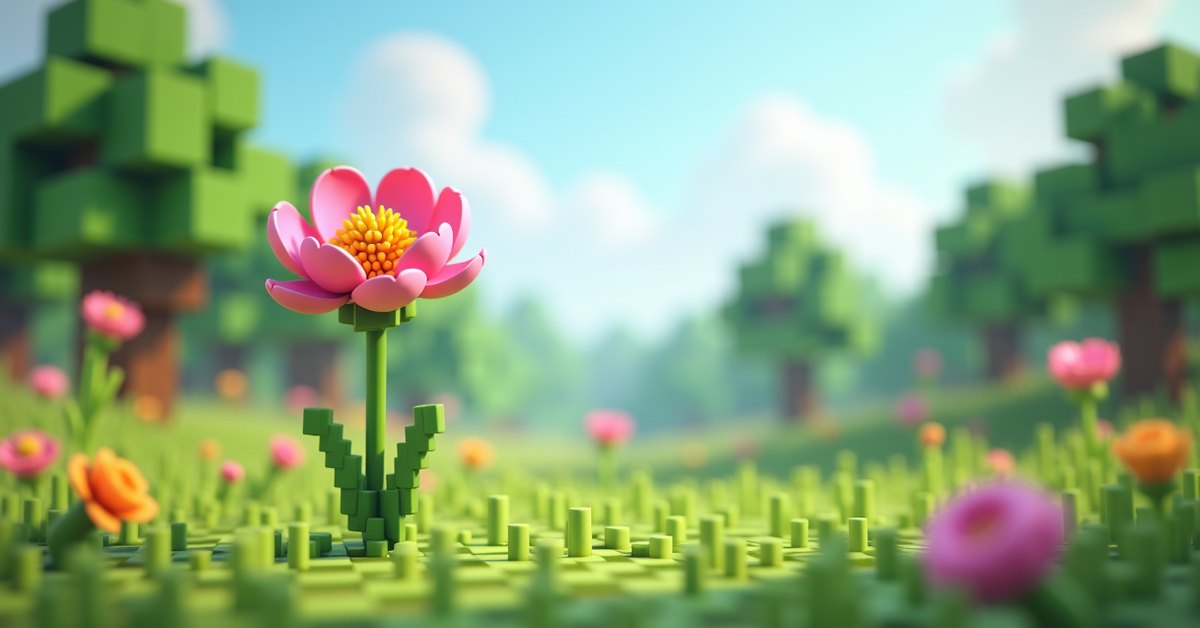
The peony is a decorative flower that stands two blocks tall. The lower block is a leafy green stem, and the upper block holds the pink flower head. Small flowers like the poppy or the dandelion take up a single block. The peony, the sunflower, the lilac, and the rose bush are the four flowers that take up two.
That height does more than change the look. It changes how you place the flower and whether it fits in a flower pot. It also ties into the peony’s two real uses: decoration and dye. As a decoration, the extra height makes it read as a small shrub rather than a single bloom, which works well for hedges and garden edges. As a crafting ingredient, it produces two pink dye per flower, the best rate of any pink flower.
The peony has no growth stages and no special behavior of its own. Once it is placed, it sits there as a solid pink fixture in your build. Everything worth knowing about it happens when you find it, farm it, or craft with it.
Where to find peony
Peony generates naturally when the world is created. It does not grow from bone meal on a plain grass block, so the first peony you own always has to be found out in the world.
Two biomes carry it. The first is the regular forest, where a few peonies appear among the oak and birch trees, often next to lilacs and rose bushes. The second is the flower forest, and that is the one you want. The flower forest is built around flowers and generates them in heavy numbers, peonies included. A single flower forest can hold dozens of peonies within a short walk.
If you are setting out specifically for pink dye, point yourself at a flower forest. Once you find one, gather two or three peonies and you have everything you need. You will never have to make the trip again, because from that point you can grow your own.
How to grow and farm peony
The peony is one of the simplest plants to farm in Minecraft, and it comes down to a single trick: bone meal clones tall flowers.
Place a peony on the ground, then use bone meal on it. Instead of growing or spreading, the flower drops a brand-new peony as an item next to itself. There is no cooldown, no growth timer, and no chance of failure. Every piece of bone meal you spend returns one peony.
A basic farm needs almost nothing:
- Place one peony on grass or dirt.
- Stand next to it with a stack of bone meal.
- Use the bone meal on the flower until you have what you need.
- Walk over the dropped peonies to collect them.
The only running cost is bone meal. You get it by crafting bones into bone meal, by trading, or straight out of a composter. If you keep a composter, you can drop a few spare peonies into it, since flowers are compostable, which softens the bone meal cost a little. You still finish far ahead, because one bone meal always returns a full flower worth two dye.
For larger setups, place a long row of peonies and walk down the line with bone meal, or build a simple collection floor so the dropped flowers gather in one spot. There is no need for water streams or hoppers unless you want them. The peony farm is as basic or as built-up as you care to make it.
Crafting pink dye
Place a single peony anywhere in the crafting grid and it produces two pink dye. There is no recipe shape to memorize and no second ingredient. One flower in, two dye out.
Pink dye does everything the other dyes do. You can use it on wool, terracotta, concrete powder, stained glass, beds, banners, candles, and shulker boxes. You can dye leather armor pink, color a tamed wolf’s collar or a cat’s collar, and dye a live sheep so it grows pink wool you can shear again and again.
Peony is not the only way to get pink dye, but it is the most efficient flower for it. Here is how the common sources compare:
| Source | Pink dye produced |
|---|---|
| Peony | 2 per flower |
| Pink tulip | 1 per flower |
| Pink petals | 1 per craft |
| Red dye plus white dye | 2 per craft |
The red-and-white recipe also gives two dye, but it means keeping two other dyes on hand. The peony farm is a single-input loop: bone meal goes in, pink dye comes out. For anyone who builds with a lot of pink, that simplicity is the whole appeal.
Placing and building with peony
Because the peony is two blocks tall, it needs two blocks of open vertical space. You can place it on grass blocks, dirt and its variants such as coarse dirt and rooted dirt, podzol, moss blocks, mud, and farmland. If anything is sitting in the block directly above your placement spot, the flower quietly refuses to place.
One rule trips up a lot of players: you cannot put a peony in a flower pot. Flower pots only hold single-block plants. The peony, the sunflower, the lilac, and the rose bush are all too tall to be potted. For a potted display on a shelf or windowsill, you need a small flower instead.
Breaking a peony is forgiving. Hit either the top block or the bottom block and the whole flower breaks and drops as a single item. You do not need a tool, and you never lose the flower. The same is true for indirect breaks. Remove the block underneath it, push it with a piston, or let water flow over it, and the peony pops off as an item rather than disappearing.
In builds, the height is what makes the peony useful. A straight row of peonies reads as a low hedge or a garden border in a way that single-block flowers cannot. Planted in clusters around trees, they make a forest build look tended instead of empty. Mixed with lilacs and rose bushes, you get a layered flower bed without spending a single dye on wool or terracotta.
Pink wool, pink concrete, and pink terracotta all pull from the same dye the peony makes, so a peony farm and a pink-themed build go hand in hand. Plant the flowers around the base of the build and the color carries straight from the garden into the walls.
How the peony compares to other large flowers
Minecraft has four tall flowers, and they all follow the same rules. What changes is the color and the dye each one makes.
| Flower | Color | Dye produced |
|---|---|---|
| Sunflower | Yellow | 2 yellow dye |
| Lilac | Light purple | 2 magenta dye |
| Rose bush | Red | 2 red dye |
| Peony | Pink | 2 pink dye |
All four clone with bone meal, and all four craft into two dye. Learn the peony and you have learned the set. The sunflower is the one exception on placement: it only generates in the sunflower plains biome and always faces east. The peony, the lilac, and the rose bush share the forest and flower forest biomes, so you will often find all three growing together.
Tips and common mistakes
Do not waste bone meal on grass hoping for peonies. A grass block only ever grows small flowers and tall grass. Cloning a placed peony is the only bone meal route to more of them.
Check the block above before you place. A peony fails silently if the top space is blocked, and it is easy to assume the flower is broken when the real problem is one missing block of headroom.
Hold onto at least one peony. Because you cannot grow them from scratch, losing your last peony means another trip to a forest. Keep a spare in a chest, or plant one in a fenced, well-lit spot where nothing can trample or break it.
Match the source to the job. If you need three pink dye once and you happen to have pink tulips, use the tulips. If pink is a color you build with often, set up a peony farm and stop thinking about it.
Frequently asked questions
Can you put a peony in a flower pot?
No. Flower pots only hold single-block plants, and the peony is two blocks tall. Sunflowers, lilacs, and rose bushes cannot be potted either. You need a small flower for a flower pot.
How do you get more peonies?
Use bone meal on a peony you have already placed. It drops a copy of itself as an item every time. This is the only way to multiply peonies, because bone meal on a grass block will not grow them.
How much pink dye does one peony give?
One peony crafts into two pink dye. That is twice what a pink tulip gives, which is why the peony is the best flower for pink dye.
Which biome has the most peonies?
The flower forest. It generates every flower type in large amounts, peonies included. Regular forests have a scattering of them too, but the flower forest is where you will find them in bulk.
Do bees pollinate peonies?
Yes. Bees treat the peony like any other flower and will pollinate it. A peony works well as part of a bee garden near a hive or nest.
Do peonies spread or grow back on their own?
No. A peony stays exactly where you place it and never spreads to nearby blocks. The only way to get more is the bone meal clone trick on a flower you already have.
Does the peony behave the same on Java and Bedrock?
Yes. The placement rules, the bone meal clone trick, and the two pink dye per flower are identical on both editions. There is no peony-specific difference to account for.
The peony is worth picking up for one simple reason: a single flower, found once in a flower forest, becomes an endless supply of pink dye the moment you point bone meal at it. Grab one, plant it somewhere safe, and pink stops being a color you have to ration for the rest of your world.