What is polished diorite?
Polished diorite is a decorative stone block made by smoothing raw diorite. Diorite is one of three igneous stones in Minecraft, alongside andesite and granite. All three generate in large blobs underground, scattered through the Overworld at most depths. Diorite is the pale one with black speckles, granite is pink, and andesite is gray.
You cannot find polished diorite while mining. It only exists as a crafted block. You dig up rough diorite, bring it to a crafting table or a stonecutter, and convert it there.
The polished version keeps the white-and-black coloring but tightens the speckled pattern into neat diagonal lines. That cleaner texture is the whole point. Rough diorite looks busy in a wall. Polished diorite looks deliberate.
A block with a rough reputation
Diorite, granite, and andesite all entered Minecraft in the same update, version 1.8, together with their polished forms. For years afterward, plain diorite was a running joke in the mining community. It generates in such large amounts that it clutters caves and fills inventories with a block many players had no use for.
The polished variant quietly answered that complaint. Polished diorite gives an abundant, free material an actual job. If you have spent any time underground, you already own the raw material for a large white build without spending a thing.
Where to find diorite
Since polished diorite is always crafted, the real question is where to get the rough diorite that feeds the recipe. Diorite generates naturally in the Overworld as large blobs mixed into stone. You will run into it on almost any mining trip.
It also shows up wherever stone is already exposed: cliff faces, ravine walls, and the sides of open caves. If you specifically want diorite, scanning an open cave or a mountain cliff is faster than tunneling at random.
Diorite drops itself when you mine it with a pickaxe, so there is no processing step between digging it up and using it. One stack of diorite makes one stack of polished diorite, and most players end up with far more than they planned for.
How to craft polished diorite
There are two ways to make polished diorite, and they suit different situations.
The crafting table recipe
Place four diorite blocks in a 2×2 square on a crafting table. That gives you four polished diorite. The recipe is one-to-one, so you never lose material by polishing.
If you don’t have diorite yet, you can craft that as well. Diorite is made from two cobblestone and two nether quartz set in a checkerboard pattern in a 2×2 grid, and that recipe produces two diorite. A single Nether trip for quartz, plus the cobblestone you already have in bulk, can supply all the polished diorite a build needs.
It helps to know the related recipes while you are at the table. Diorite plus nether quartz makes granite. Diorite plus cobblestone makes andesite. Diorite is the shared ingredient for Minecraft’s crafted stone family, so a matching set is easy to put together.
The stonecutter method
The stonecutter is faster. Drop a single diorite block into a stonecutter and you can cut it straight into one polished diorite. No 2×2 arrangement, no batches of four.
A stonecutter is made from one iron ingot and three stone blocks. If you build with stone at all, it pays for itself quickly. For polished diorite specifically, the stonecutter also cuts raw diorite straight to stairs and slabs, which the crafting table cannot do in one step.
For a large build, set up a stonecutter next to your storage and cut diorite as you go. The interface lists every variant you can make from whatever block sits in the input slot.
Polished diorite stairs and slabs
Polished diorite has two shaped variants: stairs and a slab. Both arrived in the Village and Pillage update, so any current version of the game includes them.
For stairs, six polished diorite in the standard stair layout make four polished diorite stairs. The stonecutter turns one polished diorite into one stair.
For slabs, three polished diorite in a row make six polished diorite slabs. The stonecutter turns one polished diorite into two slabs, which is the better ratio of the two methods.
There is no polished diorite wall. Polished diorite only comes as stairs and a slab. Regular, unpolished diorite does have a wall variant, so if your design needs a wall in the same color family, place a diorite wall beside your polished blocks. The textures will not match exactly, but the color will.
What polished diorite is good for
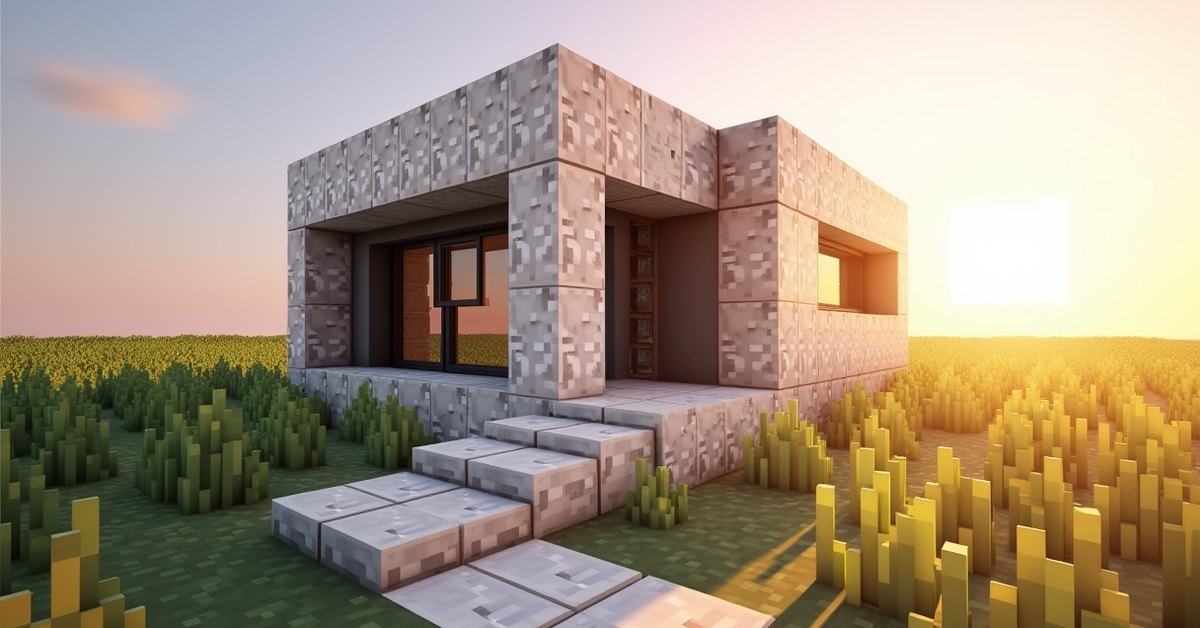
Polished diorite earns its place as a building block. It is one of the cleanest light-colored blocks in the game that needs no bleaching and no rare materials. The flat, even texture suits modern houses, interior walls, pillars, and floor tiling.
It works best against dark blocks. Set polished diorite next to deepslate, polished blackstone, or dark oak and the contrast does the heavy lifting. Builders often use it as the light half of a two-tone color scheme.
In practice, polished diorite shows up most in floor tiling and as a clean wall material for interiors. Checkerboard floors made from polished diorite and a darker block are a common look, and the block’s pale tone keeps indoor rooms from feeling cramped. It also works as accent banding on an otherwise dark exterior, where a single row of polished diorite breaks up a deepslate or stone-brick wall.
It also serves as a quartz substitute. Quartz block is whiter and smoother, but you need a lot of nether quartz to produce quartz blocks. Polished diorite gives you a similar bright tone for far less Nether mining, because the diorite recipe only uses one nether quartz per block.
For redstone and technical builds, polished diorite behaves like ordinary stone. It is a full solid block, so it conducts redstone and blocks light. You can place rails and redstone dust on top of it. Polishing changes none of those properties.
Mining and block behavior
Polished diorite needs a pickaxe to mine. Any tier works, including wood. If you break it by hand or with the wrong tool, the block is destroyed and drops nothing, so keep a pickaxe on you.
Mined correctly, polished diorite drops itself. You do not need Silk Touch. This is different from plain stone, which drops cobblestone unless you use Silk Touch. Diorite and polished diorite both drop as their own block every time.
The block has the same hardness and blast resistance as stone. It is not flammable, and gravity does not affect it. Pistons push and pull it normally. If you place a note block on top of polished diorite, the note block plays the bass drum sound, the same as it does over most stone-type blocks.
Tips and common mistakes
A few things players run into with polished diorite:
- Use the stonecutter for stairs and slabs. Routing diorite through polished diorite and then into stairs on a crafting table wastes blocks on poor ratios. The stonecutter cuts raw diorite straight to any variant, and its slab output of two per block is the best ratio available.
- Do not go looking for polished diorite in caves. It is always crafted. The white speckled stone underground is rough diorite, which you then polish yourself.
- Remember that polishing is one-way. No recipe turns polished diorite back into diorite, so only polish the amount you actually plan to use.
- Check your variants before building tall. If a plan calls for a wall, polished diorite does not have one. Sort that out before you are forty blocks in the air.
Frequently asked questions
How do you make polished diorite in Minecraft?
Place four diorite in a 2×2 grid on a crafting table to get four polished diorite, or put one diorite into a stonecutter to cut a single polished diorite. The stonecutter is quicker for small amounts and can go straight to stairs and slabs.
Can you turn polished diorite back into diorite?
No. Polishing is a one-way process. No crafting or stonecutter recipe converts polished diorite back to rough diorite, so only polish what you plan to use.
What is the fastest way to get polished diorite?
A stonecutter. It converts diorite to polished diorite one-to-one with a single click, and it is the only way to go from raw diorite straight to polished stairs or slabs in one step.
Can polished diorite be used for a beacon base?
No. Beacon pyramids only accept blocks of iron, gold, emerald, diamond, and netherite. Polished diorite is a decorative stone, so it can sit nearby for looks but it will not power a beacon.
Does polished diorite have stairs and slabs?
Yes, both. Polished diorite stairs and the polished diorite slab are standard variants. There is no polished diorite wall, though regular diorite does have a wall.
Can mobs spawn on polished diorite?
Yes. Polished diorite is a full opaque block, so hostile mobs can spawn on it in the dark, the same as on stone. Keep the area lit if you want to prevent spawns.
Is polished diorite the same in Java and Bedrock?
Yes. The crafting recipe, the stonecutter conversions, and the stair and slab variants work the same way in both editions.
Worth keeping your diorite
Polishing is the cheapest upgrade in the game for a block you already have stacks of. Next time your inventory fills with the white speckled stuff on a mining run, don’t drop it in lava. A stonecutter and a few seconds turn it into one of the better light-colored building blocks Minecraft offers.