What are red nether bricks?
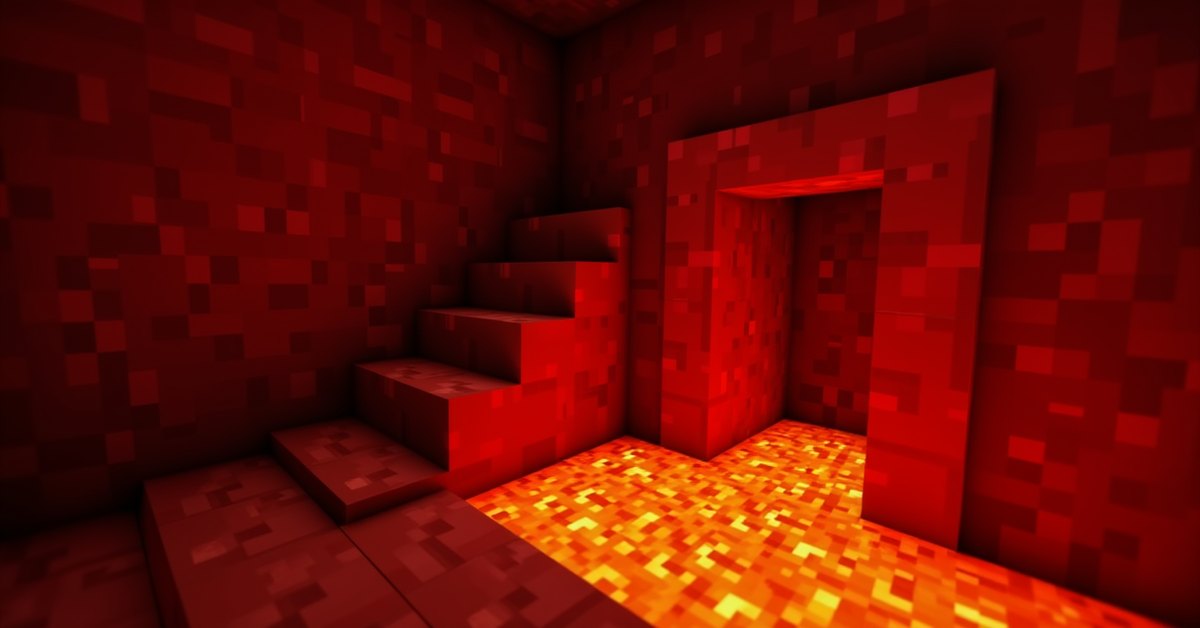
Red nether bricks are a deep crimson building block you craft by mixing nether brick with nether wart. They give a build a darker, warmer tone than regular nether bricks, and they sit well next to crimson wood, blackstone, and anything lit by lava.
The recipe blends crushed nether wart into the brick, which is where the dark red color and the speckled texture come from. The block has a hardness of 2 and a blast resistance of 6, the same numbers as regular nether bricks. That blast resistance is higher than stone, so a red nether brick wall holds up to a creeper better than a cobblestone one.
One thing it is not: fireproof in the way netherrack is. Red nether bricks do not catch fire on their own and they do not burn away, so they are safe to build with right next to lava. Netherrack, by contrast, burns forever once it is lit.
How to craft red nether bricks
Red nether bricks are crafting-only. No structure in the game uses them in any version, so the crafting table is the single source. If you are exploring the Nether hoping to find some, stop looking. They do not generate.
The crafting recipe
Open a crafting table and place two nether brick items and two nether wart in a checkerboard pattern. Put a nether brick in the top-left and bottom-right slots, and a nether wart in the top-right and bottom-left slots. The two ingredients have to sit diagonally from each other. Each craft returns one red nether bricks block.
Here is the detail that trips people up: the recipe needs the nether brick item, not the nether bricks block. The item is the small reddish lump you get by smelting netherrack. Four of those items craft into one nether bricks block, but for the red version you keep them loose.
Getting the ingredients
Both ingredients come from the Nether. For nether brick items, mine netherrack, which is everywhere down there and breaks with a wooden pickaxe, then smelt it in a furnace. One netherrack smelts into one nether brick item, so a full stack of netherrack gives you a full stack of items.
Nether wart grows on soul sand. You can find it growing in nether fortresses, usually in small stairwell gardens near a doorway, and sometimes in bastion remnants. Grab a few warts and a couple of blocks of soul sand, carry them home, and start a small farm. Nether wart needs no light and no water, which makes it one of the simplest crops to grow.
Plant the wart on soul sand and it passes through four growth stages before it is ready to pull. The timing is random rather than tied to a light level, and bone meal does nothing to speed it up. The only way to scale output is to plant more of it. A long row of soul sand with wart on every block, walked and harvested on a loop, keeps a steady supply coming in.
Because one craft uses two warts and yields a single block, a large red nether brick build burns through a lot of wart. A dedicated farm pays for itself quickly if you plan to use the block in bulk. Soul sand is worth carrying home in quantity too, since it doubles as the platform for the farm and as a build material in its own right.
Slab, stairs, and wall variants
Red nether bricks come with the usual three shaped variants: a slab, stairs, and a wall. All three carry the same hardness of 2 and blast resistance of 6 as the full block, and all three need a pickaxe to drop.
You can make them two ways. In a crafting table, three red nether bricks in a row make six slabs, six bricks in the staircase shape make four stairs, and six bricks in two rows of three make six walls. The faster route is a stonecutter: drop a single red nether bricks block in and it offers the slab, stairs, or wall directly. The stonecutter gives two slabs per block and one stair or wall per block, so it wastes less material than the crafting table for stairs and walls.
The shaped variants arrived later than the block itself. The slab, stairs, and wall were added in the 1.16 Nether Update, while the base block goes back to Java Edition 1.10. Worlds made between those versions have the block but not the shaped pieces.
Mining red nether bricks
Any pickaxe breaks red nether bricks and returns the block, even a wooden one. Break it with anything else, like your hand or an axe, and the block still breaks but drops nothing. The same rule covers the slab, stairs, and wall.
Silk Touch and Fortune do nothing special here. The block is not an ore, so it always drops one of itself with any pickaxe. You also cannot recover the nether wart or the nether brick items once they are crafted into a block, so think before you tear down a finished wall.
Build ideas for red nether bricks
The color is the whole appeal. Red nether bricks read as a rich, dark crimson, somewhere between dried blood and old terracotta, and that makes them a strong fit for a few specific looks.
They work best as an accent, not as a whole structure. A full building in red nether bricks can feel heavy and flat, but a band of red running through a wall of regular nether bricks or blackstone breaks up the gray nicely. The two brick types share a texture style, so the seams line up cleanly.
Good pairings include crimson planks and crimson stems for a matching Nether base, magma blocks for a glowing floor accent, and gilded blackstone for a bit of contrast. In the Overworld, red nether bricks suit anything meant to look hellish or volcanic: a dungeon, a forge, a villain’s lair. The wall variant makes a clean dark fence line, and the stairs are handy for trim and rooflines.
Common mistakes to avoid
The most common slip is the wrong ingredient. Players load the nether bricks block into the recipe and wonder why nothing crafts. The recipe wants the loose nether brick item. If you already turned every item into a block, you cannot craft red nether bricks until you smelt more netherrack.
The second mistake is running out of nether wart partway through a build. Wart is the bottleneck. Set up a farm before you commit to a big red nether brick project, or you will spend more time replanting soul sand than placing blocks.
Last, do not expect to find this block while exploring. Some players waste time searching fortresses for it because regular nether bricks are everywhere down there. The red version does not spawn anywhere. Crafting is the only way to get it.
Frequently asked questions
Do red nether bricks spawn naturally?
No. No structure in the game uses them, in any version. Regular nether bricks build the nether fortress, but the red variant is crafting-only.
Can you make red nether bricks without nether wart?
No. Nether wart is half the recipe and there is no substitute. You need two warts and two nether brick items for each block.
What is the difference between nether bricks and red nether bricks?
Color and recipe. Regular nether bricks are gray-brown and craft from four nether brick items. Red nether bricks are dark crimson and need nether wart mixed in. Their hardness and blast resistance are identical.
Are red nether bricks flammable?
No. Fire will not spread to them and they will not burn away, so they are safe next to lava or open flame. That sets them apart from netherrack, which burns forever once it is lit.
Can you turn red nether bricks back into nether bricks?
No. There is no recipe that reverses the block, and mining it will not give back the wart or the items. The craft only goes one direction.
What pickaxe do you need for red nether bricks?
Any pickaxe works, including wooden. The block has a low hardness, so a higher tier just mines it faster. Mine it without a pickaxe and it drops nothing.
Does the stonecutter work on red nether bricks?
Yes. A stonecutter turns one red nether bricks block into a slab, stairs, or a wall, and it wastes less material than crafting for stairs and walls.
Does bone meal speed up nether wart?
No. Bone meal has no effect on nether wart at all. The crop grows on its own timer, so the only way to get wart faster is to plant more soul sand and harvest a longer row.
How much nether wart do you need for a stack of red nether bricks?
A full stack of 64 blocks costs 128 nether wart and 128 nether brick items, since each block uses two of each. That works out to two stacks of every ingredient for one stack of the finished block, which is the real reason a wart farm is worth building.
Red nether bricks ask for a little setup, mostly a steady supply of nether wart, but the payoff is a building block in a color nothing else in the game quite matches. If you are planning a Nether base or anything meant to look dangerous, build a small wart farm first and the block stops feeling like a chore.