What is a red tulip?
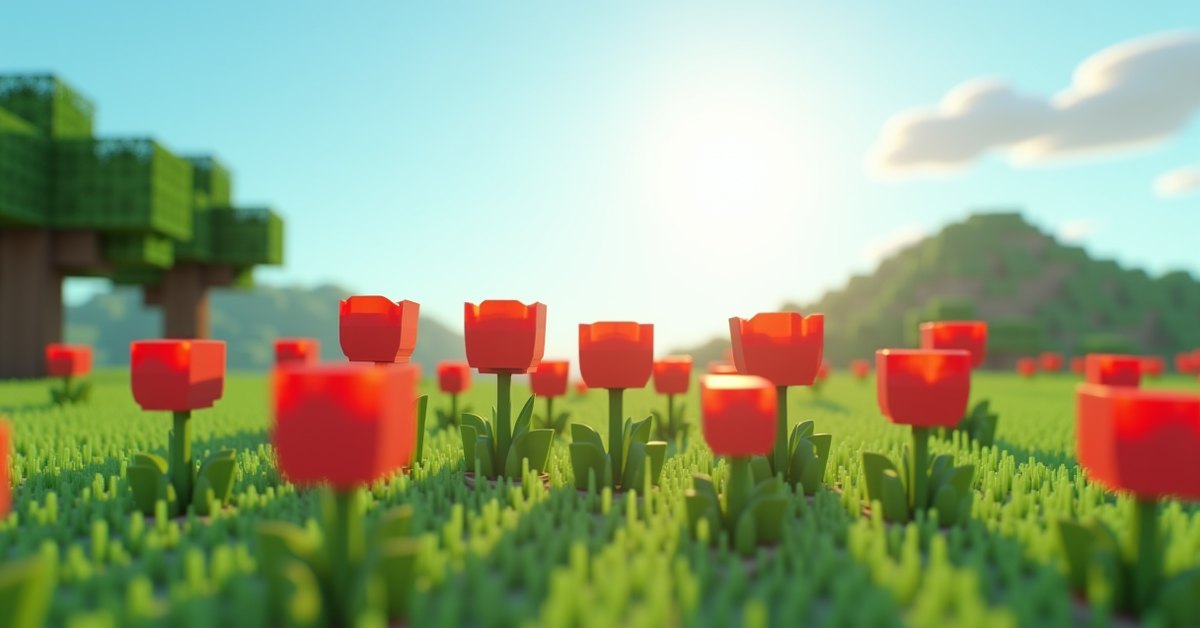
A red tulip is one of the small flowers you can find growing wild in Minecraft. It stands a single block tall, sits on top of grass and dirt, and does nothing on its own except look good. The value comes from what you can turn it into: red dye and suspicious stew.
Tulips come in four colors in Minecraft: red, orange, white, and pink. The red one is the common pick for dye because red is a base color that mixes into other shades. If you want a steady supply of red dye without hunting down a specific mob or ore, a patch of red tulips is one of the easiest sources in the game.
This guide covers where red tulips spawn, how to farm them with bone meal, and every use worth knowing.
Where to find red tulips
Red tulips generate naturally on grass blocks in a handful of biomes. The plains biome is the most reliable everyday source, with small flowers scattered across the open ground. Meadows, which sit on mountain slopes, grow them too.
The fastest place to stock up is a flower forest. That biome is packed with flowers of every type, and red tulips show up in large clumps there. A short walk through a flower forest can fill an inventory slot or two without much effort. Tulips tend to appear in small clusters of the same color, so spotting one red tulip usually means a few more are close by.
Flowers also appear as scattered decoration around some villages and along the edges of wooded areas, but if you want quantity, head for a flower forest or grow your own with bone meal.
How to pick up a red tulip
Getting a red tulip is simple. Walk up to one and break it. You don’t need a tool, and it takes no time at all. The flower breaks instantly by hand and drops itself as an item every time.
One thing to watch: flowing water will break a tulip and pop it off as a drifting item. If you place tulips near a water source, the current can wash your decoration away. Keep flowers a block clear of any water you expect to flow.
Growing red tulips with bone meal
You can’t plant a red tulip and bone-meal it into more tulips. Using bone meal directly on a placed flower does nothing. Bone meal works on the grass block instead.
When you use bone meal on a grass block, Minecraft spreads grass and flowers across the nearby grass blocks. The flowers it produces depend on the biome you’re standing in. In a plains biome, that pool includes dandelions, poppies, azure bluets, and all four tulip colors, so red tulips come up regularly. In a flower forest, the pool covers nearly every flower in the game, red tulips included.
The catch is that you can’t choose the color. Each flower bone meal creates is rolled at random from the biome’s list. To farm red tulips specifically, bone-meal a wide patch of grass, collect everything, and keep the red ones. The orange, white, and pink tulips you pull up are still useful for their own dyes, so nothing is wasted.
For a steady setup, clear a flat area of grass blocks inside a plains or flower forest biome, stand in the middle, and work through a stack of bone meal. Sweep up the flowers and repeat.
What red tulips are used for
Making red dye
The main job of a red tulip is red dye. Put a single red tulip anywhere in the crafting grid and you get one red dye. Poppies and the red side of a rose bush also make red dye, so tulips aren’t the only route, but they give a clean one-to-one trade.
Red dye colors wool, terracotta, concrete powder, candles, beds, banners, shulker boxes, and leather armor. It also feeds other dye recipes: red plus white makes pink, and red plus yellow makes orange. A few stacks of red dye cover most building projects, and a tulip patch keeps that supply going. Keep a few spare tulips in a chest and you won’t have to stop a build to go dye-hunting.
Suspicious stew
Red tulips are one of the flowers you can cook into suspicious stew. The recipe is a bowl, a red mushroom, a brown mushroom, and a flower. Use a red tulip as the flower and the stew gives the Weakness effect for nine seconds when eaten.
Weakness lowers your melee damage, so this particular stew is not something you’d eat before a fight. Most players brew tulip stew for the novelty or to tick off the advancement for eating a wide variety of foods. If you want a stew that actually helps, swap the tulip for an oxeye daisy or another flower with a friendlier effect.
Decoration and flower pots
A red tulip placed on the ground is a quick splash of color for gardens, village builds, and pathways. You can set one inside a flower pot for a tidy indoor or windowsill look. Crafting a flower pot takes three bricks, and any small flower, including a red tulip, drops straight into it.
Tulips sit on grass blocks, dirt, coarse dirt, podzol, farmland, moss blocks, and mycelium. They won’t stay on stone or other solid blocks unless they’re tucked into a pot.
Bees and pollination
Bees treat tulips like any other flower. A bee flies to a red tulip, collects pollen, and carries it back to its hive or nest, which raises the honey level there. Planting red tulips near a bee nest gives your bees something to work with and keeps a small honey operation running.
Composting
If you end up with more tulips than you need, drop the spares into a composter. Flowers have a 65 percent chance to raise the composter level by one, so a stack of leftover tulips turns into a useful amount of bone meal. That bone meal can go right back into growing more flowers.
Tips and common mistakes
Bone meal used on the flower itself is a wasted click. Aim at the grass block instead.
Don’t expect to control which tulip color you get from bone meal. The game rolls each flower at random, so sorting by color happens after you collect, not before.
Keep tulips away from any water you plan to release. A flood will strip a flower bed in seconds.
If you only need red dye and you’re standing in a field of poppies, you don’t have to find tulips at all. Poppies give red dye too. Tulips are the better choice when you also want the other colors or a specific decorative look.
A flower forest is worth marking on your map. It’s the single best place to gather flowers in bulk, and one trip there can supply dye projects for a long time.
Frequently asked questions
Where do red tulips grow in Minecraft?
Red tulips grow on grass blocks in plains, meadow, and flower forest biomes. Flower forests have them in the largest numbers, so they’re the best target if you need a lot at once.
How do you make red dye from a red tulip?
Place one red tulip anywhere in a crafting grid, with no other ingredients, and it becomes one red dye. The recipe is shapeless, so the slot you use doesn’t matter.
What does a red tulip do in suspicious stew?
A suspicious stew made with a red tulip gives the Weakness effect for nine seconds. Weakness lowers your attack damage, so it isn’t a combat food. All four tulip colors produce the same effect.
Can you grow red tulips with bone meal?
Yes, but indirectly. Bone meal used on a grass block spreads flowers nearby, and red tulips are part of the flower pool in plains and flower forest biomes. You can’t bone-meal a planted tulip to copy it.
Can a red tulip go in a flower pot?
Yes. Use a flower pot with a red tulip in hand to place the flower inside. The potted tulip works as decoration on any surface a pot can sit on.
Do red tulips work the same in Java and Bedrock?
Yes. Red tulips spawn, break, craft into dye, and behave the same way in both the Java and Bedrock editions.
Can a red tulip grow into a tall flower?
No. A red tulip stays one block tall no matter what you do. Minecraft’s two-block flowers, like the sunflower, lilac, rose bush, and peony, are separate plants, and bone meal won’t stretch a tulip into a bigger version.
Can you feed red tulips to animals?
No. Flowers aren’t a food item for breeding or taming. Bees use tulips for pollen, but that happens on its own and doesn’t involve handing a flower to anything.
Worth keeping a stack
Red tulips are cheap to gather and quietly useful. One run through a flower forest, or a few minutes with bone meal in a plains biome, gives you enough for a long stretch of red dye. Keep a stack in a chest near your crafting area and you’ll rarely go looking for red again.