What is a respawn anchor?
A respawn anchor is the only reliable way to set your spawn point in the Nether. Beds blow up the moment you try to sleep in them down there, so if you want to respawn near your Nether base instead of all the way back at your Overworld bed, this is the block you need.
It was added in the 1.16 Nether Update. The block stores up to four charges and lets you respawn in the Nether after you die, as long as it still has a charge left. Think of it as the Nether’s version of a bed, with the catch that its fuel runs out and has to be topped up.
One charge equals one respawn. A fully charged anchor holds four charges, so it covers four deaths before it runs dry. After that it still sits there as a block, but it will not bring you back until you recharge it.
How to craft a respawn anchor
You craft a respawn anchor from six blocks of crying obsidian and three blocks of glowstone in a crafting table. Place crying obsidian across the entire top row and the entire bottom row, then fill the middle row with glowstone.
Crying obsidian is the hard part. You cannot craft it. It generates naturally in ruined portals and bastion remnants, and piglins sometimes hand it over when you barter with gold ingots. You need six pieces for one anchor, and mining it takes a diamond or netherite pickaxe, the same as regular obsidian.
Glowstone is easier to get. It hangs from the ceilings and walls of the Nether in bright yellow clusters. Mining a glowstone block drops glowstone dust, and four dust crafts back into one block. You need three full blocks for the recipe, plus more later for charging, so it pays to bring back extra.
How to charge a respawn anchor
A freshly placed respawn anchor is empty and does nothing. To charge it, hold a block of glowstone and interact with the anchor. Each glowstone block you use adds one charge, and the anchor accepts up to four.
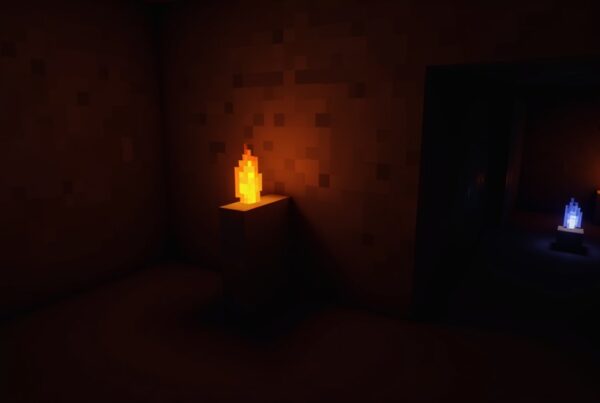
You can read the charge level off the block itself. An empty anchor looks dark. Each charge adds a glowing band to the side of the block, so a full anchor has four bright bands and gives off a strong light. That is a quick way to check how many respawns you have left without any guesswork.
Charging costs one full glowstone block per charge, not dust. Filling an anchor from empty to full takes four glowstone blocks, which works out to sixteen glowstone dust. Keep that math in mind when you are stocking up before a trip.
How to set your spawn point
Once the anchor has at least one charge, interact with it while holding an empty hand or anything other than glowstone. You will see the message “Respawn point set,” and the next time you die in the Nether you will reappear next to the anchor.
Setting your spawn does not cost a charge. Charges are only spent when you actually respawn. Each death in the Nether burns one charge, and when you come back the anchor visibly drops a band. When the last charge is gone, the anchor goes dark and stops working.
If you die with a depleted anchor, the game ignores it and sends you to your Overworld spawn instead, either your bed or the world spawn point. That fallback is the most common reason players end up confused about where they woke up, so keep an eye on the charge level.
Why a respawn anchor explodes outside the Nether
A respawn anchor only functions as a spawn point in the Nether. If you place one in the Overworld or the End and interact with a charged anchor, it explodes. This is the same safety mechanic that makes beds explode in the Nether, just flipped around.
The explosion is not small. It has a blast power of 5, which is stronger than a block of TNT at power 4, and it starts fires around the blast zone. Standing next to one when it goes off in the Overworld will almost certainly kill you and blow a hole in whatever you built.
Some players set this off on purpose. A charged respawn anchor works as a portable explosive for PvP or for blasting through blocks. If you go that route, trigger it from a safe distance and never with your own spawn point on the line.
Using a respawn anchor as a light source
A charged respawn anchor gives off light, and the brightness scales with the charge level. An empty anchor stays dark. One charge produces light level 3, two charges level 7, three charges level 11, and a full four-charge anchor hits light level 15, the same as a torch or a glowstone block.
Because charges only drop when you respawn, not over time, a full anchor that you never die at will keep glowing at full brightness for good. That makes it a decent decorative light for a Nether base, with the bonus that it doubles as your spawn point.
Mining and moving a respawn anchor
To break a respawn anchor and keep it, mine it with a diamond or netherite pickaxe. Any weaker tool destroys the block and drops nothing, which matches crying obsidian, the material it is mostly made of.
When you mine an anchor, it drops as an empty block. Any charges it had are lost, so do not expect to carry a charged anchor around. If you relocate your base, plan to recharge from scratch at the new spot.
The respawn anchor has the same blast resistance as obsidian, so creepers, ghasts, and stray TNT will not damage it. Pistons cannot push or pull it either, which is worth knowing if you build redstone contraptions near one.
Respawn anchor vs bed
Beds and respawn anchors do the same core job of setting your spawn, but they swap which dimension they are safe in. A bed works as a spawn point in the Overworld and explodes in the Nether and the End. A respawn anchor works in the Nether and explodes in the Overworld and the End. The End has no safe spawn-setting block at all, which is why dying to the dragon sends you back to your last bed or anchor.
A bed never runs out. Once you sleep in it, that spawn sticks until you sleep somewhere else or the bed is destroyed. An anchor spends a charge on every respawn and goes dark when empty. So a bed is set-and-forget, while an anchor needs glowstone restocks. If you spend most of your time in the Overworld, lean on a bed. If you keep a serious Nether base, an anchor saves you the long portal trip home after every death.
Tips and common mistakes
The mistake that catches almost everyone is treating the anchor like a bed. A bed sets your spawn and keeps it forever. An anchor sets your spawn but quietly spends a charge every time you respawn, and once it is empty you are back at your Overworld spawn with no warning. Glance at the charge bands before any risky trip.
Carry spare glowstone. The whole point of the anchor is respawning close to danger, like a Nether fortress raid or a bastion run, and that is exactly when you will burn through charges fastest. A stack of glowstone in your inventory means you can top up between deaths.
Do not interact with a charged anchor in the Overworld to test it. There is no safe test. It explodes on the first interaction. If you crafted one at your Overworld base, carry it to the Nether before you ever charge it or click it.
Frequently asked questions
Can you use a respawn anchor in the Overworld?
No. A respawn anchor only sets your spawn in the Nether. Interacting with a charged one in the Overworld or the End makes it explode instead.
How many times can you respawn with a respawn anchor?
Up to four times. The anchor holds four charges, and each respawn spends one. After the fourth, the anchor is empty and you respawn at your Overworld spawn instead.
What do you charge a respawn anchor with?
Blocks of glowstone. Hold a glowstone block and interact with the anchor to add a charge. It takes four blocks to fill an empty anchor.
Does a respawn anchor work in the End?
No. The End behaves like the Overworld here. A charged respawn anchor explodes if you interact with it in the End, so it stays Nether-only.
How do you mine a respawn anchor?
Use a diamond or netherite pickaxe. Anything less breaks the block without dropping it. The anchor always drops empty, with no charges saved.
Why won’t my respawn anchor set my spawn?
Two common reasons: the anchor has no charges, or you are trying to use it outside the Nether. Add glowstone to charge it, and only rely on it while you are in the Nether.
Does charging a respawn anchor cost dust or blocks?
Full glowstone blocks. One block per charge, four blocks for a full anchor. Since four dust crafts one block, a full charge comes to sixteen glowstone dust.
Treat the respawn anchor as a fuel tank, not a permanent spawn point. Keep it charged, watch the glowing bands, and never click one outside the Nether, and it will save you a long, miserable walk back from the Overworld every time you die deep in hostile territory.