What the smithing table does
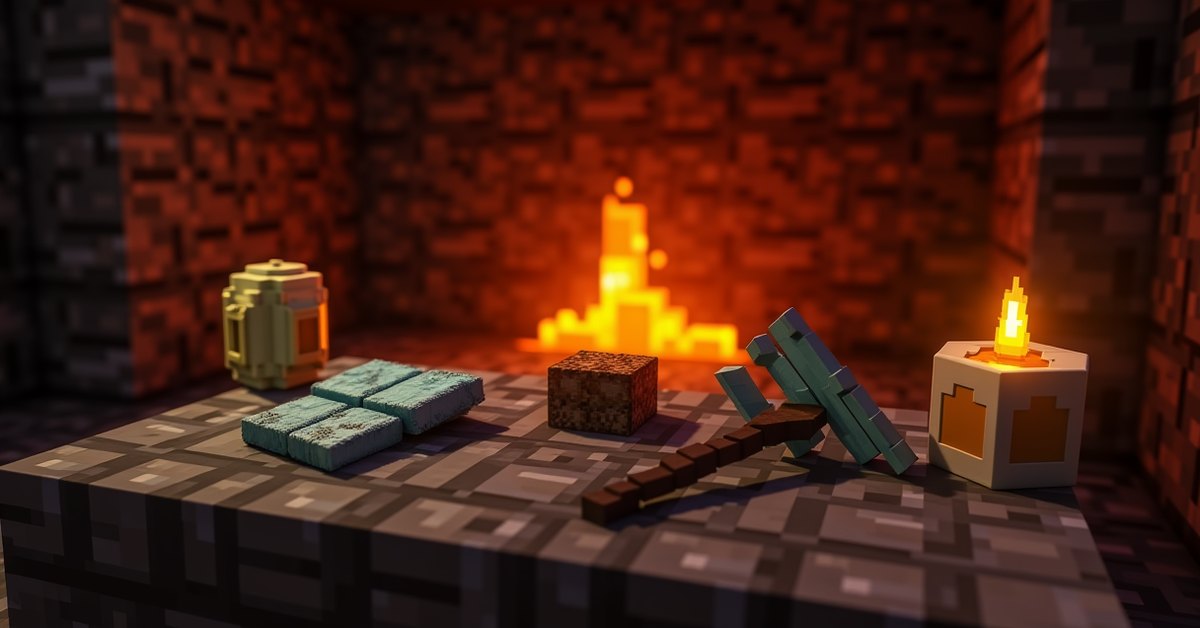
The smithing table is the only block that upgrades diamond gear into netherite gear. It also applies armor trims, the decorative patterns you stamp onto armor. Those are its two jobs, and the netherite upgrade is the one most players come for.
Since the 1.20 update, upgrading to netherite takes three things in the table at once: a netherite upgrade smithing template, the diamond item you want to upgrade, and one netherite ingot. Older versions skipped the template, so guides written before 1.20 leave that part out and confuse a lot of returning players.
Netherite is the strongest gear material in the game, but you cannot mine it or craft it from scratch. You earn it through a short chain of steps that all run through the Nether. This guide walks the full path, from finding a table to copying the template so you can do a whole set.
Where to find a smithing table
You craft a smithing table with two iron ingots on top and four wood planks of any type below them. One already sits in most villages too, inside the toolsmith’s house, where it doubles as that villager’s job site block. If you break a village table early, you can carry it home instead of crafting your own.
Right-click the table to open the smithing screen. It has three input slots in a row plus an output slot. The leftmost slot wants a template, the middle slot wants the gear, and the right slot wants the upgrade material.
How to upgrade diamond gear to netherite
Here is the full path from raw material to a finished netherite tool. Every step happens in or because of the Nether, so plan a trip with a diamond pickaxe and fire resistance before you start.
Step 1: Mine ancient debris
Everything starts with ancient debris, a rare ore that only generates in the Nether. It sits low, most commonly around Y 15, with a thinner band deeper down. Dig out a long tunnel at that height, or open up more rock with bed explosions or TNT, to expose as much of it as you can per trip.
You need a diamond or netherite pickaxe to mine it. Anything weaker breaks the block and gives you nothing. Ancient debris will not burn, so it survives lava and fire, and a freed block floats up to the top of a lava pool instead of sinking into it.
Step 2: Smelt scrap and craft ingots
Put ancient debris in a furnace or blast furnace to get netherite scrap. Then combine four netherite scrap with four gold ingots in a crafting grid to make one netherite ingot. That four-to-one ratio is why netherite feels expensive: a single ingot costs four pieces of ancient debris plus four gold.
A full netherite kit (four armor pieces, plus a sword, pickaxe, axe, shovel, and hoe) takes nine ingots, which works out to 36 ancient debris and 36 gold ingots. Most players upgrade their armor and a couple of tools first and leave the rest for later.
Step 3: Get a netherite upgrade smithing template
The template comes from bastion remnants, the large blackstone structures in the Nether. A treasure room bastion has a guaranteed template in its loot, and other bastion chests can hold one as well. You only need to find a single template, because you can copy it at the smithing table.
Step 4: Combine everything at the table
Open the smithing table and fill the three slots: the netherite upgrade template on the left, your diamond gear in the middle, and one netherite ingot on the right. The output is the netherite version of that item. The upgrade keeps every enchantment and the item’s current durability, so you lose nothing by upgrading a tool you have already enchanted.
One thing to plan around: the template is used up each time you upgrade a piece. The ingot and the gear are consumed too, which you expect, but plenty of players are caught off guard when the template vanishes after one use. Copy your template before you work through a full set.
What netherite gear actually gives you
Netherite is a clear step up from diamond, though not a dramatic one. The biggest practical win is survivability. Netherite items do not burn in lava or fire, and if you die holding them, the dropped items float on top of lava instead of being destroyed. That alone has saved many late-game inventories.
Netherite tools and armor also have higher durability than their diamond versions, so they last longer before breaking. Netherite tools mine a touch faster as well, and netherite armor adds knockback resistance, so you get shoved around less in a fight. Each armor piece carries more toughness than diamond too.
| Item | Diamond durability | Netherite durability |
|---|---|---|
| Tools and sword | 1,561 | 2,031 |
| Helmet | 363 | 407 |
| Chestplate | 528 | 592 |
| Leggings | 495 | 555 |
| Boots | 429 | 481 |
What netherite does not do is unlock new blocks. A netherite pickaxe mines exactly the same things a diamond one can. You upgrade for durability, lava safety, and the small combat edge, not for extra mining power.
Duplicating the smithing template
Because each upgrade eats a template, you will want copies. The smithing table handles that too. Put your existing netherite upgrade template in the table along with one piece of netherrack and seven diamonds, and you get the original back plus one copy.
Netherrack is everywhere in the Nether, so the real cost of a copy is the seven diamonds. That is steep, but it is a one-time setup. Copy the template as many times as you have gear to upgrade, and you never have to hunt another bastion for it.
The table’s other job: armor trims
The smithing table also applies armor trims, the patterns you stamp onto a piece of armor to change how it looks. Trims are purely cosmetic and do not touch your stats, so this part is for players who care about the look of their gear. You can trim diamond, netherite, iron, gold, and any other armor.
A trim takes three slots, the same as a netherite upgrade: a trim smithing template, the armor piece, and a material that sets the color. The material can be iron, copper, gold, lapis, emerald, diamond, netherite, redstone, amethyst, quartz, or resin, and each one tints the pattern differently. Trim templates come from a range of structures, get used up on application, and can be copied at the table with seven diamonds and the block the structure is made from.
Tips and common mistakes
Enchant first, then upgrade. Since the upgrade carries enchantments over, there is no reason to wait. Build the diamond item, enchant it the way you want, and convert it to netherite once the ingot is ready.
Do not try to mine ancient debris with an iron pickaxe. It will not drop anything. Bring a diamond pickaxe into the Nether before you go digging.
Watch your gold supply. Players often gather plenty of ancient debris and then stall because they ran out of gold ingots for the four-to-one recipe. Nether gold ore and bartering with piglins are quick ways to stock up.
Copy the template early. Running back to a bastion midway through a set because you used your only template is a common time sink that is easy to avoid.
Frequently asked questions
Does upgrading to netherite keep my enchantments?
Yes. The netherite item comes out with all the same enchantments and the same durability the diamond item had. Enchant the diamond version first, then upgrade it.
Is the smithing template used up when I upgrade?
Yes. Each netherite upgrade consumes one template along with the ingot and the gear. Duplicate your template with netherrack and seven diamonds so you have enough for a full set.
Can netherite gear burn in lava?
The gear itself does not burn, and netherite items dropped on the ground survive lava and float to the surface. You can still take fire damage as a player, so this protects your equipment, not your health bar.
Do I need diamond gear to make netherite gear?
Yes. There is no recipe to craft netherite tools or armor from scratch. You always upgrade an existing diamond item with a netherite ingot and a template.
What Y level is best for ancient debris?
Around Y 15 gives the most consistent results, with a thinner spread lower down. Straight tunnels at that height, or bed explosions, expose the most blocks per trip.
Is a netherite pickaxe needed to mine anything special?
No. A netherite pickaxe mines the same blocks a diamond one does, just with more durability and slightly more speed. A diamond pickaxe is enough to mine ancient debris itself.
Is the upgrade worth it?
For an early survival world, diamond gear is fine and the trip for ancient debris can wait. Once you are spending real time in the Nether or working near lava, the upgrade pays for itself the first time a careless step would have cost you an enchanted set. Get your armor and main pickaxe to netherite first, and treat the rest as a slow project you finish a piece at a time.