What a shield does in Minecraft
A shield blocks incoming damage from the direction you are facing. Raise it and most melee swings, arrows, and thrown items stop cold instead of taking a chunk out of your health. It is the single best piece of defensive gear for surviving early fights, and it stays useful long after you have full armor.
Shields work in both Java and Bedrock Edition, though the way you raise them differs between the two. The basics are the same: point your character at the threat, put the shield up, and the hit either gets reduced or canceled.
This guide covers how to craft a shield, how to block with it, exactly what it stops and what it doesn’t, how to repair and customize it, and the differences between the two editions.
How to craft a shield
You need six wooden planks and one iron ingot. Any wood type works, and you can mix plank types if you want. Open a crafting table and arrange them like this:
- Top row: plank, iron ingot, plank
- Middle row: plank, plank, plank
- Bottom row: empty, plank, empty
That gives you one shield with full durability. The recipe is cheap, so it is worth carrying a spare on longer trips. You can also find shields as loot in some structures and as drops from pillager-related mobs, but crafting one yourself is faster than hunting for them.
How to equip and use a shield
A shield is meant to go in your off-hand so you can still swing a sword or mine with your main hand. In Java Edition, hover over the shield in your inventory and press F to move it to the off-hand slot, which sits next to your hotbar. In Bedrock, drag it into the off-hand slot on the inventory screen.
To block in Java Edition, hold the use button (right-click by default) while the shield is equipped. Your character raises it and the block stays up until you let go. In Bedrock Edition, you block by crouching, or by tapping the dedicated shield button on touch controls and console layouts.
While blocking you move at sneak speed, so raising the shield is a trade between defense and mobility. You also can’t attack with your main hand at the same instant you are blocking, so good shield play is about timing: drop the block, strike, and raise it again.
What blocking stops, and what it doesn’t
A raised shield protects against attacks coming from in front of you, roughly within a 180 degree arc. Anything that hits you from the side or behind gets through.
Blocking fully or partly stops:
- Melee attacks from mobs and players
- Arrows and other projectiles, including most thrown items
- Trident throws
- Ghast fireballs, which you can deflect
- The direct hit from a creeper, skeleton, or other explosion, with the blast damage greatly reduced
A shield does nothing against damage that doesn’t come from a direction you can face. That means fall damage, drowning, suffocation, fire and lava, magma blocks, the wither effect, poison, and similar sources all ignore it. You also can’t block while the shield is on cooldown after it gets disabled, which is covered below.
Durability and repair
A shield has 336 durability. It only loses durability when it blocks a hit strong enough to matter, so light taps don’t wear it down much. Strong attacks chip away at it faster.
When a shield gets low, you have a few ways to fix it. On an anvil, combine the damaged shield with wooden planks to restore durability. You can also combine two damaged shields in a crafting grid or on an anvil to merge their remaining durability into one. If you put Mending on the shield, experience orbs repair it as you play.
Getting your shield disabled
The biggest weakness of a shield in Java Edition is the axe. When a mob or player lands an axe hit on a raised shield, the shield gets disabled for about five seconds, and you can’t block during that window. Vindicators and other axe-wielding enemies can punch right through your defense this way, so don’t assume a raised shield makes you safe against them.
Bedrock Edition handles this differently. Axes do not disable shields the same way, so the axe counter that Java players rely on isn’t a factor there. If you play both editions, this is one of the bigger gameplay gaps to keep in mind.
Customizing a shield with a banner
You can put a banner design onto a shield to give it a custom look. In Java Edition, combine a shield and a banner in a crafting table, and the banner pattern transfers onto the shield. The shield keeps the design permanently. In Bedrock Edition, you apply the banner to the shield using a loom instead.
The design is cosmetic and has no effect on how the shield performs. It is purely for personalizing your gear or matching a team color on a multiplayer server.
Enchanting a shield
Shields can’t be enchanted at an enchanting table, but you can apply enchantments through an anvil using enchanted books. The useful ones are Unbreaking, which makes the shield last longer before it wears out, and Mending, which repairs it with experience. Curse of Vanishing can also go on a shield, though most players avoid it.
Java vs. Bedrock differences
The two editions handle shields with a few clear differences:
- Raising the shield: hold the use button in Java; crouch or use a dedicated button in Bedrock.
- Axe disabling: axes disable shields in Java for about five seconds; they do not in Bedrock.
- Banner application: crafting table in Java, loom in Bedrock.
The core job of the shield, stopping frontal damage, is the same in both. The control scheme and the axe interaction are what trip up players moving between editions.
Using a shield against specific threats
Some fights are made much easier by a shield, and a few ignore it entirely. Knowing which is which saves you a lot of health.
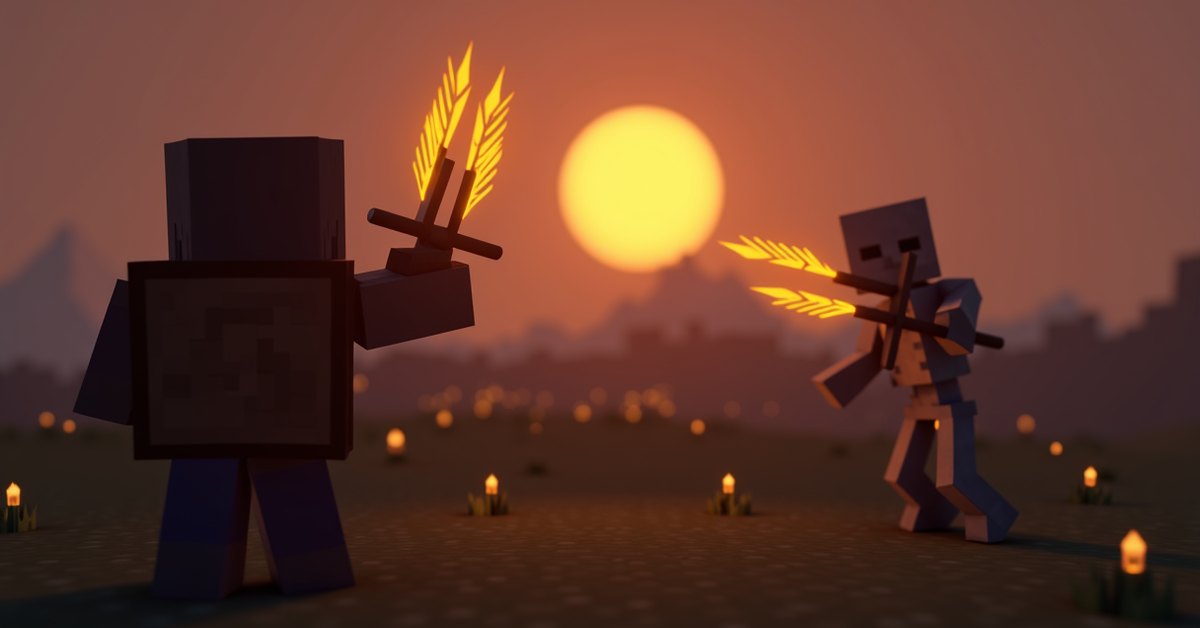
Ranged attackers are where the shield shines. Skeletons, strays, and pillagers all fire projectiles that a raised shield stops outright. Walk toward them with the block up and close the gap safely. Blazes are the same idea in the Nether: their fireballs bounce off, so you can push in and trade hits up close.
Melee crowds are manageable too, as long as you face them. During a pillager raid, a shield lets you hold a chokepoint and soak crossbow fire while you pick enemies off one at a time. Just remember the arc only covers the front, so getting surrounded is still dangerous.
A few threats go straight through a block. The warden’s sonic boom ignores shields completely, so blocking does nothing against it and you need to break line of sight instead. Piglin brutes and other axe carriers in Java can disable the shield with a hit, and any damage type that isn’t a frontal attack, like fall damage or lava, is unaffected no matter how well you time the block.
Tips and common mistakes
Raise the shield a moment before the hit lands rather than after. Blocking is about timing, and a shield that goes up late won’t stop the swing that is already connecting.
Keep your shield in the off-hand so your sword or pickaxe stays free. New players often equip it in the main hand and then can’t fight back.
Against skeletons, a shield is one of the cleanest counters in the game. Walk toward them with the shield up and the arrows bounce off, then close the distance and strike.
Watch for axe enemies in Java. If you see a vindicator or a pillager captain with an axe, don’t rely on the shield alone, because they can disable it and leave you open.
Frequently asked questions
Can you block while holding a sword?
Yes, as long as the shield is in your off-hand. You raise the shield with the off-hand and keep the sword in your main hand, ready to swing the moment you drop the block.
Does a shield block creeper explosions?
It blocks the direct portion of the blast aimed at you and greatly reduces the rest, so a raised shield can be the difference between surviving a creeper and dying to one. You still take some damage from a close explosion.
Why does my shield keep getting broken through?
In Java Edition, an axe hit disables your shield for about five seconds. If enemies keep getting past your block, an axe mob is likely the reason. Deal with that mob first or back off until the shield comes back.
Can you repair a shield?
Yes. Use an anvil with wooden planks, combine two damaged shields, or put Mending on it so experience repairs it as you play.
Do shields work in the off-hand and main hand?
They work in both, but the off-hand is almost always better because it leaves your main hand free to attack or mine. Using a shield in the main hand means you can’t do anything else while blocking.
Can you put any banner on a shield?
Yes. Any banner you have crafted can be applied to a shield, including ones with multiple layered patterns. The design carries over exactly.
The bottom line
A shield costs six planks and one iron ingot and pays for itself in the first skeleton fight you walk into. Learn the timing, keep it in your off-hand, and respect the axe if you play Java, and it becomes the piece of gear you reach for in almost every fight.