What is a smithing table?
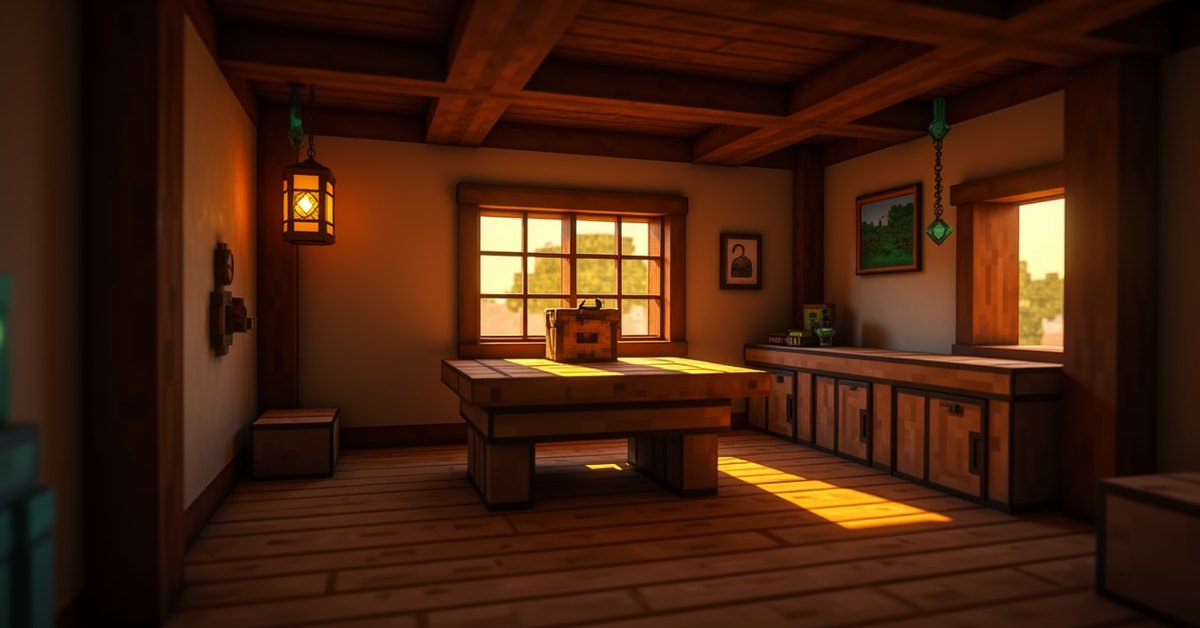
A smithing table is a utility block used to upgrade diamond gear into netherite and to apply decorative armor trims. It has a flat wooden top with two iron-capped corners, and you open it the same way you open a crafting table.
Smithing tables generate naturally inside toolsmith houses in villages, so you may run into one before you ever craft your own. They are cheap to make, though, and most players just build one when they need it.
The block does two separate jobs. For you as a player, it is the only way to turn diamond tools and armor into the stronger netherite versions, and since the Trails & Tales update it also applies armor trims. For villagers, it works as a job site block that turns an unemployed villager into a toolsmith.
How to craft a smithing table
The recipe takes two iron ingots and four wooden planks. Place the two iron ingots across the top row of a crafting grid, then put a plank in each of the two squares directly below them and the two squares below that. The planks form a 2×2 block sitting under the pair of ingots.
Any plank type works, and you can mix them. Oak, spruce, bamboo, crimson, or any other plank fills the same four slots, and the finished table looks identical no matter which wood you use.
Two iron ingots is a small cost, so there is no reason to put this off. If you have done any early mining you almost certainly have the iron already, and four planks come from a single log.
How to upgrade diamond gear to netherite
Turning diamond equipment into netherite is the main reason to keep a smithing table around. Netherite tools and armor have higher durability than diamond, give a small attack and armor boost, and survive lava and fire instead of burning up. Drop a netherite item in lava and it floats on the surface rather than despawning, which can save an expensive tool from a careless mistake.
Open the smithing table and you will see three input slots in a row with an output slot on the right. Each input slot has a specific job:
- The first slot takes a smithing template. For a netherite upgrade, that is the Netherite Upgrade Smithing Template.
- The second slot takes the diamond item you want to upgrade.
- The third slot takes one netherite ingot.
Fill all three and the netherite version appears in the output slot. The upgrade keeps every enchantment and any custom name on the item, and it costs no experience levels. You can run a fully enchanted diamond pickaxe through the table and lose nothing in the process.
Only the nine diamond items can be upgraded: the sword, pickaxe, axe, shovel, and hoe, plus the helmet, chestplate, leggings, and boots. Iron and gold gear cannot skip straight to netherite, and items like the bow and shield have no netherite tier at all.
Getting a Netherite Upgrade Smithing Template
The Netherite Upgrade Smithing Template comes from bastion remnants in the Nether. It shows up in their loot chests, and one always generates on display inside a bastion’s treasure room.
You only need to find one, because the template can be copied. Place it in a crafting grid with seven diamonds and one netherite ingot, and you get the original back along with a second copy. Duplicating it that way is expensive, so many players simply hold on to a single template and reuse it for every upgrade.
How to apply armor trims
The Trails & Tales update added armor trims, and the smithing table is where you put them on. A trim is a decorative pattern laid over a piece of armor. It changes only the look of the armor, so trims are purely cosmetic and never affect protection.
Applying a trim uses the same three slots as a netherite upgrade:
- The first slot takes an armor trim smithing template, such as the Coast, Sentry, or Ward pattern.
- The second slot takes the armor piece you want to decorate.
- The third slot takes the trim material.
The material in the third slot sets the color of the trim. Iron, copper, gold, lapis lazuli, emerald, diamond, netherite, redstone, amethyst, and quartz each produce a different shade, so one pattern can look completely different depending on what you feed it.
Armor trim templates are spread across the game’s structures, and each pattern has its own source. The Sentry trim comes from pillager outposts, the Coast trim from shipwrecks, and the Ward and Silence trims from ancient cities. Like the netherite template, trim templates can be duplicated using seven diamonds and a block of the material from the structure where the template was found.
How the smithing table has changed
The smithing table has not always done what it does now. It arrived in version 1.14, the Village & Pillage update, as little more than a job site block. Back then it had no crafting function at all and existed only to give toolsmith villagers somewhere to work.
The Nether Update, version 1.16, gave it a real purpose by adding netherite and making the table the place to upgrade diamond gear. At that point an upgrade needed only the diamond item and a netherite ingot, with no template involved.
Version 1.20, Trails & Tales, changed the process again. It introduced smithing templates and armor trims, so netherite upgrades started requiring the Netherite Upgrade Template, and the table picked up its second job of applying trims. If you played years ago and stopped, this is the change most likely to catch you out.
Using a smithing table as a villager job site
A smithing table is the job site block for the toolsmith profession. Put one near an unemployed adult villager in a village and the villager can claim it, taking the toolsmith job.
Toolsmiths are one of the better villagers to set up. They buy coal and iron, which gives you something to do with mining surplus, and at higher trade levels they sell enchanted diamond axes, pickaxes, shovels, and hoes for emeralds, often cheaper than enchanting that gear yourself.
To steer a specific villager into the job, remove any job site block they are already tied to, then place a smithing table within range of both the villager and their bed. A villager who has never traded with a player will keep switching professions when you change their job site, so you can break and replace the table to reroll a toolsmith’s trades until the offers look good.
Tips and common mistakes
A few things worth knowing before you rely on a smithing table:
- You only ever need one. The table is not consumed when you use it, so a single smithing table covers every netherite upgrade and every armor trim in your world.
- You need a template for both jobs. Since Trails & Tales, a netherite upgrade fails without the Netherite Upgrade Template in the first slot. Players coming back from older versions tend to miss this.
- Upgrading to netherite costs no experience. Enchant your diamond gear first, then upgrade it, and the enchantments move straight across.
- Only diamond gear becomes netherite. There is no shortcut from iron or gold, and the bow, crossbow, and shield have no netherite version.
- Armor trims are cosmetic. A trimmed chestplate gives exactly the same protection as a plain one.
- An axe breaks the table fastest, but any tool or your bare hand will still drop it to pick back up.
Frequently asked questions
What is a smithing table used for in Minecraft?
It does two things: it upgrades diamond tools and armor into netherite, and it applies decorative armor trims. It is also the job site block that turns a villager into a toolsmith.
How do you craft a smithing table?
Combine two iron ingots and four wooden planks. Put the iron across the top row of the crafting grid and the four planks in a 2×2 square beneath it. Any plank type works.
Do you need a smithing template to upgrade to netherite?
Yes, since the Trails & Tales update. The upgrade will not work without a Netherite Upgrade Smithing Template in the first slot. That template is found in bastion remnants in the Nether.
Can you upgrade iron or gold gear to netherite?
No. Only diamond tools and armor can be upgraded. You have to reach the diamond tier first, then use the smithing table to go from diamond to netherite.
Does upgrading to netherite keep enchantments?
Yes. Every enchantment and any custom name on the diamond item carries over to the netherite version, and the upgrade costs no experience levels.
How many smithing tables do you need?
One. Using the table does not destroy it, so a single smithing table handles every upgrade and trim for an entire world.
Where do you find a smithing table in a village?
Inside a toolsmith’s house. If a village has a toolsmith building, a smithing table generates there as part of the structure.
How do you make a villager a toolsmith?
Place a smithing table within range of an unemployed adult villager who has a bed. The villager claims the table as a job site and becomes a toolsmith.
One smithing table is all you need
For two iron ingots and a handful of planks, the smithing table opens the door to the strongest gear in the game and every armor trim alongside it. Craft one early, keep it somewhere safe in your base, and the only thing left to track down is the templates that feed it.