Snow and powder snow are not the same block
Minecraft has two white blocks that both call themselves snow, and they could not behave more differently. Regular snow is harmless. You walk over it, scoop it with a shovel, and pack it into snowballs and snow blocks. Powder snow is a trap. It looks like a solid floor, but you sink into it like quicksand, and if you stay too long it freezes you and starts chipping away at your health.
Telling them apart at a glance is hard, which is exactly why powder snow works as a trap. This guide covers both: how each one forms, how to collect it, what it does, and the safe ways to use the dangerous one.
Regular snow: layers, blocks, and snowballs
Regular snow shows up in three forms, and they all trace back to the same material.
Snow layers
A snow layer is the thin white coating you see on the ground in cold biomes after it snows. It appears in places like snowy plains, snowy taiga, snowy slopes, groves, and frozen peaks whenever weather is falling. A single layer is shallow enough to walk across without slowing down. Layers can stack on top of each other to build up a deeper covering, and a full stack of eight layers fills a complete block height.
Snow layers are soft. You can break them instantly with your hand, but to get anything useful out of them you want a shovel.
Snow blocks
A snow block is the full, solid white cube. You craft one by placing four snowballs in a square in the crafting grid. Snow blocks are the building material version of snow: stackable, easy to mine, and the base ingredient for a snow golem. Mine a snow block with a shovel and it drops four snowballs, so the recipe is reversible if you ever need the snowballs back.
Snowballs
Snowballs are the throwable item. You get them by breaking snow layers or snow blocks with a shovel. They stack up to 16, and you can throw them at anything. Against most mobs a thrown snowball does no damage but still applies knockback, which can be handy for shoving a creeper off a ledge. The exception is the blaze, which takes real damage from snowballs. Beyond combat, snowballs are what you craft into snow blocks and what a snow golem launches at its targets.
How to collect regular snow
The tool you use decides what you walk away with. A plain shovel turns snow into snowballs: one snowball per layer when you break a layered block, and four when you break a snow block. That is what you want when you plan to craft or build snow golems.
If you want to keep the snow in its original layered form, put Silk Touch on your shovel. With Silk Touch, breaking a snow layer drops the snow layer item itself instead of snowballs, so you can pick up partial layers and replace them exactly as they were. This matters for decoration, where the height of a layer changes the look of a build.
Snow layers also regenerate on their own. Leave an open patch of ground in a snowy biome, wait for the weather, and a fresh layer settles back over it, which makes snowballs effectively renewable.
Powder snow: the trap that looks like a floor
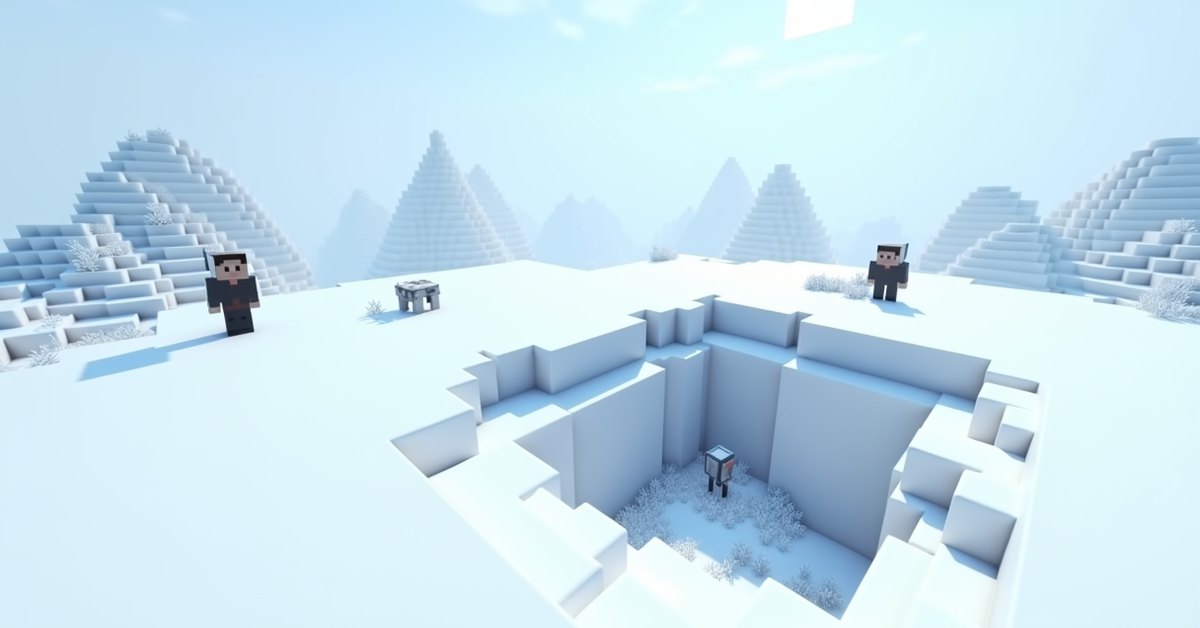
Powder snow arrived with the Caves and Cliffs update and changed how snowy mountains play. From above, a patch of powder snow reads as ordinary ground. Step onto it without preparing and you drop straight in, the same way you would sink into deep water, except this material also tries to freeze you solid.
You find it naturally in the colder mountain biomes: grove, snowy slopes, jagged peaks, and frozen peaks. It tends to collect in dips and hollows where an unlucky traveler can wander in without warning.
How powder snow behaves
Three things happen when you enter powder snow, and knowing each one is the difference between using it and dying in it.
First, you sink. Your character slides down into the block and moving around inside it is slow. To climb back out, hold the jump key and you slowly rise to the surface. Panic-sprinting sideways usually just buries you deeper, so the calm move is to jump your way up.
Second, you freeze. Stand in powder snow without the right gear and a frost effect creeps in from the edges of your screen. After a few seconds the freeze meter fills and you start taking freeze damage, which keeps ticking until you climb out and warm up. It is slow damage, but in a deep pit with no easy exit it adds up fast.
Third, it puts out fire. If you are burning, dropping into powder snow extinguishes the flames immediately, which is a small upside if you fall in while on fire.
The counter to all of this is leather. Wearing leather boots lets you walk across the top of powder snow without sinking at all, so you can cross a field of it like a normal floor. To drop in on purpose while wearing the boots, sneak as you step on. Wearing leather armor also protects you from the freeze damage, so a player kitted out in leather can sit in powder snow unharmed.
One more useful trait: powder snow cancels fall damage. Land in a patch from any height and you take no damage from the drop, the same as landing in water.
How to get powder snow
You cannot mine powder snow into an item. Hit it with any tool and it simply vanishes. The only way to pick it up is with a bucket. Use an empty bucket on a powder snow block to scoop it into a powder snow bucket, then use that bucket to place the block anywhere you like, even in a warm biome where it would never form on its own.
For a renewable supply, use a cauldron. Place a cauldron outdoors in a biome where snow is falling and it slowly fills with powder snow over time. Once it is full, scoop it out with a bucket and the cauldron starts filling again. This is the standard way players farm powder snow for traps and builds without hiking back up a mountain every time.
What to build with each
Regular snow and powder snow point you toward different projects.
With snow blocks, the headline build is the snow golem. Stack two snow blocks and place a carved pumpkin on top to bring one to life. A snow golem throws snowballs at hostile mobs, leaves a trail of snow layers as it walks through cold biomes, and works well as a distraction or a perimeter guard. Keep it out of warm biomes and rain, though, because heat and water both damage it. Snow blocks and layers also make clean white building material for winter bases and decorative trim.
Powder snow earns its place as a trap. Because most mobs sink in and take freeze damage just like you do, a hidden pit of powder snow under a thin disguise drops enemies into a slow freeze. It also doubles as a soft landing pad: place a bucket of it at the bottom of a long drop and you can dive in from the top of a build or off an elytra flight without losing a heart.
Java and Bedrock differences
The two editions handle snow accumulation differently. In Bedrock Edition, falling snow can pile into multiple layers on the ground during a single snowfall, so deep cover builds up naturally. In Java Edition, natural snowfall settles a single layer, and deeper stacks come from placing snow yourself. Powder snow exists in both editions and works the same core way in each: you sink, you freeze, and leather is your way out. If you are following a tutorial that assumes thick natural snow, check which edition it was made for before you expect the same buildup.
Frequently asked questions
Can you walk on powder snow?
Yes, if you wear leather boots. With boots on you stand on top of powder snow like solid ground. Without them, you fall straight through.
How do you pick up powder snow?
Only with a bucket. Use an empty bucket on the block to collect it, then use the filled bucket to place it again. No tool will drop it as an item.
Does powder snow stop fall damage?
It does. Landing in powder snow cancels all fall damage, which makes it a reliable landing pad under tall drops and elytra courses.
How many snowballs make a snow block?
Four. Place four snowballs in a two-by-two square in the crafting grid to make one snow block, and mining that block with a shovel gives the four snowballs back.
Why does my snow keep melting?
Snow layers and snow blocks melt when the light or temperature around them is too high. Bright light sources nearby and warm biomes both cause it, so snow placed indoors next to torches or out in a hot biome will not last.
Can you get powder snow without finding a mountain?
Yes. Set a cauldron outside in any biome where snow falls and it fills with powder snow on its own. Scoop it with a bucket and you have a portable supply you can place wherever you want.
Which one to reach for
If you want a building block or ammunition for a snow golem, regular snow and a shovel are all you need. If you want a hidden hazard for mobs or a no-damage landing spot, powder snow and a bucket are the tools. The danger of powder snow is also its value, so handle it with leather on and it turns from a threat into one of the more useful blocks on a snowy map.