Sculk is the strange blue-black growth that covers the floors and walls of the deep dark. It arrived in version 1.19, the Wild Update, and it behaves unlike anything else in the game. It spreads on its own, reacts to movement, hands out experience, and in the wrong spot it can call down the most dangerous mob Minecraft has.
This guide covers the whole sculk family: what each block does, where to find it, how it grows, how to harvest it without losing the drop, and how it connects to the warden. If you have only ever seen sculk from a distance and backed away slowly, this is the rundown that makes it useful instead of scary.
What is sculk?
Sculk is not a single block. It is a set of related blocks that all share the same glowing, organic look and the same origin in the deep dark biome. The base block is simply called sculk, and it acts like a dark carpet of growth over stone. Around it you find sculk veins, sculk catalysts, sculk sensors, and sculk shriekers, each with its own job.
The thing that makes sculk special is that it is alive in a way ordinary blocks are not. It feeds on the experience that mobs drop when they die. Walk through a patch of it and the sensors will hear you. Stand on the wrong block and you might wake something up. Treat it with respect and it becomes one of the best experience sources in the game.
Where to find sculk
Sculk only generates naturally in the deep dark, a biome that sits deep underground in the deepslate layer. Look for it well below sea level, usually under Y 0, often around Y -35 and lower. The deep dark forms under mountainous regions where the surface climbs high, because the biome generates at the bottom of tall terrain.
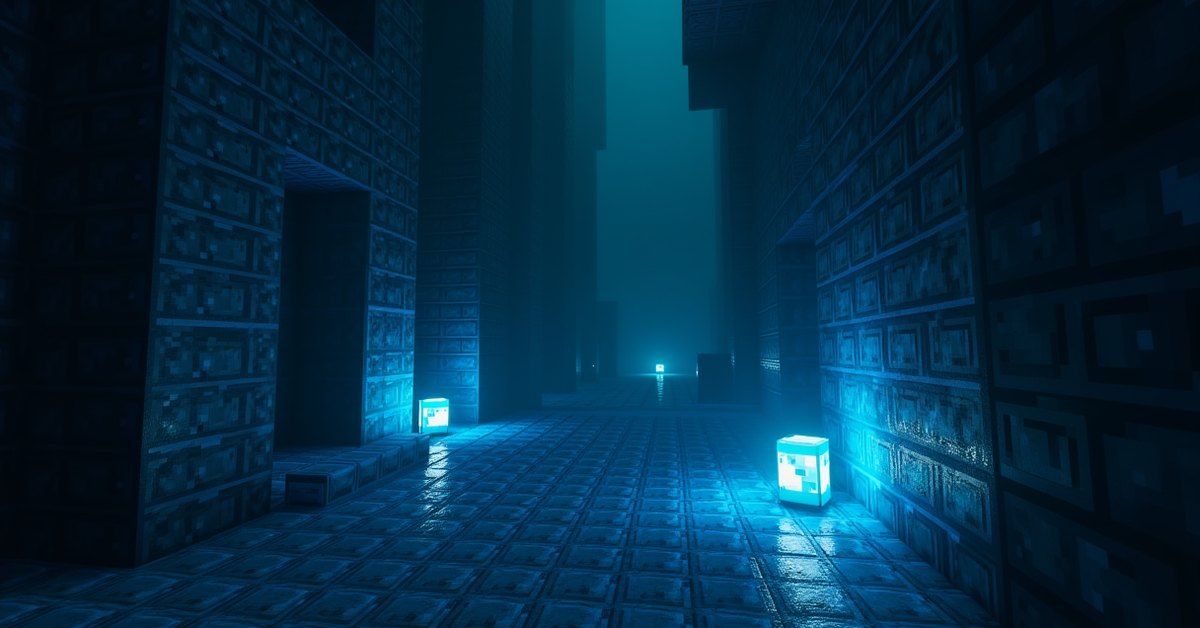
You will know a deep dark when you see it. The lighting goes flat and gloomy, sculk patches coat the ground, and sculk sensors and shriekers dot the area. Many deep dark biomes also contain an ancient city, a sprawling ruin built from deepslate bricks and dark oak. Ancient cities hold some of the best loot chests in the game, including the swift sneak enchantment book, but they are thick with shriekers, so every step matters.
There is no way to find sculk on the surface or in any other biome. If you want it, you go down.
The sculk family, block by block
Sculk
The plain sculk block is the dark, speckled growth that forms the floor of the biome. On its own it does nothing except look the part and drop a little experience when you mine it. Its real value comes from how it appears: a sculk catalyst can spread it across nearby blocks, which is the basis for every sculk experience farm.
Sculk vein
Sculk veins are the thin, flat decorations that climb over the surfaces of other blocks. They are not a full block, so they sit on top of stone, walls, and ceilings like a coating. Veins spread along with sculk when a catalyst feeds, and they are popular as a decorative texture in builds that want a creepy, overgrown feel.
Sculk catalyst
The sculk catalyst is the heart of the whole system. When a mob that gives experience dies within eight blocks of a catalyst, the catalyst absorbs that experience and uses it to spread sculk and sculk veins over the blocks around the death. The more experience the mob would have dropped, the more sculk appears. No catalyst, no spreading. This is the block you build an experience farm around.
Sculk sensor
A sculk sensor detects vibrations. Footsteps, breaking a block, a chest opening, an arrow landing, even a fish swimming nearby all count as vibrations. When the sensor picks one up within range, it emits a redstone signal for a short time, then goes on cooldown before it can fire again. Different vibrations produce different signal strengths, which makes the sensor a powerful and slightly tricky redstone component. Wool blocks vibrations, so placing wool between a source and a sensor will silence it.
Calibrated sculk sensor
Added in 1.20, the calibrated sculk sensor is a tuned version of the standard one. You feed it a redstone signal on its back input, and that signal tells it which single vibration frequency to listen for while ignoring everything else. It also reaches a bit farther than a normal sensor. For redstone builders who want a sensor that only reacts to one specific event, this is the upgrade.
Sculk shrieker
The sculk shrieker is the dangerous one. When it is triggered, it lets out a loud shriek and hits nearby players with the darkness effect, which makes your screen pulse to near-black and ruins your visibility. Naturally generated shriekers also build toward something worse. Each shriek raises a hidden warning level, and once that level is high enough, the shrieker summons a warden. Shriekers you place yourself do not summon the warden, so the ones to fear are the ones already sitting in the deep dark.
How sculk spreads
Sculk does not grow on a timer. It grows on death. The only natural way to make more sculk is through a sculk catalyst, and the catalyst only acts when an experience-dropping mob dies close to it.
Here is the loop. A mob dies within range of a catalyst. The catalyst takes the experience that mob would have dropped and converts it into a “charge.” That charge travels out and turns nearby blocks into sculk and sculk veins. A bigger experience drop means a bigger spread. Baby animals and mobs killed with no experience produce nothing, because there is no charge to feed the growth.
One important limit: a catalyst spreads sculk and veins, but it does not create new sensors or shriekers. Those only come from natural generation. So an experience farm built on a catalyst is safe from spawning extra shriekers, which is exactly what you want.
How to harvest sculk without wasting it
Every sculk block is mined fastest with a hoe. That is the unusual part that catches people out. A pickaxe will eventually break sculk, but a hoe does it far quicker, so keep one in your hotbar before you start digging.
Whether you keep the block depends on silk touch. Mined with a silk touch tool, every sculk block drops itself so you can take it home and build with it. Mined without silk touch, the blocks give experience instead:
- Plain sculk drops 1 experience.
- Sculk catalysts, sensors, and shriekers each drop about 5 experience.
- Sculk veins need silk touch to drop at all.
This is why a sculk farm doubles as an experience farm. If you only want levels, mine the spread sculk with a plain hoe and pocket the experience. If you want the blocks for decoration or redstone, bring silk touch.
Sculk and the warden
You cannot talk about sculk without talking about the warden. The warden is a blind, towering mob that lives nowhere except the deep dark, and it is summoned by sculk shriekers when a player makes too much noise nearby.
Because it is blind, the warden hunts by vibration and smell. Sprinting, breaking blocks, and fighting all draw it straight to you. Crouch-walking makes no vibration, so sneaking is the single most useful skill in an ancient city. Throwing a snowball or firing an arrow at a far-off spot creates a vibration there and pulls the warden away from you. Wool placed on the floor muffles your footsteps from sensors and shriekers.
If the warden does reach you, it hits brutally hard in melee and has a ranged sonic boom that passes through blocks and ignores armor. There is no real “fighting” it early in the game. The play is to avoid waking it, and if you do, to run, climb, and break line of vibration until it gives up and burrows away.
What sculk is actually good for
Three things make sculk worth the trip down. The first is experience. A catalyst-based farm that funnels mob deaths into one spot lets you mine huge amounts of experience from the sculk it leaves behind, which is excellent for enchanting and repairing gear.
The second is redstone. Sculk sensors react to movement without any wiring, so they enable hidden doors, intruder alarms, and contraptions that respond to a player simply walking past. The calibrated version lets you filter for one exact trigger.
The third is decoration. The dark, glowing texture of sculk and sculk veins gives builds a haunted, otherworldly look that no other block set matches. Harvested with silk touch, it is a unique palette for spooky bases, dungeons, and horror maps.
Tips and common mistakes
Use a hoe, not a pickaxe. People burn through time mining sculk with the wrong tool because every other underground block wants a pickaxe.
Bring silk touch only if you want the blocks. For a pure experience run, a cheap hoe is all you need.
Carry wool into ancient cities. A stack of wool to step on and to wall off shriekers is your best defense against summoning a warden.
Never break a sculk shrieker by stepping on it to test it. Each activation in a natural deep dark pushes the warning meter up. Three or four careless triggers and the warden arrives.
Light is not the answer in the deep dark. The warden does not care about light level, so torches will not keep it away. Silence does.
Java and Bedrock differences
Sculk behaves almost identically across both editions. The blocks, the spreading, the warden summon, and the silk touch rules are the same. Small timing and redstone-signal quirks can differ between versions, as they often do with redstone components, so if you are building a precise sensor circuit, test it in your own world before you rely on the exact numbers.
Frequently asked questions
Where does sculk spawn?
Only in the deep dark biome, deep underground in the deepslate layer, usually below Y 0. It does not generate anywhere else.
What is the fastest way to mine sculk?
A hoe. Every block in the sculk family breaks fastest with a hoe, not a pickaxe.
Do I need silk touch to collect sculk?
Yes, if you want the actual block. Without silk touch, sculk blocks drop experience instead of themselves, and sculk veins drop nothing at all.
Does mining sculk summon the warden?
Mining plain sculk, veins, catalysts, and sensors is safe. Only activating a naturally generated sculk shrieker raises the warning level that eventually summons a warden.
Can I grow my own sculk?
Yes. Place a sculk catalyst and kill experience-dropping mobs within eight blocks of it. The catalyst spreads sculk and veins around each death, though it will never create new sensors or shriekers.
Does sculk give good experience?
It does. A catalyst farm turns mob deaths into a field of sculk you can mine for experience, which makes it one of the better renewable experience sources for enchanting and repairs.
The takeaway
Sculk rewards players who slow down. Sneak through the deep dark, leave the shriekers alone, and you walk out with experience, a rare building material, and the parts for sensor-driven redstone. The warden is only a threat to people in a hurry.