What is a stained glass pane?
A stained glass pane is the thin, colored version of a glass pane in Minecraft. You make it by crafting a stained glass block down into a pane, the same way you turn regular glass into a regular pane. The result is a flat panel about a pixel thick that snaps onto blocks next to it, which makes it the go-to choice for windows, partitions, and any build where you want color and light without taking up the full block of space.
There are 16 colors, one for every dye in the game. Stained glass panes look the same as stained glass blocks from across the room, but they take up far less room and use less material. If you’re building a long stained glass wall or a row of windows, panes are almost always the better pick.
How to craft stained glass panes
You have two ways to make stained glass panes, and the right one depends on what you have on hand.
Recipe 1: from stained glass blocks (best for bulk)
Place 6 stained glass blocks of the same color in the bottom two rows of a crafting table, filling all six slots. You get 16 stained glass panes. The color matches whichever stained glass you used.
This recipe is the most material-efficient. Six blocks turn into 16 panes, which works out to one block per 2.67 panes. If you already have a stack of stained glass, this is how you turn it into a stack of panes fast.
Recipe 2: from plain glass panes and dye
Put 8 regular glass panes around a single dye in a 3×3 crafting grid (8 panes in the outer slots, dye in the center). You get 8 stained glass panes in the matching color.
This recipe is handy when you have a chest full of plain glass panes from an old build and want to recolor them without crafting back through the stained glass block step. The math is even: 1 pane in, 1 pane out, plus 1 dye for the whole batch of 8.
Which recipe to use
If you’re making panes from scratch (sand smelted into glass), go through the stained glass block recipe. You’ll get more panes per resource. If you already have plain glass panes lying around, the dye-in-the-middle recipe is faster than uncrafting back to blocks.
All 16 stained glass pane colors
Stained glass panes come in the same 16 colors as wool, concrete, terracotta, and most other dyed blocks:
- White
- Orange
- Magenta
- Light blue
- Yellow
- Lime
- Pink
- Gray
- Light gray
- Cyan
- Purple
- Blue
- Brown
- Green
- Red
- Black
Each one matches a single dye. White stained glass pane uses white dye (made from bone meal or a lily of the valley). Black uses ink sacs. Orange comes from an orange tulip or by combining red and yellow dye. The rest follow the same pattern.
One thing worth knowing about the color black: black stained glass panes are not fully opaque. They still let some light through, just heavily tinted. If you want a true blackout window, you need a solid block, not glass.
How stained glass panes behave
Placement and connections
When you place a stained glass pane, it starts as a small post in the center of the block space. As soon as you place another pane next to it, or set it next to a solid block or an iron bar, the pane extends to meet whatever it’s connecting to. That’s what makes long pane walls look like a single continuous panel instead of a row of disconnected posts.
Panes connect to other glass panes (stained or plain), iron bars, and most full solid blocks. They don’t connect to fences or to thin blocks of a different type. If your pane wall has a weird gap at the end, drop a solid block on the far side and the last pane will reach across.
Light and transparency
Stained glass panes let light through, but the light that comes out the other side picks up the color of the pane. If you put a torch or other light source behind a colored pane, the area in front gets a tint. This is the trick people use to make colored mood lighting without messing with lamps and redstone.
Mobs can see through stained glass panes the same way they see through regular glass and stained glass blocks. If you build a window over your bed, a creeper across the room can still find you. Panes block movement (mobs won’t try to walk through them) but they don’t break line of sight.
Beacon beams
Stained glass panes color a beacon beam. Place one or more panes directly above the beacon and the beam picks up the color. Stack different colored panes and the beam blends through them in order. A beam shooting up through cyan and then magenta will mix into a purplish shade above the magenta layer.
Panes work the same as full blocks for this. Players sometimes assume you need a full stained glass block to color a beam, but a single pane does the job for a sixth of the material.
Pistons, water, and gravity
Stained glass panes ignore gravity. They float in place once placed. Pistons can push them, and water flows around them without breaking them. They don’t shatter from a stray explosion unless the blast is strong enough to break a regular glass block.
Endermen can’t pick up stained glass panes, so you don’t have to worry about a window getting rearranged overnight.
How to mine stained glass panes
Stained glass panes break instantly with your bare hand or any tool. The catch: they drop nothing unless you mine them with a tool that has the Silk Touch enchantment.
If you swing at a stained glass pane with a normal pickaxe, sword, or your fist, the pane disappears and you get nothing back. With Silk Touch on the tool (any tool that can hold the enchantment will do), the pane drops as an item and you can place it again somewhere else.
This is the same rule as regular glass, stained glass blocks, and ice. Silk Touch or no recovery. If you’re tearing down a stained glass build to reuse the material, put Silk Touch on a cheap shovel or sword you don’t care about and use that for the demo work. It saves enchanting a real tool.
What stained glass panes are good for
Windows
The obvious use. Panes let you make large window walls without spending a full block per square. A 4×4 window made of stained glass panes uses 16 panes, which is one batch of the bulk recipe with leftovers. The same window in stained glass blocks would use 16 full blocks and look identical from across the room.
Stained-glass-style walls
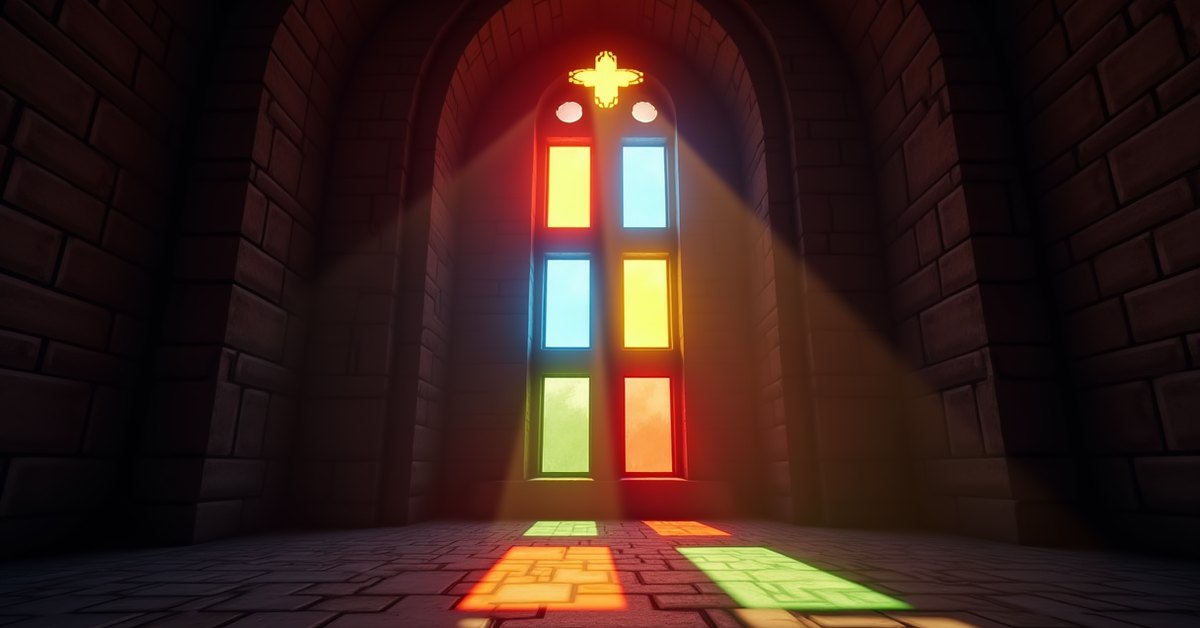
For chapel, library, or fantasy castle builds, alternating colored panes inside a frame of dark wood or stone bricks gives you a believable stained glass window without needing custom textures or mods.
Colored mood lighting
Place a sea lantern, glowstone block, or shroomlight on a ceiling and cover it with a stained glass pane on the face the light shines through. The light comes out tinted. You can match the color to the room’s theme: green for a forest base, blue for an underwater build, red for a Nether-themed room.
Beacon beam coloring
A single stained glass pane above a beacon colors the beam for the cost of one dye plus eight glass panes. If you want a multi-color beam that shifts as it rises, stack different colored panes one above the other.
Separators and partitions
Inside a base or shop layout, panes work as visual separators that still let you see through. They’re useful for storage rooms where you want to display items behind glass, or for villager trading halls where you want to see your villagers without giving outside mobs line of sight to them.
Common mistakes
The most common mistake is mining a stained glass pane wall with the wrong tool and watching all the panes pop out of existence. If you place 60 panes for a big window and decide to move them later, you need Silk Touch first. Plan the location before you commit.
Another one: mixing pane colors at the boundary. Two stained glass panes of different colors will connect to each other, but the seam between them shows clearly because each pane extends to meet the other in the middle of the block. If you want a clean color transition, set a solid block (any solid block works) between the two colors to give each section its own frame.
Don’t forget that stained glass panes don’t stop hostile mobs from spawning underneath. Mob spawning is based on the light level on the floor, not on what’s overhead. If you build a glass-paned roof but leave the floor below dark, you can still wake up to zombies indoors. Light the floor.
Frequently asked questions
How many stained glass panes can you get from one stained glass block?
You get 16 panes from 6 blocks, which works out to roughly 2.67 panes per block. For a single small window, less than one block’s worth is enough.
Can you dye a stained glass pane a different color after crafting?
No. Once a stained glass pane is a specific color, that’s it. You’d have to break it down and recraft, but breaking it without Silk Touch loses the material. Pick the color before you craft.
Do stained glass panes block beacon beams?
No, they color them. Place a pane directly above the beacon (at any height in the beam’s path) and the beam takes on the pane’s color. Stack different colors for a multi-section beam.
Can mobs see through stained glass panes?
Yes. Like regular glass and stained glass blocks, panes don’t block line of sight. A creeper across the room will see you through the window. Panes do block movement, so a zombie won’t try to walk through them, but it can still target you.
Do stained glass panes connect to fences?
No. Panes connect to other panes (any color, stained or plain), iron bars, and most full solid blocks. They don’t connect to fences or to thin blocks of a different type.
Do you need Silk Touch to mine stained glass panes?
Yes, if you want to keep them. Without Silk Touch, the pane breaks and drops nothing. With Silk Touch on any tool that can hold the enchantment, the pane drops as an item.
Can endermen pick up stained glass panes?
No. Stained glass panes aren’t on the list of blocks endermen can carry, so your colored windows are safe from late-night redecorating.
Worth building with
Stained glass panes look simple but they quietly do a lot. They make big window walls cheap, they color beacon beams for the price of a dye, and they give any base a way to add atmosphere without leaving vanilla. If you’ve never built with them, pick a color and try a 5×5 window over your bed. You’ll see why builders default to them.