What stone is in Minecraft
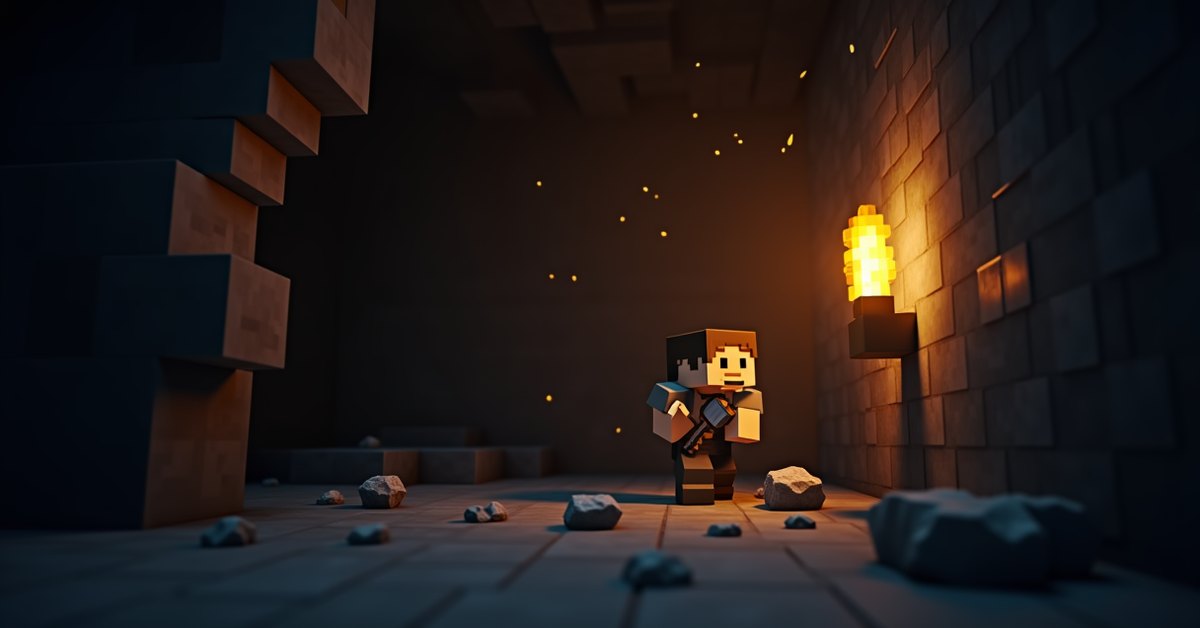
Stone is the gray block that makes up most of the Overworld below the surface. If you’ve ever dug straight down looking for diamonds, almost everything you broke on the way was stone. It generates from Y=0 up to the tops of mountains, sitting underneath the dirt and grass layer and replacing whatever the surface block is once you get a few blocks deep.
The texture is a clean, even gray with no veining or speckles. Stone is the parent material for a long line of building blocks (stone bricks, stairs, slabs, walls, and the smooth stone family), plus stone tools and a handful of redstone parts. Almost everything you build in the early game traces back to two materials, and the other one is wood.
How to mine stone
You need at least a wooden pickaxe to get anything out of stone. Hitting it with your fist or a non-pickaxe tool will break the block, but nothing drops. You burned your durability and got an empty hand.
With a pickaxe, you don’t get a stone block back. You get cobblestone. Cobblestone is what stone turns into when it’s mined the normal way. Every pickaxe in the game pulls cobblestone out of stone, all the way up to netherite. The pickaxe tier only changes how fast you mine, not what drops.
If you want the actual stone block, mine it with a pickaxe enchanted with Silk Touch. Silk Touch tells the game to drop the block as it is, so stone drops stone instead of cobblestone. That’s the only way to collect stone in its raw form without going through a furnace.
Mining speed by pickaxe
Wood is the slowest tool that works. Stone, iron, diamond, and netherite all get progressively faster, with netherite the quickest. Efficiency makes a big difference here, especially in long mining sessions. A diamond pickaxe with Efficiency V can clear a tunnel about as fast as you walk through it.
Stone has a hardness of 1.5 and a blast resistance of 6. Cobblestone has the same blast resistance, so smelting stone doesn’t give you a tougher block against creepers. For real explosion protection, you need obsidian or reinforced deepslate.
How to get the stone block
The most common path is to smelt cobblestone. Put cobblestone in a furnace with any fuel (coal, charcoal, a lava bucket, dried kelp blocks, even spare planks) and you get a stone block out. One cobblestone, one stone, no waste.
To smelt in bulk, line up a row of furnaces, or use a blast furnace if you want it twice as fast. Blast furnaces accept ore-and-stone-type inputs, so cobblestone qualifies. The trade-off is that blast furnaces give no experience on smelt, but for plain stone, that’s nothing worth crying over.
If you already have Silk Touch, you can skip the smelt step. Otherwise, smelting is the practical path. You’ll do it constantly, because almost every stone variant in the game starts with the smooth stone block, not cobblestone.
Crafting with stone
Stone is the input for a big chunk of the stone family. The main recipes:
- Stone slabs: 3 stone in a row gives 6 slabs
- Stone stairs: 6 stone in a stair pattern gives 4 stairs
- Stone bricks: 4 stone in a 2×2 gives 4 stone bricks
- Stone buttons: 1 stone gives 1 button
- Stone pressure plates: 2 stone side by side gives 1 plate
- Smooth stone: smelt a stone block in a furnace
You can skip the grid entirely if you have a stonecutter. Drop one stone block on a stonecutter and you can craft a slab, stair, button, brick, or wall directly, one input at a time. Some stonecutter recipes are less efficient than the crafting table version (stairs in particular give you 1 per stone on a stonecutter vs. 4 per 6 stone in the grid), so it’s a trade between time and material. For one-off jobs, the stonecutter wins. For production runs, the crafting table.
For stone tools, the input is cobblestone, not stone. The pickaxe, axe, shovel, sword, and hoe all use cobble. This trips up newer players who smelt every cobblestone they have before noticing they can’t craft a stone pickaxe. Save your cobble first, smelt the leftovers.
Stone variants and the wider family
Once you have stone, you can keep going. Smelt stone in a furnace and you get smooth stone, which has a flatter, cleaner texture and is what blast furnaces are built with. Combine stone in the crafting table to get stone bricks, then take stone bricks further:
- Stone bricks, from 4 stone in a 2×2 pattern
- Mossy stone bricks, from stone bricks plus a vine or moss block
- Cracked stone bricks, from smelting stone bricks in a furnace
- Chiseled stone bricks, from 2 stone brick slabs stacked or crafted on a stonecutter
You’ll see stone bricks in strongholds, which gives them a built-in ancient feel even when you’ve placed them yourself. Mossy and cracked variants blend into builds where you want age, wear, or jungle creep. Chiseled stone bricks read as decorative trim and look right above doorways or set into walls as accents.
Where stone generates
Stone fills most of the Overworld between Y=0 and the surface. Below Y=0 you start getting deepslate instead, with a transition zone roughly from Y=8 down to Y=0 where they mix. By Y=0 it’s all deepslate. The exact cutoff drifts a few blocks per chunk.
Stone also shows at the surface in stony peaks, windswept hills, stony shores, and the rocky parts of mountain biomes. If you want a lot of stone without digging, hike to a stony peak and start chopping into the side of it. Surface stone is the same block as cave stone, just easier to reach.
Stone buttons and stone pressure plates
Two stone-family redstone parts are worth knowing because their behavior differs from the wooden versions.
Stone buttons can be pressed by players only. Arrows won’t trigger them. That makes stone buttons the right choice for a hidden door or a vault where you don’t want a stray skeleton shot to pop your trap open. Wooden buttons trigger from arrows, so they have a different use case (target traps, redstone pulses from a dispenser, and so on).
Stone pressure plates activate from living mobs only. Dropped items and arrows don’t trigger them. That makes them useful at base entrances where you want a wandering animal or a returning player to open the door, but you don’t want every dropped apple to set off a piston. Wooden plates trigger from anything, so they’re more general-purpose.
Tips and common mistakes
A few things worth knowing:
- If you’re gathering stone for builds, Silk Touch is worth the enchanting table trip. Smelting thousands of cobblestone burns fuel and time you could spend on the build.
- Stone tools use cobblestone, not the stone block. Make the tools you need before you smelt.
- A cobblestone generator (water and lava in a small chamber) gives near-infinite cobble. Pair it with a row of furnaces for endless stone.
- The stonecutter is faster and more inventory-friendly than the crafting table for slabs, stairs, walls, and bricks. Worth crafting one early.
- Stone and cobblestone have the same blast resistance. Neither is creeper-proof. For real explosion resistance, use obsidian.
- Smooth stone slabs are different from stone slabs and use smooth stone as the input. Check your slab type when you’re trying to match a build.
Frequently asked questions
How do you get stone in Minecraft?
Either mine stone with a Silk Touch pickaxe, or smelt cobblestone in a furnace. The Silk Touch path is faster if you have the enchantment; the furnace path is what most players use early on.
Why do I get cobblestone when I mine stone?
Stone always drops cobblestone when mined without Silk Touch. That’s the intended behavior. To collect the stone block itself, smelt the cobble or apply Silk Touch.
Can you craft stone tools from the stone block?
No. Stone tools use cobblestone. The smooth stone block is a building material, not a tool input. Make your stone pickaxe, axe, shovel, sword, and hoe with cobble first, then smelt the leftovers.
What’s the difference between stone and smooth stone?
Smooth stone is stone that’s been smelted a second time. The texture is flatter and lighter. It’s the input for blast furnaces and smooth stone slabs, and a popular building block on its own.
What’s the best Y level for stone?
Anywhere from Y=10 up to the surface works. Below Y=0 you get deepslate, which mines slower. If you only want bulk stone, dig into the side of a mountain at the surface and skip the depth entirely.
Can you mine stone with a wooden pickaxe?
Yes. A wooden pickaxe is the minimum that drops anything. It’s slow and the durability runs out quickly, but it’ll get you started until you can craft a stone pickaxe.
Is stone the same in Java and Bedrock?
The block behaves the same in both editions: same drops, same tool requirements, same recipes. Small differences exist in performance and some redstone interactions, but for stone itself, nothing to learn separately.
Worth keeping in mind
Stone is the most ordinary block in Minecraft and one of the most useful. Once you have a steady source of cobblestone and a furnace running, you can stop worrying about gathering it and start designing builds that use the whole stone family on purpose. The blocks have been in the game for years, but you’ll keep finding new ways to use them.