What a sticky piston does
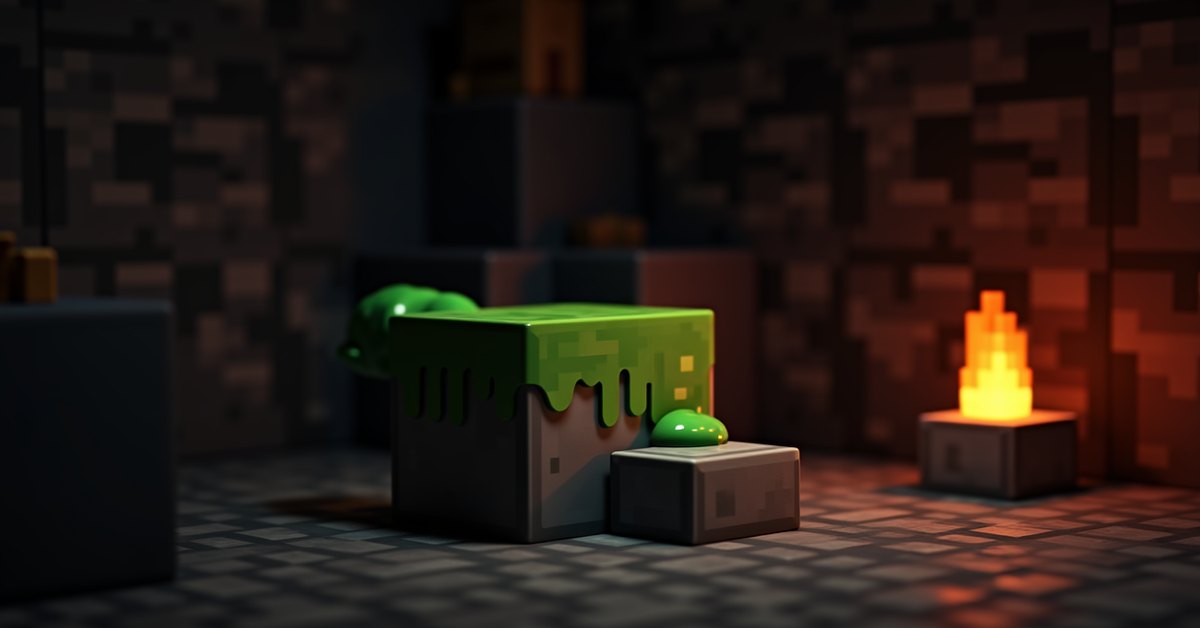
A sticky piston is a redstone block that extends a head, pushes a block, and then pulls that block back when it powers down. A regular piston does the push and leaves the block behind. The slimeball on top of the sticky version is what grabs onto the block on the way back.
If you’ve built anything moving in Minecraft, like a hidden door, a piston elevator, a flying machine, or a long redstone clock, you probably built it with sticky pistons.
How to craft a sticky piston
The recipe is one regular piston plus one slimeball. Any crafting grid works, including the 2×2 in your inventory.
The piston itself takes three wood planks across the top, four cobblestone on the sides and bottom corners, one iron ingot in the middle, and one redstone dust at the bottom-center. That gives you a regular piston. Add a slimeball above it in another crafting step and you’ve got a sticky piston.
The slimeball is the harder ingredient. You can get one from killing a slime (most commonly in swamp biomes at night, or in specific underground “slime chunks” below Y=40), from a baby panda sneezing one out, or by trading with a wandering trader. Slimeballs stack to 64, so a single slime hunt can supply a long redstone session.
Crafting recipe layout
Place the piston in the middle of the grid and the slimeball directly above it. The output is one sticky piston per craft. You can’t put a slimeball on an already-placed piston in the world; the recipe only works in a crafting menu.
How sticky pistons work
A sticky piston has two states. Retracted means the head is pulled in and any block in front of it sits untouched. Extended means the head has pushed out one block, with that block now one space further from the piston. The switch between those two states is what powers everything you can build with them.
When a sticky piston receives a redstone signal, the head shoots out one block. It pushes whatever sits directly in front of it forward by one space. If there’s a chain of blocks lined up, the piston can push up to 12 of them at once. Anything past the 12th block doesn’t move and the piston just sits extended doing nothing.
When the redstone signal turns off, the head retracts. Because of the slime on the head, the block directly in front of it comes back with it. That return trip is the whole reason to use a sticky piston instead of a regular one.
The 12-block push limit
A sticky piston can push up to 12 blocks at once. If you line up 13 or more in front of it and try to push, nothing moves. The piston freezes in place. This cap is a hard rule and it can’t be raised by enchantments, redstone power level, or anything else. Big flying machines and tall elevators get around it by chaining multiple pistons so each one only handles part of the load.
The pull rule
A sticky piston pulls exactly one block back. If a chain of blocks was pushed and the sticky piston is retracting, only the block touching its head comes back. The rest stay where they were unless they’re stuck together with slime or honey.
Blocks sticky pistons can’t move
A handful of blocks ignore pistons entirely. The most common ones in survival play:
- Obsidian and crying obsidian
- Bedrock
- End portal frames, end portals, and end gateways
- Reinforced deepslate
- Spawners and monster boxes
- Beacons
- Most tile entities on Bedrock (chests, furnaces, hoppers, jukeboxes)
- Anchored plants like vines or ladders are pushable but get knocked off as items
Some blocks can be pushed but not pulled. Most tile entities fall into this group on Java edition. The rule of thumb: if a block stores data, like a chest with items or a furnace mid-smelt, a sticky piston won’t be able to grab it on the way back.
Slime blocks and honey blocks are the opposite. They drag other blocks with them. A sticky piston pushing a slime block will move whatever sits next to that slime block in any direction. Honey blocks do the same, with one twist: slime and honey don’t stick to each other, so you can use that pair to build contraptions that detach and reattach as they move.
Common uses for sticky pistons
Hidden doors
The classic first build. A sticky piston, or two of them stacked, pushes a block into a wall to seal a passage and pulls it back when you flip a hidden lever. Two-block-tall doors need two pistons firing at the same time, so the redstone wiring has to reach both with one signal.
Piston elevators
Stack sticky pistons up a column with a slime or honey block in front of each, and you get a vertical conveyor. Slime-block elevators that lift the player straight up are a Java behavior; on Bedrock you’d use bubble columns or honey-block setups instead.
Item filters and storage
Sticky pistons feed into the back of a lot of redstone storage systems. They open and close access to hoppers, switch container connections, and reset state between cycles. A double-piston extender, which is two sticky pistons stacked back to back, gives you a 2-block reach when one isn’t enough.
Flying machines
Java flying machines use sticky pistons, slime blocks, honey blocks, and observers to chase themselves through the air. The sticky piston pushes a slime block, the slime block drags the rest of the contraption with it, and an observer detects the movement and fires the next piston in line. The whole thing inches forward until it hits an obstacle.
Redstone clocks and pulse extenders
Sticky pistons are a clean way to build slow, reliable clocks. A piston-driven clock with a block bouncing between two pistons gives you a long pulse without the burnout problems that plague repeater clocks.
Tips and common mistakes
Powered through the side
A sticky piston can be powered by redstone touching the back, the sides, the bottom, or any solid block adjacent to its base. People build hidden doors and then can’t figure out why the piston is firing on its own. Usually it’s a redstone signal leaking through a wall from an adjacent line. Use opaque blocks where you don’t want signal to spread, or insert a one-tick gap into the wiring to isolate it.
The 0-tick problem on Java
If a sticky piston receives a redstone pulse shorter than one game tick, the head will sometimes extend without pulling the block back when it retracts. The block gets stranded. This is a Java quirk that breaks fast-pulse builds. On Bedrock the rules are slightly different and 0-tick behavior is less reliable to start with. The simplest fix is a one-tick repeater on the input line.
Block drops
If a sticky piston extends, pushes a block, and then gets broken before it retracts, the block in front stays there and the piston drops as an item. If the piston is already extended when you break the head, both the head and the base drop as one sticky piston item. You don’t lose the slimeball.
Honey block confusion
Honey blocks stick to neighbors when they move, but a “honey piston” doesn’t exist. The sticky piston is the only piston variant in the game. Honey blocks add their own movement rules on top of whatever piston pushes them.
QC (quasi-connectivity) on Java
Sticky pistons on Java edition can be powered by a redstone signal one block above the space in front of them, with no wire touching the piston itself. This is called quasi-connectivity. It’s not a bug; it’s an old feature kept for backward compatibility with very old contraptions. Bedrock doesn’t have it. If you’re copying a Java redstone build into Bedrock and it doesn’t fire, this is often the reason.
Java vs. Bedrock differences
The core mechanics are the same on both editions, but there are a few sharp differences. On Java, you can push tile-entity blocks like chests, dispensers, and droppers with a regular piston, but a sticky piston still won’t pull them back. On Bedrock, those blocks usually can’t be pushed at all. Java also has the 0-tick piston behavior and quasi-connectivity described above; Bedrock has neither. Bedrock pistons retract slightly faster than Java pistons, which matters for high-speed redstone timing.
If you’re following a redstone tutorial and your contraption isn’t working, check which edition the tutorial was made for. Most contraption breakdowns between editions come from these piston timing differences.
Frequently asked questions
Can a sticky piston push a slime block stack?
Yes, up to the 12-block limit. The slime block stack will drag any adjacent non-immovable blocks with it. That’s the foundation of slime-block flying machines and elevators.
What’s the difference between a sticky piston and a regular piston?
A regular piston pushes a block and leaves it there when it retracts. A sticky piston pulls the block back with it on the way in. Both push the same; only the retract behavior differs.
Does a sticky piston drop a slimeball when broken?
No. It drops as a sticky piston item, with the slime baked in. You don’t get a separate slimeball back.
Can a sticky piston pull two blocks at once?
No. Only the block directly touching the head retracts. The blocks behind it stay put unless they’re slime or honey and attached to the front block.
Why is my sticky piston only pushing, not pulling?
Usually a 0-tick or sub-tick redstone pulse on Java edition. Add a one-tick repeater on the input line and test again. If it still drops the block, check that the front block isn’t a tile entity like a chest, which a sticky piston can’t grab.
Can sticky pistons push obsidian?
No. Obsidian, bedrock, end portal frames, reinforced deepslate, and a few other heavy blocks are immovable. If you need obsidian to move, you can’t get there with a piston; you’d have to break and replace it.
How many sticky pistons fit into one flying machine?
There’s no fixed cap. The limit is the 12-block push rule for any single piston in the chain. Most flying machines use two to four pistons firing in sequence, plus an observer driving the cycle.
Where sticky pistons fit in your build
Sticky pistons are the difference between a static base and a base that moves. Hidden rooms, retracting bridges, elevators, item sorters, automated farms: they all start with one. Once you’ve stocked a few stacks of slimeballs, sticky pistons stop feeling like a special-occasion block and start feeling like a basic building material.