What is a tadpole in Minecraft?
A tadpole is the baby stage of a frog. It’s a tiny black fish-like mob that swims in water, can’t survive on land, and eventually grows up into one of the game’s three frog colors. Tadpoles arrived with the 1.19 Wild Update, alongside frogs, frogspawn, and the mangrove swamp.
You never spawn a tadpole directly in survival. It hatches from frogspawn, which frogs lay after they breed. If you want frogs of a specific color, the tadpole stage is where you get to control the outcome, so it’s worth understanding before you start a frog farm.
Tadpoles are passive. They won’t attack you, they swim away when you get close, and they die fast if you pull them out of the water. Think of them like fish that happen to turn into frogs.
They’re also small and dark, so a group of tadpoles in murky water is easy to miss. If you’re raising them, a clean pool with clear water and good lighting makes it much easier to keep track of how many you have.
Getting your first frogs
Since tadpoles only come from frogspawn, you need frogs before you can get any. Frogs spawn naturally in swamp and mangrove swamp biomes. If neither is close, a trip to a mangrove swamp is the reliable way to find them.
Once you’ve found a pair, lead them home. Frogs follow a player holding a slimeball, the same item you use to breed them, so you can walk two of them back to base or load them into a boat. You only need two to start, and every future batch of tadpoles traces back to that first pair.
Where tadpoles come from
Tadpoles come from frogspawn, and frogspawn comes from breeding two frogs. There’s no other way to get one naturally.
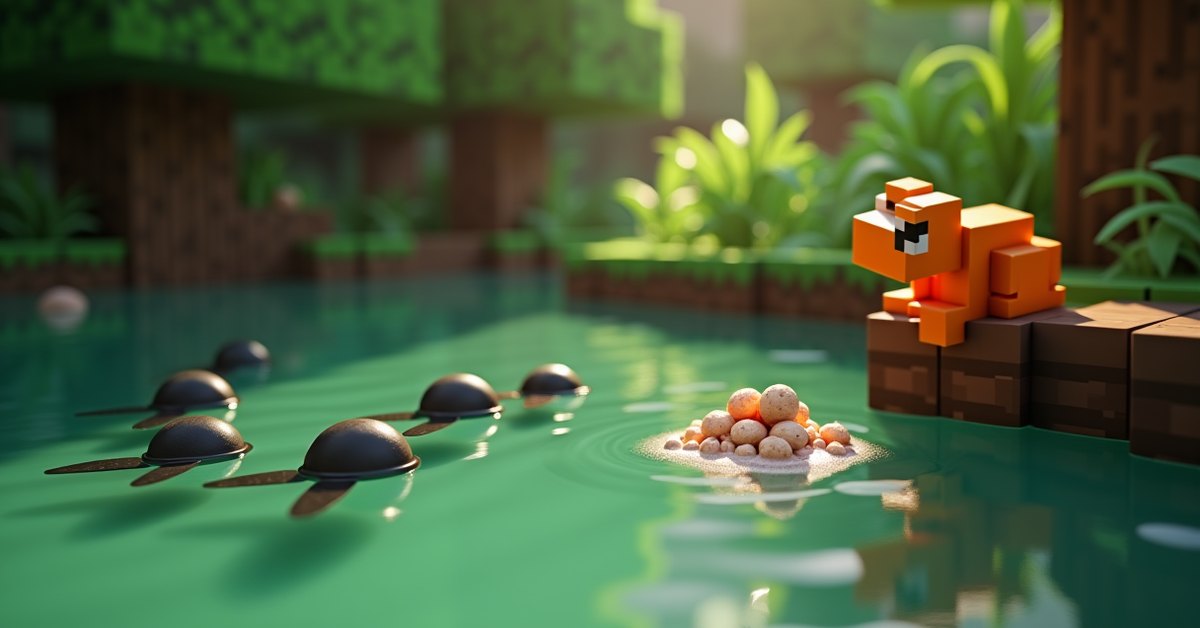
To breed frogs, feed a slimeball to each of two frogs standing near water. They enter love mode, and one of them swims to the nearest water surface and lays a clump of frogspawn on top of a water block. Frogspawn looks like a small speckled mat floating on the surface.
After about ten minutes, the frogspawn hatches and releases several tadpoles into the water below. A single clump usually produces two to five of them. The frogspawn itself disappears once it hatches, and breaking it early gives you nothing, so leave it alone until the tadpoles appear.
Because frogs only lay eggs on water, the easiest setup is a shallow pool right next to where your frogs live. Keep the water at least two blocks deep if you can, so newly hatched tadpoles have room to swim and don’t get stuck against the floor.
How to catch and move a tadpole
You can scoop a tadpole into a bucket the same way you catch a fish. Use a water bucket on the tadpole and you get a bucket of tadpole. Empty that bucket wherever you want, and the tadpole swims out unharmed.
This is the single most useful thing to know about tadpoles, because the bucket lets you decide where the tadpole grows up. Where it grows up decides what color frog you get. Catch a tadpole, carry it to the biome you want, dump it in some water, and wait.
A bucket of tadpole also makes transport safe. Tadpoles are slow and fragile in open water, but a bucketed one can’t be eaten or lost while you travel.
How tadpoles grow into frogs
Left alone in water, a tadpole takes about 20 minutes of real time to grow into a frog. You can speed that up by feeding it slimeballs. Each slimeball you feed knocks a chunk off the remaining time, so a stack of slime will turn a pool of tadpoles into frogs quickly.
The important part is what kind of frog you get. Minecraft has three frog variants, and the one a tadpole becomes depends entirely on the biome temperature where it finishes growing up, not where it was born or where the frogspawn was laid.
- Cold biomes such as snowy plains, taiga, and other cold or snowy areas produce the green frog.
- Temperate biomes such as plains, forest, and swamp produce the orange frog.
- Warm biomes such as desert, jungle, savanna, and badlands produce the white (gray) frog.
So if you want all three colors, you don’t need to travel with grown frogs. Breed one batch, bucket the tadpoles, and raise them in three different biomes. The frog color is locked in the moment the tadpole matures, and it never changes after that.
This matters if you’re farming froglights, the glowing blocks frogs make when they eat small magma cubes. Green frogs make verdant froglight, orange frogs make ochre froglight, and white frogs make pearlescent froglight. All three give off full-strength light, so the color you pick is about looks, not brightness. Since the magma cubes frogs need to eat live in the Nether, a froglight farm means getting frogs and small magma cubes into the same place safely, which is another reason to sort out your frog colors at the tadpole stage first.
One thing tadpoles can’t do is breed. They’re the baby form, so love mode only works on grown frogs. If you want more tadpoles, you breed the adults again rather than trying to multiply the babies.
What can kill a tadpole
Tadpoles are among the most fragile mobs in the game. They have very little health and a few specific weaknesses worth planning around.
Water is the big one. A tadpole out of water behaves like a fish on land: it flops, takes damage, and dies within seconds. If your breeding pool is too shallow or has gaps, tadpoles can end up beached and die before you notice. Deep, enclosed water fixes this.
Axolotls are the other threat. Axolotls treat tadpoles as prey and will hunt and eat them. If you have axolotls swimming in or near your frog pool, they’ll wipe out your tadpoles fast. Keep the two apart.
Tadpoles drop no items and no experience when they die, whether you kill them or something else does. There’s no reason to attack one. The only reward comes from letting it grow into a frog.
Tips and common mistakes
Build the pool before you breed. New tadpoles need water immediately, and scrambling to dig a pond while frogspawn is already ticking down is a good way to lose the batch.
Keep slimeballs on hand. You need them twice: once to breed the frogs, and again to rush the tadpoles to adulthood. A slime farm or a swamp trip before you start saves a lot of waiting.
Don’t raise tadpoles in the biome you happen to be standing in and expect a specific color. Check the biome first. A pool that sits on the border of two biomes can even give mixed results, so build fully inside the biome whose frog you want.
Bucket first, decide later. If you’re not sure which colors you want yet, scoop the tadpoles into buckets and store them. A bucketed tadpole waits indefinitely and grows up only after you release it.
Fence off or cover the pool while they grow. Tadpoles won’t climb out on their own, but a wandering axolotl, a stray water current, or a careless bucket can still drain your pond or eat the batch if it’s left wide open.
Frequently asked questions
What do tadpoles eat?
Tadpoles eat slimeballs, and the only effect is faster growth. Feeding a tadpole a slimeball shortens the time it needs to become a frog. They don’t need food to survive otherwise.
How long does a tadpole take to become a frog?
About 20 minutes if you leave it alone. Feeding slimeballs cuts that down, and enough slime will mature a tadpole almost on the spot.
What decides the frog’s color?
The biome temperature where the tadpole grows up. Cold biomes give green frogs, temperate biomes give orange frogs, and warm biomes give white frogs. Where the tadpole was born doesn’t matter.
Can you put a tadpole in a bucket?
Yes. Use a water bucket on a tadpole to get a bucket of tadpole, then empty it anywhere. This is how you move tadpoles to a chosen biome to control frog color.
Do tadpoles drop anything?
No. Tadpoles drop no items and no experience. The payoff is the frog they turn into, not the tadpole itself.
Can tadpoles live on land?
No. A tadpole out of water takes damage and dies quickly, just like a fish. Keep them in deep, enclosed water.
Do axolotls eat tadpoles?
Yes. Axolotls hunt tadpoles as prey, so keep axolotls away from any pool where you’re raising them.
Where do you find frogs to get tadpoles?
Frogs spawn in swamp and mangrove swamp biomes. Lead a pair home with a slimeball, breed them near water, and they’ll lay the frogspawn that hatches into tadpoles.
The tadpole stage is short, but it’s the one moment where you get to decide what your frogs become. Breed a batch, bucket the tadpoles, and raise them where the frog color and froglights you want will come out. Everything after that is just waiting.