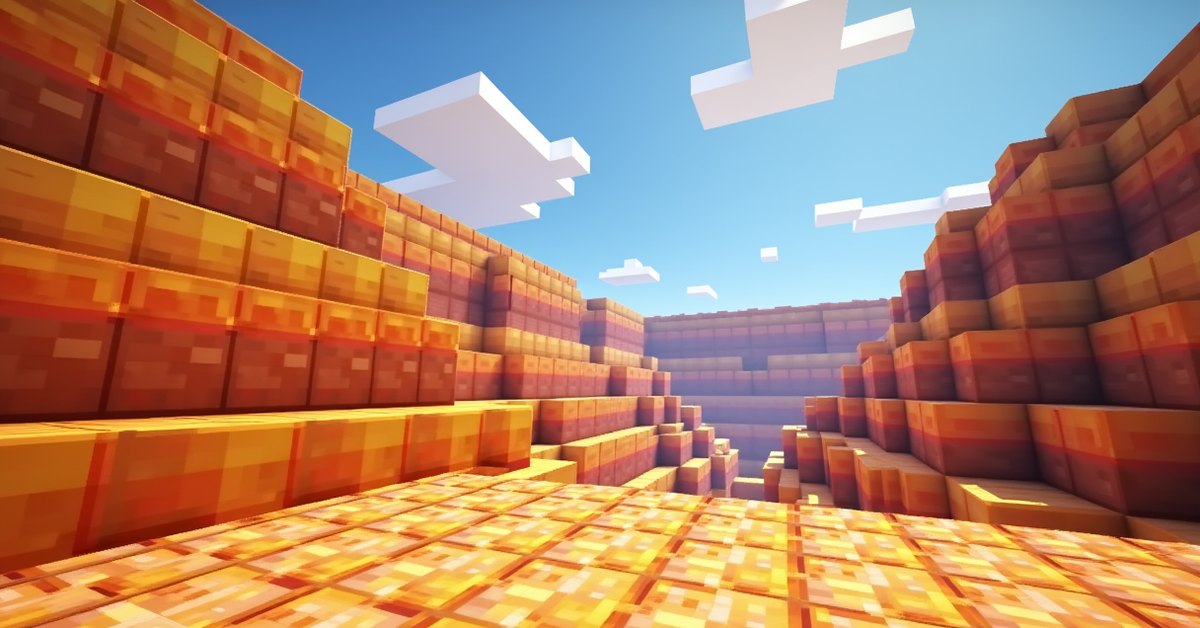
Terracotta is the orange-brown block you smelt from clay. It comes in 16 dyed colors, generates in colorful layers across badlands biomes, and forms the basis for glazed terracotta, the patterned ceramic-style block with rotating designs.
The block is cheap, fireproof, and one of the most useful building materials in the game for anyone who wants warm earthy tones. If you’ve ever looked at a Minecraft badlands cliff and wondered how to bring those colors home, that’s what this guide covers.
What terracotta is
Terracotta is a hardened clay block. You make it by smelting one clay block in a furnace, which gives you one terracotta block. The result has a default warm orange color that matches the cliffs of badlands biomes.
From that plain block, you can dye it into 16 colors (called stained terracotta) and smelt those colored versions again to get patterned blocks (called glazed terracotta). All three variants are pickaxe-mineable, fireproof, and slightly tougher than stone against creeper blasts.
Old Bedrock players might remember the block being called “hardened clay.” Mojang renamed it to terracotta to match Java, so any current version of the game uses the same name on both editions.
How to get terracotta
There are two ways to get plain terracotta:
- Smelt a clay block in a furnace. One clay block in, one terracotta out.
- Mine it directly from a badlands biome with any pickaxe.
You cannot craft terracotta from clay balls. You need the full clay block, which takes four clay balls to assemble in the 2×2 crafting grid. So the chain is: four clay balls, one clay block, one furnace smelt, one terracotta.
Fuel matters if you’re working in bulk. Coal works, but a single bucket of lava smelts 100 blocks, which makes it the cheapest way to convert a chest of clay into a chest of terracotta.
Where terracotta generates naturally
Badlands biomes are the only place where plain and stained terracotta generate naturally. You’ll see them in horizontal layers across the cliffs and mesas, often in bands of orange, yellow, red, white, brown, and light gray. The colored layers are stained terracotta that the world generator placed at chunk creation.
If you find a badlands biome, you can mine huge stacks of common colors without ever lighting a furnace. That makes badlands one of the most useful biomes for builders. Bring a couple of iron pickaxes and a stack of torches, and you can come home with enough material for a full roof and walls.
Eroded badlands (the tall pillar variant) and wooded badlands work the same way for terracotta generation. The color bands shift slightly between variants, but the block itself is identical.
Mining terracotta
Terracotta drops itself when mined with any pickaxe. Wood works, stone works, iron, diamond, and netherite all work. Mining it without a pickaxe destroys the block and drops nothing. The same rule applies to stained and glazed variants.
Tool speed makes a noticeable difference if you’re clearing a badlands wall. A netherite pickaxe with Efficiency V mines terracotta about as fast as it mines stone with no tool. For one or two blocks, the difference doesn’t matter. For a thousand blocks across a full mining run, it adds up.
Silk touch isn’t required. Fortune doesn’t help either, since terracotta doesn’t drop multiples. Save your enchanted picks for ore-mining and use a plain Efficiency pickaxe in the badlands.
Dyeing terracotta: the 16-color set
To dye plain terracotta, place 8 terracotta around a single dye in a 3×3 crafting grid. You get 8 stained terracotta in that color. The same shape works for every dye, so you have 16 possible stained colors: white, light gray, gray, black, brown, red, orange, yellow, lime, green, cyan, light blue, blue, purple, magenta, and pink.
That recipe is the only way to make stained terracotta. You cannot dye a block that’s already placed in the world, and you cannot mix two dyes for a single block. If you put the wrong color down and don’t like it, mine it back, smelt fresh clay into plain terracotta, and re-dye.
A few colors look noticeably different from the equivalent wool. White terracotta is closer to bone than to snow. Orange terracotta is slightly more red than orange wool. Pink terracotta reads more like dusty rose than the bright bubblegum pink of pink wool. Build a small test wall in creative before committing to a large project.
Glazed terracotta
Smelt a stained terracotta block in a furnace and you get glazed terracotta in that color. Glazed terracotta is the patterned, ceramic-style block that comes in all 16 colors to match the dye set.
Each color has its own unique pattern. The pattern rotates depending on which direction you were facing when you placed the block. That’s the trick behind every glazed terracotta mosaic floor you’ve seen on YouTube. Lay four blocks in a 2×2 with the right orientations, and they form a single tiled motif.
One useful quirk: glazed terracotta is treated as a non-stick block for pistons. Pistons can push glazed terracotta, but the block doesn’t stick to slime or honey blocks. Builders use this to make stop blocks in flying machine designs, and to make piston doors that won’t drag adjacent blocks along.
You cannot reverse the process. You can’t smelt glazed terracotta back into stained, and you can’t strip the pattern off. The block is its final form, so plan colors and orientations before you commit.
Building with terracotta
Terracotta’s strength is its color palette. The 16 stained colors are muted compared to wool and concrete, which makes them read more like real-world ceramics. They suit any build that wants a sun-baked, weathered feel.
A few practical color tips:
- White and light gray terracotta work for stucco-style walls and the lighter parts of a desert build.
- Yellow and orange make convincing sand and adobe without using actual sand, which falls when unsupported.
- Brown and red are the closest matches for clay brick and roof tile.
- Cyan and light blue, paired with white, give you the look of a glazed pool wall.
- Black terracotta is a more muted alternative to coal blocks for trim work.
For roofing, terracotta has a tighter, denser look than wool, and unlike wood planks it won’t catch fire. That’s a real advantage if you build close to a lava feature in your base or live near the nether.
Terracotta compared to other blocks
Wool has more saturated colors but burns easily, which rules it out for fire-prone builds and roofing near torches. Concrete is brighter and slightly tougher, but the 16-color set feels cartoony next to terracotta’s muted tones. Plain terracotta is the only cheap orange-brown block you can stack up in bulk, so it shows up in a lot of village renovations and any build that wants natural earth colors.
If you want bright, saturated color, use wool or concrete. If you want warmth and a slightly aged look, use terracotta.
Tips and common mistakes
A few things that trip players up the first time they build with terracotta:
- Don’t try to mine terracotta with your bare hands. The block breaks and drops nothing.
- Don’t try to craft terracotta from clay balls. The recipe needs an assembled clay block.
- Pay attention to the orientation of glazed terracotta when you place it. The block faces in the direction you were facing, and the pattern reads differently from each side.
- Place a test 2×2 glazed pattern in creative before laying a full floor. It’s faster than redoing it twice.
- In badlands, dig a few blocks into the cliff before you commit to a full mining wall. The color you want might run only a few blocks deep before the layer changes.
- If you want all the colors fast, pair a clay farm with bone meal and a flower field for dye stock.
Java vs Bedrock differences
For terracotta, the editions behave the same way. Plain, stained, and glazed terracotta all generate, craft, and dye identically on Java and Bedrock. The textures match. The glazed patterns rotate the same way.
The only thing worth knowing is the historical name on Bedrock. Older versions called the plain block “hardened clay,” which is what you’ll see in some old YouTube tutorials. The block is the same; only the label changed.
Frequently asked questions
Can you smelt clay balls into terracotta?
No. The furnace recipe takes a clay block, not loose clay balls. Craft four clay balls into a clay block first, then smelt that.
Does terracotta burn?
No. Terracotta is fireproof. Lava on top of it won’t set it on fire, and it won’t catch from a nearby ember. That makes it one of the better choices for builds near a lava feature or anywhere in the nether.
What’s the difference between terracotta and hardened clay?
They’re the same block. “Hardened clay” is the old Bedrock name for what Java has always called terracotta. Mojang unified the name to terracotta on both editions years ago.
Can you dye a placed terracotta block?
No. Dyeing only happens in the crafting grid. If you want a placed block to be colored, mine it back, dye it in the recipe, and replace it.
How do you make glazed terracotta?
Smelt stained terracotta in a furnace. One stained block in, one glazed block out. Plain terracotta won’t work in the recipe; you need it dyed first.
Can pistons push glazed terracotta?
Yes. Pistons push and pull glazed terracotta normally. The block doesn’t stick to slime or honey, which makes it useful as a separator in flying machines and piston doors.
What’s the best tool for mining terracotta?
Any pickaxe works. Iron is a good baseline. Add Efficiency if you plan to mine big sections of a badlands biome. Silk touch isn’t required since terracotta drops itself with any pickaxe.
When to reach for terracotta
If you’re building a roof, a town square, or anything that should look weathered, terracotta probably has the right color in its set. It’s cheap if you live near a badlands, it won’t burn, and it’s easy to mine. The only thing it isn’t great at is bright saturated color, where wool or concrete will do better. Keep a chest of plain orange terracotta in your build base, and you’ll reach for it more than you expect.