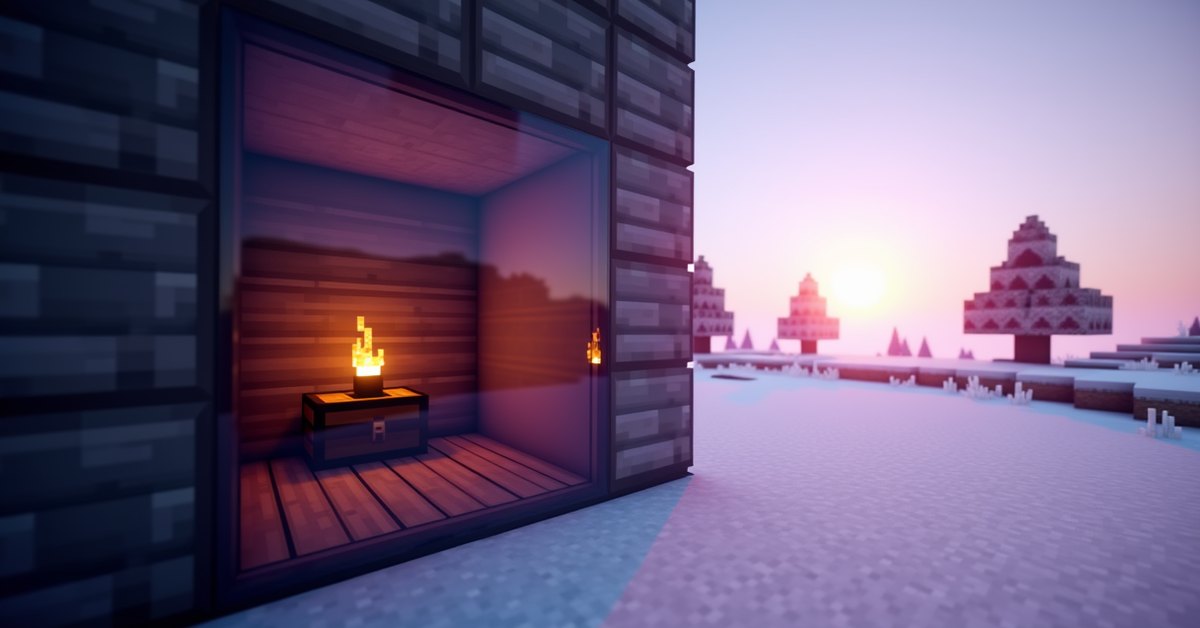
What tinted glass is
Tinted glass is a Minecraft block added in the 1.17 Caves and Cliffs update. It looks like normal glass with a soft purple tint, and from a distance it’s still see-through. The catch is that it doesn’t behave like regular glass when it comes to light. Light cannot pass through tinted glass at all, even though you can still look through it.
That single property is what makes tinted glass useful. Regular glass lets sunlight pour into your base. Tinted glass keeps the view but cuts the light. For builders who want dark rooms with windows, mob farms with a clear view of the kill chamber, or sealed bases that still feel open, tinted glass is the block to reach for.
It has one more quality regular glass doesn’t share: when you break tinted glass, you always get the block back. No silk touch needed.
How to craft tinted glass
The recipe needs amethyst shards and one regular glass block. You’ll need to find an amethyst geode first, since that’s the only place amethyst shards come from in the world.
Recipe
Place the items in a crafting table like this:
- Top row: empty, amethyst shard, empty
- Middle row: amethyst shard, glass block, amethyst shard
- Bottom row: empty, amethyst shard, empty
That’s one glass block in the center with four amethyst shards arranged in a plus pattern around it. The recipe yields two tinted glass blocks each time, which makes the amethyst go a lot further than it sounds.
Getting amethyst shards
Amethyst shards come from amethyst clusters, which grow inside amethyst geodes. Geodes are big hollow rocks made of smooth basalt, calcite, and amethyst, and they generate anywhere from y=70 down to bedrock. Mine a fully grown cluster with any pickaxe (one that isn’t enchanted with silk touch) and it drops four shards.
If you want a steady supply of tinted glass, set up an amethyst farm. Plant amethyst buds inside a geode, wait for them to grow into clusters, and harvest them on a cycle. One geode can produce more shards than most builds will ever need.
How tinted glass blocks light
Light in Minecraft has two channels: sunlight and block light from sources like torches, lanterns, and glowstone. Both get blocked by tinted glass. If you place a torch on one side of a tinted glass wall, the other side stays at light level zero. If you build a glass roof over your base with tinted glass instead of regular glass, the floor stays pitch black.
This matters for two main reasons. First, hostile mobs spawn in dark areas, so a tinted glass roof keeps your base looking like an open sky build while letting mobs spawn just below it. Second, plants and crops that need light won’t grow under tinted glass. If your wheat farm has a tinted glass roof, the wheat will sit at stage zero forever. Use regular glass over crops, tinted glass over mob farms.
The transparency is purely visual. Mobs can’t see through it the way you can. Endermen don’t aggro on you through tinted glass, because the visual tint counts as a line-of-sight block. You can stand on the other side and look right at one without provoking it.
Mining and breaking tinted glass
You can break tinted glass with anything: a pickaxe, a sword, your bare hand. The block always drops itself, no matter what you use. This is the biggest practical difference between tinted glass and regular glass. Regular glass shatters into nothing unless you mine it with silk touch. Tinted glass behaves like a normal block in your inventory.
It has the same low blast resistance as regular glass, though. A creeper explosion next to a tinted glass wall will destroy the wall, and TNT will do the same. The blocks won’t drop from an explosion either way.
What you can build with tinted glass
Tinted glass works well for a few specific kinds of builds. Here are the most common uses.
Mob farms
The classic use. A roof or wall of tinted glass keeps a mob farm at light level zero so mobs keep spawning, while you can still see what’s happening inside. No need to seal it off completely or rely on a one-way water curtain. Build a tinted glass roof over the spawning platform and you’ll get the same spawn rate as a closed dark room, plus a clear view of the action.
Hidden light sources
Want a torch or shroomlight inside a wall but don’t want it lighting the room? Wrap the light source on the side facing the room with tinted glass. The torch still warms up the wall cavity enough to prevent spawns inside it, but no light leaks into the room itself.
Privacy windows
For aesthetic builds where you want a dark interior and windows that look out onto a lit landscape, tinted glass keeps the view without leaking light back in. It works well for medieval throne rooms, modern lofts, or any build where you want a dramatic dark mood without losing visibility.
Bedrooms in survival
If you build a glass-walled bedroom and want zombies to spawn outside without lighting your room up from torches in the rest of the base, tinted glass walls keep things separate. You still see the view; the room stays dark.
Tinted glass vs regular glass vs stained glass
The three glass types behave differently. Here’s the short version.
| Glass type | Blocks light? | Drops without silk touch? | Crafts into panes? |
|---|---|---|---|
| Regular glass | No | No | Yes |
| Stained glass | No | No | Yes |
| Tinted glass | Yes | Yes | No |
One important limit: tinted glass cannot be crafted into panes, stairs, slabs, or walls. There is no “tinted glass pane” variant. If you need thin glass that blocks light, you’ll have to settle for full blocks. Workarounds usually involve hiding the seams behind trims, fence posts, or other thin blocks.
Tinted glass also can’t be dyed. The purple tint is the only color it comes in, which is a hard limit for color-themed builds.
Java and Bedrock differences
Tinted glass works the same way on both editions. The recipe is identical, the light-blocking behavior is identical, and the drop-without-silk-touch rule is the same. A tinted glass design built in Java will behave the same when copied into Bedrock.
Common mistakes to avoid
A few traps catch new players when they first start using tinted glass. The biggest is building greenhouses with it. Crops, saplings, and sugar cane all need light to grow. A tinted glass greenhouse looks great and produces nothing. Use regular glass if you want plants under glass.
Another common slip is using it for sky bases that need spawn proofing. Tinted glass blocks light, so mobs can spawn directly on top of it at night. If you want a glass floor at sky level that also stops mob spawns, regular glass (which keeps the surface lit by sunlight during the day) plus surface lighting at night is the better mix.
Some players also expect silk touch to do something extra here. It doesn’t. The block always drops itself, so don’t waste an enchanted pickaxe on it.
Finally, the crafting recipe for glass panes (six glass blocks in two rows) doesn’t accept tinted glass. The recipe will fail. There is no shortcut to a tinted glass pane.
Frequently asked questions
What level do I need to find amethyst geodes?
Amethyst geodes generate anywhere from y=70 down to bedrock, with most of them in the lower half of that range. Large caves are a good way to spot them, since geodes sometimes break the surface or appear in cave walls.
Can mobs see through tinted glass?
No. Endermen, skeletons, and other mobs treat tinted glass as visually opaque for line-of-sight checks. You can stand behind a tinted glass wall and look at an enderman without provoking it.
Does tinted glass need silk touch to drop?
No. It drops itself with any tool, including your bare hand. Silk touch makes no difference.
Can you craft tinted glass panes?
No. Tinted glass has no pane, slab, stair, or wall variant. The base block is the only form it exists in.
Can tinted glass be colored or dyed?
No. The purple tint is fixed. There are no stained tinted glass variants, and dyeing it isn’t possible.
Will plants grow under tinted glass?
No. Tinted glass blocks all light, including sunlight. Crops, saplings, sugar cane, and mushrooms all behave as if there is no light at all under tinted glass.
How much amethyst do I need per tinted glass block?
Four amethyst shards plus one regular glass block makes two tinted glass blocks. That works out to two shards per block on average. One fully grown amethyst cluster drops four shards, so one cluster gives you enough material for two tinted glass blocks.
Worth crafting?
Tinted glass is one of the cleanest small additions Mojang has shipped. If you build mob farms, run dark-mood interiors, or want windows without light bleed, set up an amethyst farm once and you’ll never run out. The crafting cost is low, the behavior is predictable, and the look fits anywhere a build calls for a darker pane of glass.