What a tube coral block is
The tube coral block is one of five coral blocks added to Minecraft in the Update Aquatic. It’s the blue one. Place it underwater in a warm ocean and you’ll see it bob with life and play tiny ambient water sounds; pull it out and within a second or two it turns gray, becoming a dead tube coral block.
Coral blocks are full cube blocks, unlike coral (the small plant) and coral fans (the wall or floor sprite). That means they place like any other solid block, except for one twist: they need water to stay alive.
If you’re just here for the basics, here’s the short version. Mine it with a silk touch pickaxe in a warm ocean. Put it back underwater within seconds. Don’t expose it to air, or it dies and turns gray forever.
Where to find tube coral blocks
Tube coral blocks only generate naturally in warm ocean biomes as part of coral reefs. Warm oceans are the bright turquoise oceans, usually found near sand-bottom waters between latitudes that also spawn desert and savanna biomes on land.
You won’t find coral reefs in:
- Lukewarm oceans (they have sea grass and tropical fish, but no living coral)
- Cold or frozen oceans (no coral at all)
- Rivers, lakes, or any other body of water
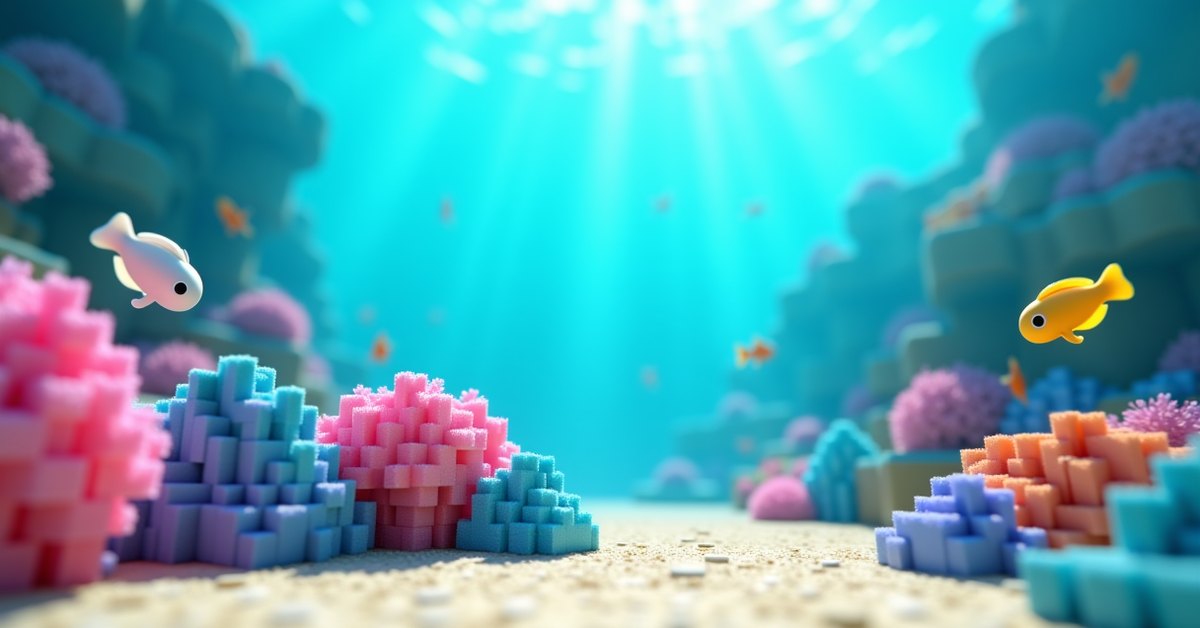
When you swim down into a warm ocean reef, the tube coral block is the deep blue one mixed in with the pink brain coral, purple bubble coral, red fire coral, and yellow horn coral. Reefs are dense; expect to find dozens of coral blocks in a single dive.
If you don’t see warm ocean nearby, the fastest options are:
- Boat exploration along the equator-ish bands of your world.
- A quick check of any biome map mod or seed viewer you trust, if you’ve spotted tropical fish or pufferfish (those live in lukewarm and warm oceans, so warm is usually close by).
- Trading with a wandering trader, who occasionally sells coral blocks for emeralds.
The wandering trader path is slow but reliable. You can stock a coral collection without ever traveling, if you have the patience.
How to mine a tube coral block
You need two things: a pickaxe and the Silk Touch enchantment.
Without silk touch, the tube coral block drops nothing in Java Edition. On Bedrock, it drops the dead version, which is gray and lifeless. Either way, you lose the blue color that made you mine it.
With silk touch, the block comes up whole, keeps its blue, and goes into your inventory ready to place again. Any pickaxe tier works for this: wood, stone, iron, gold, diamond, or netherite. Tier only affects how fast you mine.
A few practical notes:
- Get to the reef with a water breathing potion or a turtle shell helmet with Respiration. Reefs sit at the surface, so depth isn’t the issue, but you’ll be there a while.
- A trident with Riptide doesn’t help underwater for mining, but Loyalty plus Impaling does help with the drowned and guardians that sometimes show up nearby.
- If you’re playing in survival without silk touch yet, get an enchanting table and a few bookshelves before your coral run. It’s the difference between coming home with a backpack of dead coral and coming home with the real thing.
How to keep tube coral blocks alive
This is the part that catches new players. Coral blocks die when they’re not touching water for more than a few seconds. That means:
- Walking around with the block in your hotbar is fine; it doesn’t die in your inventory.
- Placing it down on dry land kills it within about a second.
- Placing it underwater keeps it alive.
- Placing it next to water (in an air block with water on at least one adjacent face) also kills it. It needs to be inside water, not adjacent to it.
The safest way to build with live tube coral blocks is to set them inside a water source first, then add scaffolding or sand around them later. If you’re building an enclosed underwater aquarium, place water source blocks with a bucket before you set the coral.
If you mess up and a block turns gray, that’s it. Dead tube coral blocks can’t be revived; bone meal won’t bring them back, and water won’t help. The only way to “fix” a dead block is to replace it with a fresh live one.
What coral blocks do mechanically
Beyond decoration, the tube coral block has a few quiet mechanics worth knowing.
Coral blocks don’t emit light on their own. For a glowing reef build, mix in sea pickles, which give off light when placed in clusters, or hide sea lanterns inside the build.
Live coral blocks play subtle ambient water sounds when you’re close, which dead coral blocks don’t. The first time you notice the difference, you’ll wonder why your reef seems quieter than usual. Check whether any blocks have turned gray.
Sea pickles can be placed on top of live coral blocks. Bone-mealing a sea pickle on a live coral block in warm water grows it from one to four, which is the fastest way to multiply sea pickles for storage or trading.
Coral blocks count as solid blocks for mob pathfinding. Creatures will treat them like any other floor, so you don’t have to worry about pathing weirdness inside a reef.
Crafting and related items
The tube coral block doesn’t appear in any crafting recipe as an ingredient. You can’t smelt it, you can’t combine it with anything, and there’s no recipe to make a coral block from coral plants or fans. The only way to get one is to find it, mine it with silk touch, or trade for it.
The related items in the tube coral family are:
- Tube coral (the plant): a thin blue stalk that grows on top of a coral block. Drops nothing without silk touch.
- Tube coral fan: a flat blue sprite that grows on the sides or top of coral blocks. Also needs silk touch.
- Dead tube coral block: the gray version. Stable on land, doesn’t need water.
You can’t craft a fan from a coral block, and you can’t craft a block from fans. They’re separate items that have to be found separately.
Building with tube coral blocks
Tube coral blocks work well in any underwater build because the deep blue reads cleanly against sand, gravel, and prismarine. The most natural use is a reef floor: mix tube, brain, bubble, fire, and horn coral blocks at random for a varied seabed. A single tube coral block dropped into a glass-walled aquarium with tropical fish gives the whole tank something to look at without having to add much else.
Ocean monument builds also benefit. Tube coral against prismarine and sea lantern walls gives a tropical contrast that prismarine alone can’t. For an underwater base entry, lining the tunnel with live coral signals you’re entering somewhere built, not just hollow rock.
If you want the look without the water-maintenance hassle, use dead tube coral blocks. They’re a desaturated blue-gray that fits stone and weathered builds, and they don’t care about being dry.
Tips and common mistakes
- Always bring silk touch. Mining without it is wasted time.
- Carry a water bucket. Reef trips go faster when you can pocket a quick water column on the way back up.
- Watch the color when you place a block. If it doesn’t immediately tint blue, water isn’t fully covering it. Check the adjacent blocks.
- Don’t try to drain an area to “see” your coral better. Once the water’s gone, the coral starts dying.
- Use waterlogged blocks (stairs, slabs, fences) around your coral to keep things alive while you build. Waterlogged blocks count as water for coral life support.
- Avoid pistons. Pistons can push or break coral blocks the same way they push any block, and a misfire turns a clean reef into a mess.
Java vs. Bedrock differences
The biggest difference shows up at mining time. In Java Edition, a tube coral block mined without silk touch drops nothing. In Bedrock Edition, the same action drops a dead tube coral block. Functionally, both versions punish you for not using silk touch; Java just punishes you harder.
Otherwise, the mechanics are nearly identical: warm ocean spawning, silk touch requirement, fast death out of water, sea pickle interaction, and the same dead variant.
Frequently asked questions
What pickaxe do I need to mine a tube coral block?
Any pickaxe works for the mining itself, but you need Silk Touch on it to keep the block alive and blue. Without silk touch, Java drops nothing and Bedrock drops the dead version.
Why does my tube coral block keep turning gray?
It’s dying from lack of water. Coral blocks need to be inside water (not just next to it) at all times. Place a water source block on or around it, or use waterlogged stairs and slabs to keep it submerged.
Can I bring a dead coral block back to life?
No. Dead tube coral blocks are permanent. Bone meal won’t revive them, and water won’t help. You have to replace the dead block with a fresh live one.
Do tube coral blocks grow?
The block itself doesn’t grow. You can bone meal coral plants and fans on top of a live coral block in warm water to spread them, and bone-mealing a live coral block underwater can grow more coral around it.
Can I find tube coral in a cold ocean?
No. Coral reefs only generate in warm oceans. Lukewarm oceans don’t have coral, even though they share other tropical features like sea grass and tropical fish.
Do tube coral blocks burn?
No. Coral blocks are not flammable. Lava destroys them like most blocks, but fire won’t spread to or from them.
Can I farm tube coral blocks?
There’s no true coral-block farm. The block itself doesn’t grow or duplicate. You can farm coral plants and fans by bone-mealing coral blocks underwater, but the blocks themselves only come from natural reefs or trader trades.
Worth knowing
A small reef in a glass-walled aquarium with one of each coral color, a couple of sea pickles, and a few tropical fish makes one of the best-looking decorative spaces in the game. The tube coral block does a lot of work in that build because the blue holds its color even in low light, where pink brain coral and purple bubble coral can wash out. If you’re picking just one to start with, it’s a strong choice.