What is the vault?
The vault is a block in Minecraft that holds loot you can claim with a trial key. It was added in the 1.21 Tricky Trials update and only generates inside trial chambers, the large underground structures that arrived in the same update.
Each vault has a keyhole on the front. You insert a trial key, the vault ejects an item, and you collect it. Each player can claim from a given vault once, then that vault is finished for them. Other players in the same world can still claim from the same vault using their own keys.
That last point is what makes vaults interesting. Older loot rooms in Minecraft give every player the same chest contents, so a coop run turns into a footrace. Vaults flip that around: the loot is per-player, and every key you carry is yours to spend.
Where vaults spawn
Vaults only spawn in trial chambers. Trial chambers themselves generate underground between Y=-50 and Y=10 in the overworld, in most cave biomes except deep dark and lush caves. Stony underground sections are the most common host, so a tuff vein near the surface is often a hint.
Inside a chamber, vaults sit in their own alcoves, often with a few visible from a corridor. There is no fixed number per chamber. Larger chambers can have eight or more vaults; small ones may have only two or three.
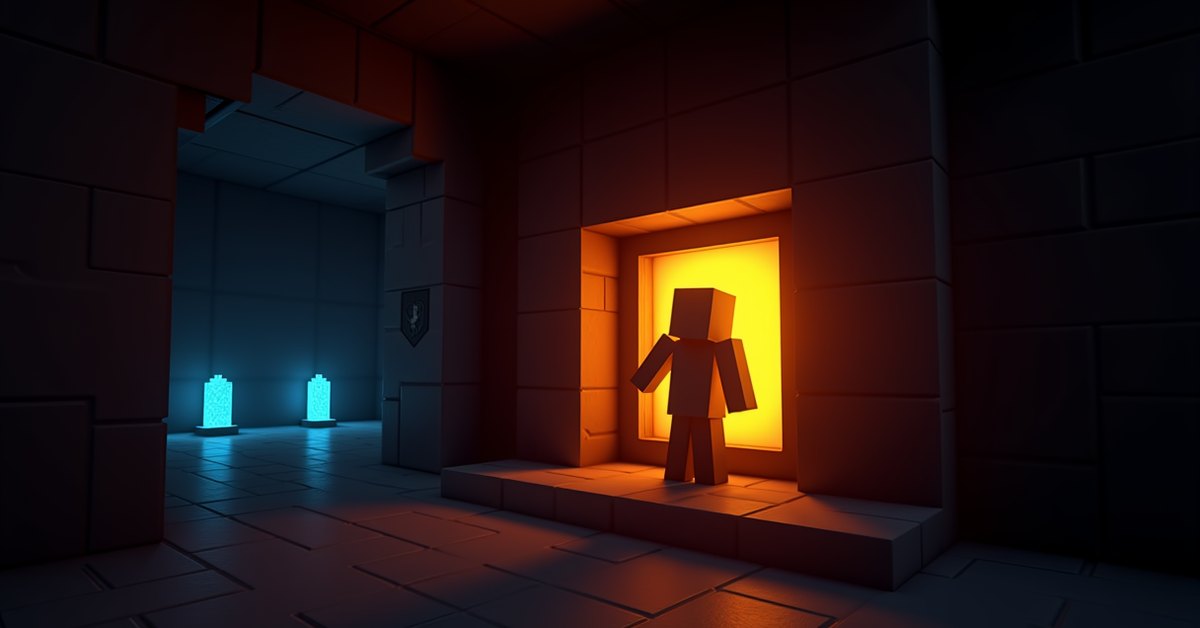
The block itself is hard to miss. It has a dark stone body with a glowing orange face, a copper-colored frame around the keyhole, and a metallic interior visible through the slit. If you can see the orange glow, the vault still has loot waiting for you. If the face is dim and dark, you already claimed from it.
How to unlock a vault
You unlock a vault by using a trial key on it. Hold the key in your hand, look at the vault, and right-click on Java, or use the interact button on Bedrock. The vault accepts the key, plays a short animation, and ejects one stack of loot from the slot on the front.
Trial keys drop from trial spawners after you complete a wave fight. Each trial spawner gives one key per player when the final wave is cleared, so the more players who join the fight, the more keys come out.
One key opens one vault, for one player. You can carry as many keys as you want, but you can only claim from any given vault once. After that, the vault recognizes you and refuses your next key.
What vaults drop
Regular vault loot is a mix of useful gear and crafting items. Common drops include diamonds, emeralds, iron ingots, gold ingots, redstone, arrows, and enchanted gold armor. Less common drops include enchanted bows, crossbows, shields, and saddles. Items tied to the Tricky Trials update, like wind charges and breeze rods, show up too.
The drop tables are weighted, so two vaults in the same chamber rarely give the same item. A full chamber clear can leave you with a stack of diamonds, a few enchanted pieces, and a pile of utility items.
Loot does not respawn. Once every player in the world has claimed from a vault, it stays inert. Trial spawners, by contrast, can be triggered again after a cooldown, so trial keys themselves are renewable even though vaults are not.
Ominous vaults
Ominous vaults are the harder, more rewarding cousin of the regular vault. They have a darker face, a red glow instead of orange, and require an ominous trial key.
You get ominous trial keys from ominous trial spawners, which appear when you enter a trial chamber under the Bad Omen effect. Drinking an ominous bottle (looted from pillager outposts and raids) gives you Bad Omen. Walking into a chamber with that effect upgrades every trial spawner inside to its ominous version. Those harder spawners drop ominous keys when cleared.
Ominous vault loot is meaningfully better. The pool includes heavy cores (the central crafting ingredient for the mace), totems of undying, enchanted golden apples, music discs, and high-tier enchanted books. If you want a mace or a totem stockpile, ominous chambers are the most efficient path in vanilla survival.
Mechanics and behavior
A few rules about how vaults behave that catch people off guard:
- You cannot mine a vault. No pickaxe, even Netherite with Silk Touch, breaks the block in survival. It is treated as an indestructible piece of the trial chamber.
- You cannot craft a vault. There is no recipe.
- You cannot place a real working vault. The block does not appear in the creative inventory by default. You can summon one with the command
/give @s minecraft:vault, but the placed copy behaves as a decoration and does not generate loot. - Vaults track which players have claimed from them using the player UUID. Changing your skin or username does not let you double-claim.
- The orange glow is a visual signal of state, not a light source. A vault does not light up the room around it.
- Pistons cannot push vault blocks. The same applies to sticky pistons, slime blocks, and honey blocks.
Tips and common mistakes
A few things that save time when you explore a chamber:
- Carry empty inventory slots. Vault drops go straight into your inventory if there is room, but excess loot lands on the floor and can despawn if you wander off.
- Clear the trial spawners in the chamber before you start opening vaults. The keys you collect from spawners feed the vaults later, and a chamber usually has enough spawners to cover every vault inside it.
- If a vault refuses your key, check the glow. A dim face means you already claimed. Try another vault.
- Bring a totem of undying for ominous chambers. The waves get harder, the mobs deal more damage, and ranged Breeze attacks can knock you into lava.
- Coordinate with friends. Each player can claim from the same vault with their own key, but if one teammate hoards every key the others get nothing.
The most common mistake is leaving a chamber half-finished. Players often clear the first room, grab a few drops, and assume they have seen the whole structure. Trial chambers sprawl, and the best loot usually sits in the back rooms.
Java vs Bedrock differences
The vault block behaves the same on both editions. Trial chamber generation rules, vault loot tables, and ominous mechanics are consistent across Java and Bedrock.
The one small difference is the interact button. On Java, you right-click the vault while holding the key. On Bedrock, you tap the vault with the key held, or press the platform interact button (LT on Xbox, L2 on PlayStation, the long press on touch).
Console and mobile players on Bedrock should make sure the trial key is the active hotbar item before interacting, because Bedrock consumes the key from the active slot.
Frequently asked questions
Can you mine a vault?
No. The vault block cannot be broken in survival by any tool, including a Netherite pickaxe with Silk Touch. The block is fixed in place when the trial chamber generates.
Can you craft a vault?
No. There is no crafting recipe for the vault. The only way to obtain one as an item is the /give command on Java Edition, or the equivalent /give on Bedrock with cheats enabled.
Why won’t my vault open?
Three common reasons. First, you may have already claimed from that vault. Check the face for a dim glow. Second, you may be using the wrong type of key. A regular trial key will not open an ominous vault, and vice versa. Third, the key may not be the active item in your hand when you interact.
What does an ominous vault drop?
Ominous vaults drop higher-tier loot than regular vaults. The pool includes heavy cores, totems of undying, enchanted golden apples, music discs, enchanted iron and diamond gear, and high-level enchanted books. Heavy cores are the marquee drop because they craft the mace.
Can you make a vault farm?
Not in the usual sense. Each vault delivers loot once per player and then stops. You can build a trial spawner farm by clearing waves to collect keys repeatedly, but the vaults themselves are one-and-done per visit.
Do vaults work in peaceful mode?
The vault block itself accepts keys in peaceful mode, so any keys you already carry will still claim loot. The catch is that peaceful mode disables trial spawners, so you cannot earn new keys without switching the difficulty back to easy or higher first.
What is the difference between a vault and an ominous vault?
Color and loot. Regular vaults glow orange and use trial keys. Ominous vaults glow red and use ominous trial keys. The ominous version drops rarer items, including heavy cores and totems, but the chamber around it is harder to clear.
Final thought
The vault rewrites how loot rooms feel in Minecraft. Strongholds and end cities give every player the same chest contents, so a coop run turns into a footrace. A trial chamber hands out loot one key at a time, which makes a group run feel a lot more like a heist than a tour.