Where vines come from
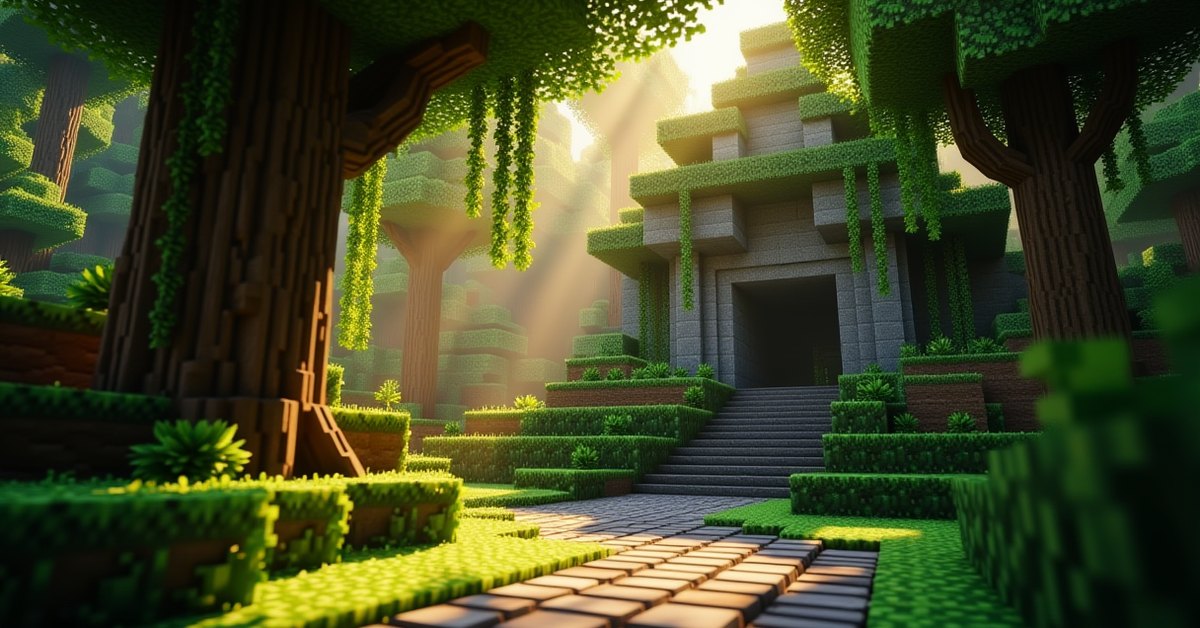
Vines are a leafy green plant block that hangs off the sides of other blocks. They look like draped strands of foliage, and they show up most often in jungles, swamps, and lush caves. If you’ve ever wandered into a jungle and seen leafy green covering nearly every tree trunk, those are vines.
You’ll find them naturally in a handful of places:
- Jungle biomes, hanging from almost every tree and surface
- Swamp biomes, dangling off oak trees over the water
- Lush caves, near azaleas, moss, and dripleaf
- Jungle temples and a few woodland mansion rooms
They also spread on their own once placed, so a single vine block can eventually cover a much larger area if you leave it alone.
How to get vines
The reliable way is to break vines with shears. Any other tool, including bare hands, will destroy the vine and drop nothing. Shears are cheap to make from two iron ingots, so it’s worth crafting a pair before any vine-hunting trip.
A vine block placed on a wall will eventually spread to neighboring blocks if there’s room. If you only need a few, find a wall in a jungle, snip a starter strand with shears, plant it on a block at home, and wait. The vine will multiply over time without any input from you.
Vines have no crafting recipe. They’re a gathered resource only.
If you’re in a hurry and don’t have a jungle or swamp nearby, a wandering trader will sometimes offer vines for an emerald per piece. That’s an expensive way to get them in bulk, but it can save a long trip across the world when you only need a few for a build.
How vines work
Climbing
You climb vines the same way you climb a ladder: walk into them and hold the jump key to go up, or hold sneak to stop in place. They count as a climbable block in both Java and Bedrock. Touching a vine during a fall slows you to a safe speed, which makes vines an excellent emergency rope in caves and ravines.
One quirk: you don’t have to be standing on the vine itself. As long as you’re against the block the vine is attached to, the climb-and-cling behavior kicks in. That’s why a single vertical line of vines down a wall is enough to scale a cliff.
To get off at the top, just jump and walk forward onto the block above. If the vine column ends before the top of the wall, you’ll need to break out into open air and jump, which can be awkward. The fix is to make sure your vine column reaches the same height as the block you want to stand on, or one block higher.
Spreading
Once placed, vines grow on their own through random ticks. Over time, a single vine can spread sideways and downward to cover neighboring block faces, as long as those faces are exposed to air and there’s a solid block backing them. They’ll happily wrap around the corner of a building or creep down the side of a tower if you give them weeks of in-game time.
Spreading is slow, and you can’t rush it. Bone meal has no effect on vines, which trips up a lot of players. If you want vines in a specific spot, place them by hand on every block face you care about.
Decay
A vine block needs support to stay attached. As long as the vine has a solid block on the side it’s clinging to, or a vine block above it that does, it’s stable. If you break the support, the vine pops off, and without shears it leaves no drop.
Placing vines yourself
You place a vine on the side of any solid full block. Aim your reticle at the face of the block you want covered and right-click (or use the place control on Bedrock). The vine attaches to that face.
A few quick rules:
- Vines won’t attach to non-solid blocks like fences, glass panes, or slabs placed in the top position
- Multiple vine blocks can stack vertically, which is how you make a usable climbing rope
- You can place a vine on the bottom face of a block in Java if you aim at the underside of an overhang
If you want a curtain of vines for a build, the fastest method is to fill an entire wall with vines on every face, then trim the strays with shears after they’ve matured.
What vines are good for
Climbing without ladders
The most practical use. Drop a column of vines from the top of a cliff to your front door and you have a renewable elevator that costs no iron and no sticks. In jungles, the natural vine cover means you almost never need ladders at all.
Decoration
Vines turn flat builds into something that looks lived-in. Hang them off the eaves of a wooden house, cover one wall of a tower, or trail them down the front of a treehouse. They’re a free pop of green that breaks up large stone and wood surfaces.
Hiding doors and entrances
You can’t walk through vines, but a curtain of them in front of a piston door or trapdoor entrance is a classic visual trick. From a distance the wall looks solid; up close, your secret door is right behind the greenery.
Composting
Vines have a 50% chance per item to fill a level on a composter, so they’re a decent passive bone meal source if you’re sitting on a stack. They’re not as efficient as sugar cane or melon, but in a jungle base they cost nothing to gather.
Things to watch out for
Vines burn fast. They’re about as flammable as wool. A torch a block away can ignite a vine column, and the fire spreads up the vine quickly and onto whatever the vine is attached to. Keep open flames at least a couple of blocks clear of any vine surface in a wooden build. If lightning strikes a tree wrapped in vines, the whole thing can go up.
Spread is hard to predict. Vines won’t grow where you want them, but they will grow where you don’t. If you place a single vine on the back of your storage room, expect to come back later and find a green carpet on the ceiling. Trim with shears or place blocks to contain the spread.
No drop without shears. If you punch a vine, you lose it. Always carry shears in your hotbar when you’re harvesting.
Vines vs. cave vines, weeping vines, and twisting vines
Minecraft has four different vine-style blocks, and they don’t share rules. Quick reference:
- Vines (this article): green hanging vines from jungles and swamps
- Cave vines: grow downward in lush caves, produce glow berries, and emit light when the berries are present
- Weeping vines: red hanging vines from the crimson forest of the Nether
- Twisting vines: teal vines that grow upward in the warped forest of the Nether
Each has its own placement and growth behavior. If you came here looking for the glowing berry kind, you want cave vines.
Frequently asked questions
Can you grow vines with bone meal?
No. Bone meal has no effect on vines. They spread on their own through random ticks, but you can’t speed them up.
Do vines burn?
Yes, very easily. Vines are about as flammable as wool. Keep torches, campfires, and lava at least two blocks away from any vine surface in a wooden build.
Can you walk through vines?
No. Vines block your movement the way a thin wall does. You can climb them, but you can’t pass through them, which is why they work well as a visual curtain over a hidden door.
How do you get vines without shears?
You can’t, at least not directly. Breaking a vine with anything else destroys it without a drop. The workaround is to wait for a wandering trader who occasionally sells them for an emerald, or to find a placed vine in the world and snip it with shears once you’ve crafted some.
Do vines decay if I take down the wall behind them?
Yes. A vine needs a supporting block on the face it’s attached to, or a vine block above it that has support. Pull the wall and the strand drops off without giving you the vine back, so always snip with shears before remodeling.
Can vines grow upward?
Yes, vines can spread to a block above the source if there’s a solid block beside that target. They mostly spread sideways and downward, but slow upward growth does happen over time.
What block do I use if I want glowing vines?
Use cave vines instead. Cave vines grow downward from a solid block, produce glow berries, and emit light when the berries are present. They’re a separate block from regular vines and have their own placement and growth rules.
If you only remember one thing about vines, make it this: bring shears. Everything else (climbing, decorating, spreading) follows from being able to pick the things up in the first place. Once you have a stack, a jungle base practically builds itself.