What is the warped wart block?
The warped wart block is a cyan, sponge-textured decorative block that generates inside warped forests in the Nether. It’s the teal counterpart to the red nether wart block, and the two share the same texture and behavior with different color schemes for different biomes.
You won’t find a crafting recipe for it. The block isn’t made from any item, and there’s no “warped wart” plant or drop that you can craft nine of (the warped forest gives you warped fungi, warped roots, and twisting vines, none of which produce wart blocks). It only exists where the game places it in the world, plus whatever you carry home from a warped forest trip.
Where to find warped wart blocks
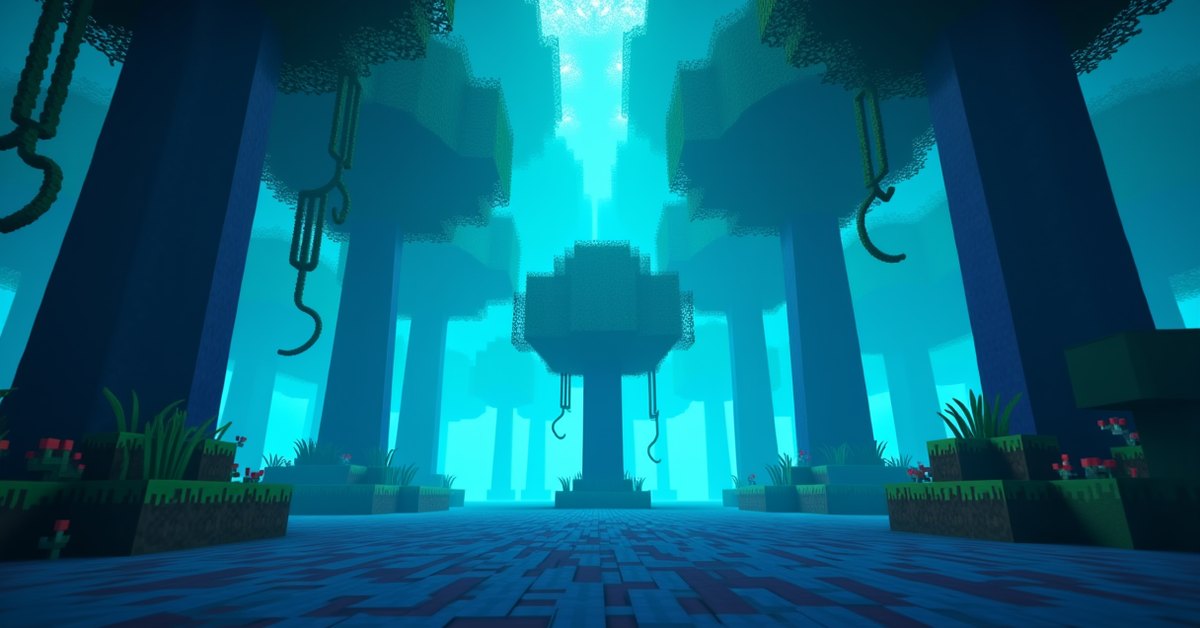
Warped wart blocks generate in the warped forest, a Nether biome added in the Nether Update (Java 1.16, Bedrock 1.16). They form the cyan canopies on top of warped trees and also show up in clumps inside the trunks themselves. The warped trees are tall, blue-stemmed plants with cyan tops, and the wart blocks fill in those tops.
You can spot a warped forest from a distance by its teal glow and the floating warped trees, which grow taller than crimson trees and have a distinctive turquoise canopy. If you’ve found warped fungi on the ground or twisting vines hanging from the ceiling, you’re in the right biome.
You won’t see warped wart blocks anywhere else. They don’t generate in the Overworld, the End, or any other Nether biome. If you want to use them in a base or build outside the warped forest, you have to bring them with you.
How to mine warped wart blocks
You can break a warped wart block with your bare hands, but a hoe is the fastest tool for the job. The block has a hardness of 1, similar to wool or sponge. A diamond or netherite hoe with Efficiency V breaks one almost instantly. Any other tool works too, just slower.
The block drops itself when broken with any tool. Silk Touch isn’t required, and there’s no risk of losing the drop the way you might with grass or live coral. You also don’t lose anything to Fortune (the enchantment has no effect on this block), so mine away with whatever hoe you have.
One thing worth knowing: warped wart blocks are non-flammable. The warped forest as a whole contains no naturally-burning blocks, and the wart block follows that pattern. You can place it next to a lava stream in a build without worrying about it catching fire.
Composting warped wart blocks
Drop a warped wart block in a composter and there’s an 85% chance it raises the compost level by one. That’s the same rate as melons, pumpkins, hay bales, and the red nether wart block. If you’ve got a stack to spare, composting them is a reasonable way to turn surplus into bone meal.
That said, warped wart blocks aren’t easy to come by in bulk. A single warped forest doesn’t produce thousands of them, and they don’t grow back once you’ve harvested a tree’s canopy. If your goal is bone meal volume, easier sources exist (skeleton XP farms, large melon farms, kelp drying). Composting wart blocks makes more sense when you’ve grabbed too many for a build and don’t want to waste the leftovers.
Using warped wart blocks in builds
The block reads as pure decoration. Its texture is uneven and bumpy, similar to a sponge, but in a cyan color that doesn’t appear anywhere else in the game. That makes it useful when you want a textured surface that isn’t smooth like wool or planks.
Common build uses:
- Reef and coral-style underwater builds where you want a faux-coral look without dealing with live coral mechanics
- Alien, fantasy, or undersea interiors where stone and wood feel too earthy
- Roof material on Nether-themed bases for a fungus-canopy effect
- Trim or accent blocks paired with warped planks, warped stems, and shroomlights
- Filler for organic shapes, like blob-shaped trees or strange plants on a custom map
The block is fully opaque, so torches, banners, signs, and other attachable items will stick to it. Light doesn’t pass through, and it doesn’t transmit redstone signals in any special way. Treat it like any normal solid block for placement and contraption purposes.
Growing more warped wart blocks
You can’t craft warped wart blocks, but you can grow more by replanting warped forests. Pick up warped fungi from the forest floor and plant them on warped nylium back at your base. Use bone meal on the fungus and it sprouts into a full warped tree, complete with a fresh canopy of warped wart blocks.
Each grown tree gives you a small canopy worth of blocks, usually somewhere between 10 and 30 warped wart blocks depending on the size of the tree. If you set up a small warped nylium farm in the Nether or in an enclosed Overworld room, you’ve got a renewable supply without trekking back to the warped forest for every build.
Warped wart blocks vs nether wart blocks
The red nether wart block and the cyan warped wart block share almost everything except color and biome. Both generate in their respective Nether forest biomes (crimson for the red version, warped for the cyan). Both have the same hardness, the same hoe-as-fastest-tool rule, the same composter odds, and the same fire resistance.
The big practical difference: the red one is crafted from nine nether wart items, which makes it cheap to mass-produce once you’ve got a nether wart farm running. The cyan version has no crafting recipe. If you want a lot of warped wart blocks, the only options are to harvest them from warped forests by hand or to grow more warped trees yourself.
One more thing players mix up: nether wart (the brewing ingredient) and warped wart (the block) share a confusingly similar name. The brewing ingredient is the small red plant that grows on soul sand in Nether fortresses, used to brew awkward potions. The warped wart block has no relation to it. They share three letters in their name and nothing else.
Tips and common mistakes
A few things players run into when working with warped wart blocks:
Use a hoe, not an axe. Axes work, but a hoe is faster on this block. A netherite hoe with Efficiency V breaks the block in a tick.
Don’t expect a recipe. Searching for a “warped wart block recipe” returns nothing because the recipe doesn’t exist. Either you collect them in the world or you grow your own trees.
Stock up on the trip. A single Nether trip is a good chance to grab two or three stacks. Return trips are slow and you may have to fight through hostile mobs. Future-you will appreciate current-you for grabbing extras.
Watch your footing in the canopy. Mining out the top of a warped tree usually means standing on warped wart blocks or warped stems with a long drop below. Bring scaffolding or filler blocks to bridge across before you cut the platform out from under yourself.
Look out for endermen. Endermen spawn often in warped forests because the biome’s open ceiling gives them space. Wear a pumpkin or keep your camera low if you don’t want to fight them while you harvest.
Java vs Bedrock differences
The warped wart block behaves identically in Java Edition and Bedrock Edition. Both versions generate it in the warped forest biome, both treat a hoe as the fastest tool, both have the same composter odds, and both make it non-flammable. If you’re following a tutorial built for the other version, you can apply it without changes.
Frequently asked questions
Can you craft a warped wart block?
No. There’s no crafting recipe. You can only get warped wart blocks by harvesting them from warped forests, or by growing more warped trees from warped fungi with bone meal.
What’s the fastest way to break a warped wart block?
Use a hoe. A diamond or netherite hoe breaks it almost instantly. Any other tool works, just slower. Bare hands work as a fallback.
Can warped wart blocks catch fire?
No. They’re non-flammable, like most blocks in the warped forest. You can place them next to lava without worrying about them burning up.
Are warped wart blocks the same as nether wart?
No. Nether wart is a small red plant that grows on soul sand and is used in potion brewing. The warped wart block is a large cyan decoration block from the warped forest. They share part of a name and nothing else.
Do warped wart blocks regrow?
Not on their own. Once you mine a warped tree’s canopy, the wart blocks don’t come back. You can grow new trees by planting warped fungi on warped nylium and using bone meal on them, which produces fresh wart blocks.
Can you compost warped wart blocks?
Yes. Each block has an 85% chance to add a compost level, the same as melons, pumpkins, and hay bales.
What’s the difference between a warped wart block and a nether wart block?
Color and biome of origin. The red nether wart block comes from crimson forests and can be crafted from nine nether wart items. The cyan warped wart block comes from warped forests and has no crafting recipe. Everything else about them works the same.
Bringing it home
If you’re stocking up on Nether decoration blocks and you’ve never visited a warped forest, it’s worth the trip just for the cyan palette. Pair warped wart blocks with warped stems, warped planks, twisting vines, and shroomlights and you’ve got a build kit that doesn’t look like anything else in the game.