What weather is in Minecraft
Weather in Minecraft is the background system that decides whether the sky is clear, raining, or in the middle of a thunderstorm. It runs only in the Overworld. The Nether and the End never have weather, so the sky there stays the same no matter how long you play.
There are three states: clear, rain (which falls as snow in cold biomes), and thunder. The game cycles between them on a timer, but you can also set the weather yourself with a command. Each state changes how the world looks and, more importantly, how it behaves. Rain hydrates your crops and puts out fires. A thunderstorm darkens the sky enough for monsters to spawn in the middle of the day and brings lightning that can set the ground on fire or turn a normal creeper into something far worse.
If you know how the cycle works, you can plan around it. You can farm charged creepers during storms, protect your wooden builds from lightning, or skip a storm entirely by going to sleep.
How the weather cycle works
Left alone, weather changes on its own. Clear skies last for a stretch of in-game time, then rain rolls in for a while, then it clears again. Every so often the rain escalates into a thunderstorm instead of staying a plain shower. The exact length of each phase is randomized, so you can’t set a clock by it, but clear weather generally runs longer than rain.
The whole system is controlled by a game rule called doWeatherCycle. When it’s on (the default), weather changes by itself. Turn it off with /gamerule doWeatherCycle false and the current weather freezes in place until you change it manually. Builders who want permanent sunshine for a screenshot, or permanent rain for a farm, use this.
One thing worth knowing: weather is global within a world. If it’s raining at your base, it’s raining everywhere in the Overworld at once. What changes from place to place is whether that rain actually falls, and what form it takes.
Where it rains and where it doesn’t
Whether you see rain depends on the biome you’re standing in. The game sorts biomes into warm, temperate, and cold groups, and each handles precipitation differently.
In temperate and warm-but-humid biomes like plains, forests, jungles, and swamps, rain falls normally. In cold biomes such as snowy plains, taigas, and mountain peaks, the same weather event drops snow instead of rain. Snow builds up into snow layers on the ground and can freeze exposed water into ice.
Some biomes get nothing at all. Deserts, savannas, badlands, and other dry biomes stay clear even when the rest of the world is “raining.” The sky may dim, but no water falls. This is why a desert base never has its fires put out by rain and why cacti farms there are safe from weather.
Altitude matters too. In mountain biomes that normally rain at low elevation, precipitation switches to snow once you climb high enough, which is how snow caps form on tall peaks.
What rain actually does
Rain is more than a visual effect. While it’s falling in your area, several systems change at once.
Farmland becomes fully hydrated regardless of how close it is to water, so exposed crops get watered for free. Open fires and burning blocks get extinguished, and lit campfires keep burning but anything spreading as fire damage goes out. The sky darkens a little, dropping the surface light level, though usually not enough to let monsters spawn in daylight on its own.
Rain also pushes mobs around. Endermen take damage from contact with rain and will teleport away to find cover, so a storm is a bad time to fight one out in the open. Villagers in Bedrock Edition head indoors. In Bedrock, open cauldrons left out in the rain slowly fill with water, and in snowy biomes they fill with powder snow instead. Java cauldrons don’t fill from weather, which is a common cross-platform surprise.
The visual side is easy to read once you know the signs. The sky and lighting shift first, then the rain texture appears, and the ambient sound changes to a steady patter. When that patter turns heavy and the world goes noticeably darker, you’ve moved from plain rain into a thunderstorm and should expect lightning within a short window.
Thunderstorms and lightning
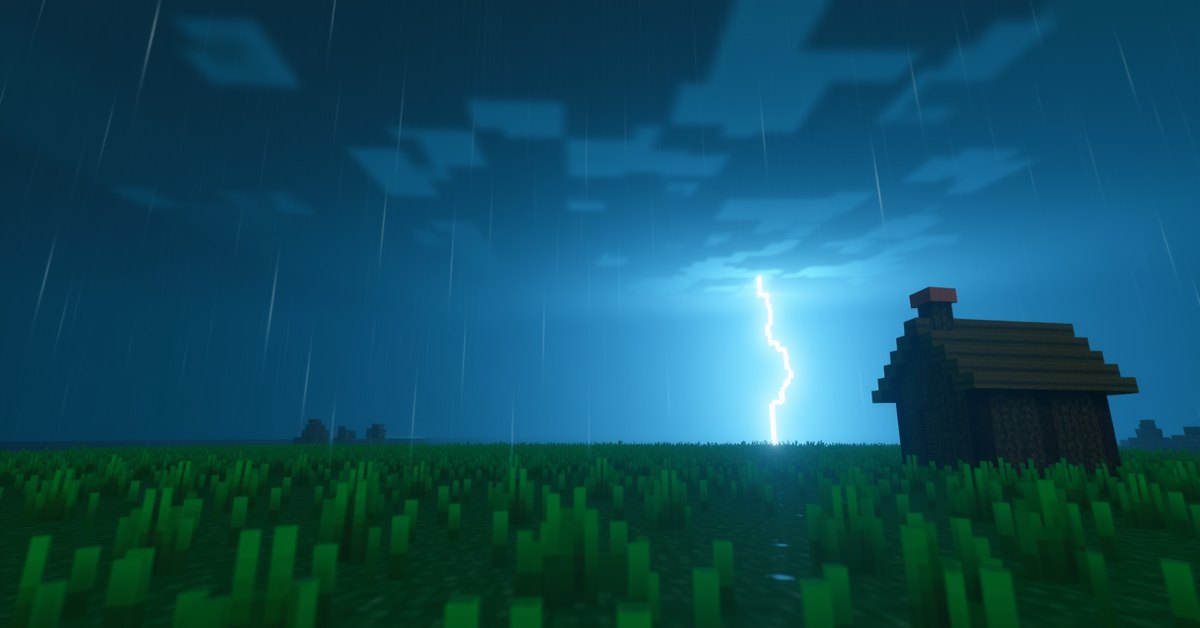
A thunderstorm is rain turned up to its most dangerous setting. The sky goes much darker than normal rain, dark enough that the surface light level drops low enough for hostile mobs to spawn during the day. If you’re caught outside when a storm hits at noon, zombies and skeletons can appear around you as if it were night.
The headline feature is lightning. Strikes land at random across loaded areas, and each one does several things where it hits. It starts a small fire, which can spread to wooden buildings and forests if the weather is dry afterward. It deals damage to any mob or player at the strike point. And it transforms certain mobs:
- A creeper becomes a charged creeper, which has a much larger, more destructive explosion.
- A pig becomes a zombified piglin.
- A villager becomes a witch.
- A red mooshroom becomes a brown mooshroom.
Storms can also trigger skeleton trap horses. A lone horse-like mob may appear during a thunderstorm, and when a player gets close, lightning strikes it and reveals a group of skeleton riders armed with bows. It’s one of the few mob events tied directly to weather.
You can aim lightning on purpose with a trident enchanted with Channeling. Throw it at a mob during a thunderstorm with open sky above, and the strike lands on that target. This is the standard way to farm charged creepers or convert a villager into a witch for a witch farm.
Protecting your builds from lightning
Random lightning is a real threat to wooden structures, especially large forests or all-wood bases. The tool for this is the lightning rod, crafted from three copper ingots. Place it on top of or near your build, and it pulls in lightning that would have struck nearby, taking the hit so your timber doesn’t catch fire. When struck, it also emits a short redstone pulse, so you can wire it into a storm detector.
For full safety, you can simply switch the weather off. /weather clear ends a storm immediately, and locking doWeatherCycle to false keeps it from coming back.
Controlling weather with commands
If cheats are enabled, you control weather directly with the /weather command. The three options are /weather clear, /weather rain, and /weather thunder. Each accepts an optional duration in seconds, so /weather rain 600 gives you ten minutes of rain before the cycle takes over again.
There’s a no-cheat option too: sleep. Getting into a bed at night skips to morning and resets the weather to clear, which ends any rain or storm. On a multiplayer server, the percentage of players who need to sleep is set by the playersSleepingPercentage game rule, so a storm clears once enough of the group is in bed.
Java vs. Bedrock differences
The core of weather works the same on both versions, but a few details split. Cauldrons fill from rain and snow in Bedrock but not in Java. Bedrock villagers actively seek shelter when it rains, while Java villagers are less consistent about it. The visual density of rain and the exact timing of cycles also differ slightly between editions. The big mechanics, lightning transformations, snow in cold biomes, and farmland hydration, behave the same way across both.
Frequently asked questions
How do I stop the rain in Minecraft?
If cheats are on, type /weather clear. Without cheats, sleep through the night in a bed, which resets the weather to clear by morning.
Can it rain in the Nether or the End?
No. Weather only exists in the Overworld. The Nether and the End never rain, snow, or storm.
Why isn’t it raining in my desert?
Deserts, savannas, and badlands are dry biomes that never show falling precipitation. The sky can dim during a weather event, but no rain or snow lands there.
Does rain make crops grow faster?
Not directly. Rain hydrates farmland so your crops stay watered without a nearby water source, but it doesn’t speed up the growth rate itself.
How do I make a charged creeper?
Get lightning to strike a creeper. The reliable method is a trident with the Channeling enchantment thrown at a creeper during a thunderstorm under open sky.
Do lightning rods always block lightning?
A lightning rod attracts strikes that would land nearby and takes the hit instead, protecting blocks around it. It doesn’t cover an entire base from one spot, so large builds may need more than one.
Can I turn weather off permanently?
Yes. Run /gamerule doWeatherCycle false to freeze the current weather, then set whatever state you want with /weather.
Getting weather to work for you
Most players treat weather as something that happens to them, but it’s easy to flip that around. Keep a lightning rod over anything wooden, save your enderman fights for clear skies, and remember that a Channeling trident turns a passing thunderstorm into a charged-creeper or witch farm whenever you want one.