What is the Overworld?
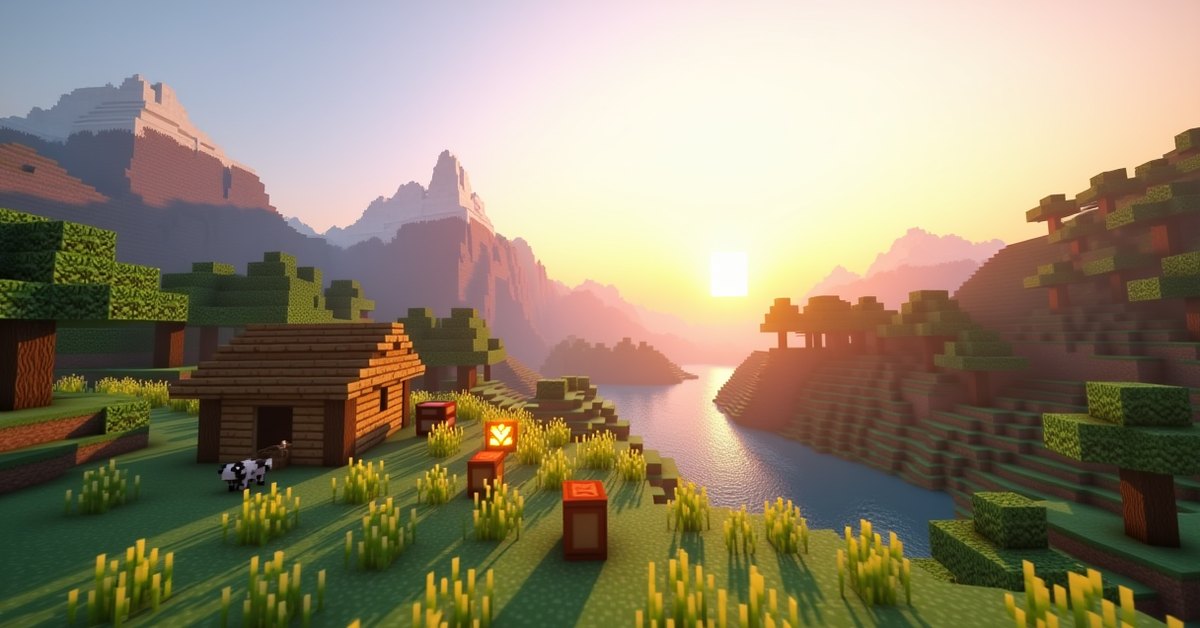
The Overworld is the main dimension in Minecraft and the one you start in. When you create a new world, your character spawns here, on the surface of a procedurally generated map of grass, water, trees, and stone. Almost everything a new player learns to do happens in this dimension first.
It’s the home base for survival. You gather wood, mine ore, build a shelter, farm food, and breed animals in the Overworld before you ever think about the Nether or the End. The other two dimensions are places you visit for specific reasons. The Overworld is where you live.
Mechanically, the Overworld has a normal day and night cycle, weather, a full range of biomes, and the widest spread of blocks and mobs in the game. The Nether and the End each strip most of that away and replace it with their own rules.
How big is the Overworld?
The Overworld is enormous. Horizontally, the world border sits at 29,999,984 blocks from the center in every direction, which gives you a playable square roughly 60 million blocks on a side. You will never walk to the edge in normal play. Past about 30 million blocks the game stops generating new land anyway.
Vertically, the build range runs from Y=-64 at the bottom to Y=319 at the top in current versions, for 384 blocks of total height. A layer of unbreakable bedrock seals the very bottom around Y=-64 to -60, and an invisible ceiling caps the top so you can’t place blocks above the limit.
That vertical space splits into rough zones. The surface and everything above sea level (Y=63) is where biomes, trees, and most structures sit. Below that you get caves and the main stone layers, then deepslate takes over under Y=0, running down to the bedrock floor where diamonds and other deep ores are most common.
Biomes and terrain
The Overworld holds the large majority of the game’s biomes. Forests, plains, deserts, jungles, savannas, swamps, taigas, badlands, snowy regions, mountains, and every ocean variant all generate here. Underground you also get cave biomes like lush caves and dripstone caves, each with its own blocks and plants.
Terrain generation gives you tall mountain ranges, deep ocean trenches, winding river systems, and cave networks that can drop hundreds of blocks below the surface. Where two biomes meet you often find sharp transitions, like a desert butting straight up against a snowy forest.
Structures are scattered across the surface and underground: villages, pillager outposts, ruined portals, ocean monuments, strongholds, ancient cities deep in the deepslate, and more. These are the main reason to explore, since each one carries loot or a function you can’t easily get elsewhere.
The day and night cycle
A full Overworld day lasts 20 real-world minutes. Of that, daytime runs about 10 minutes, with the remaining time split between dusk, night, and dawn. The sun rises in the east and sets in the west, which is a reliable way to find your bearings without a compass.
Daytime is safe on the surface. Most hostile mobs burn in direct sunlight, so zombies and skeletons that survived the night catch fire once the sun is up unless they’re standing in water or shade. Night is when the surface turns dangerous and mobs spawn freely in the dark.
You can skip the night by sleeping in a bed, which also sets your respawn point. On a multiplayer server, the default rule requires a share of players to sleep at once before the night passes. Beds only work in the Overworld; trying to sleep in the Nether or the End makes the bed explode.
Mobs in the Overworld
The Overworld has the widest cast of mobs in the game. Passive animals like cows, sheep, pigs, chickens, horses, and rabbits roam the surface and give you food, wool, and leather. You can breed most of them with the right food to build a sustainable farm.
Hostile mobs come out in the dark or spawn in unlit caves. Zombies, skeletons, creepers, spiders, witches, and slimes are the common threats near the surface, while drowned patrol the water and phantoms swoop in if you go too long without sleeping. Endermen wander day or night and turn hostile only if you look at them directly.
A few mobs sit in between. Wolves, iron golems, and bees are neutral, leaving you alone until provoked. Light level controls most hostile spawning, so keeping your base and surrounding area well lit is the simplest way to stop monsters from appearing where you don’t want them.
Resources and mining
The Overworld is the only dimension with the full ore lineup. Coal, copper, and iron generate across a wide band of heights, gold appears lower down (and also in badlands biomes near the surface), and redstone, lapis lazuli, and diamond cluster in the deepslate layers below Y=0.
Ore distribution changed with the cave update, so deeper is now better for the valuable ores. Diamonds peak in frequency around Y=-59, just above the bedrock floor, which is why most strip-mining happens near the bottom of the world. Emeralds are the exception, generating only in mountain biomes.
Stone, dirt, sand, gravel, wood, and water are all effectively unlimited here, which makes the Overworld your supply depot for building materials. The Nether and the End have their own block sets, but neither comes close to the variety you can gather on the surface and in the caves.
Weather
The Overworld has weather, which the other dimensions don’t. Rain rolls in periodically, turning into snowfall in cold biomes and skipping desert and savanna regions that are too dry. Rain fills cauldrons, hydrates farmland, and pushes most hostile surface mobs to spawn during the day because of the lower light.
Thunderstorms are a stronger version of rain with lightning. A lightning strike can start fires, turn a pig into a zombified piglin, or create a charged creeper. You can sleep through a thunderstorm at any time of day, not just at night, which is the fastest way to clear one.
How the Overworld connects to other dimensions
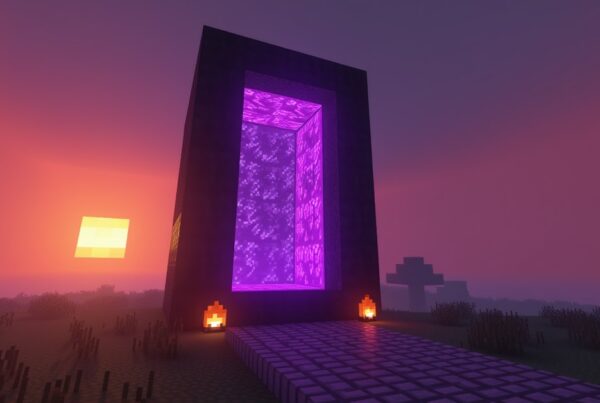
The Overworld is the hub. You reach the Nether by building and lighting a nether portal frame from obsidian, then stepping through. Distance in the Nether is compressed, so one block walked there equals eight in the Overworld, which makes the Nether the fastest way to travel long surface distances.
The End is reached through an end portal, which you don’t build from scratch. End portals already exist inside strongholds underground, and you activate the frame by filling each slot with an eye of ender. Beating the ender dragon in the End opens a gateway back to your Overworld spawn.
Both trips start and end in the Overworld, and your bed and respawn point stay anchored here. That’s why most players treat the Overworld as home and the other two dimensions as expeditions.
Java and Bedrock differences
The core of the Overworld is the same across both editions: the same height range, the same biomes, and the same day length. Most differences are small. Mob spawning math, the exact multiplayer sleep rules, and a handful of redstone behaviors vary between Java and Bedrock, but the dimension itself behaves the same way in both.
If you follow a guide written for one edition, the Overworld sections almost always carry over to the other. The bigger edition gaps show up in technical farms and redstone, not in how the world generates or how day and night work.
Frequently asked questions
What is the lowest point in the Overworld?
The build limit bottoms out at Y=-64, with a jagged bedrock layer filling roughly the bottom four blocks. You can’t dig through bedrock in survival, so Y=-60 is about as low as you can stand on solid, breakable ground.
What is the best Y level for diamonds?
Around Y=-59. Diamond ore generates from Y=16 down to the bottom of the world, but it’s most common in the deepslate just above bedrock, so digging a branch mine near Y=-59 gives you the best odds.
Can I sleep during the day in the Overworld?
Only during a thunderstorm. On a clear day the bed tells you that you can only sleep at night or during a storm. Once it’s actually night, or once a thunderstorm starts, the bed works.
Why do my beds explode in the Nether?
Beds only function as beds in the Overworld. In the Nether and the End, using one triggers an explosion instead. If you need a respawn point outside the Overworld, use a respawn anchor in the Nether.
How do I get back to the Overworld from the Nether?
Walk back into the same nether portal you arrived through. It links to your Overworld portal, so stepping in returns you to where you started. If you build a new portal far away in the Nether, it can link to a new spot in the Overworld instead.
Does the Overworld ever end?
For practical purposes, no. The world border stops you near 30 million blocks from the center, and terrain generation gets glitchy long before that. You’ll never reach a true edge in normal survival play.
A practical takeaway
Treat the Overworld as your supply line. Everything you need to survive the harder dimensions, food, building blocks, armor materials, and a safe respawn point, comes from here. Set up a well-lit base near a few different biomes, and the rest of the game opens up from that one foothold.