What world generation means in Minecraft
Every Minecraft world is built from a single number called a seed. The seed feeds a set of math functions that decide where land rises, where oceans sit, which biomes appear, and where caves, villages, and ores end up. Give the game the same seed on the same version and edition, and it will build the exact same world every time.
You never see the whole world get made at once. The game builds it in pieces as you walk, fly, or teleport toward unexplored ground. That is why a fresh world can feel endless: the terrain only exists once you get close enough for the game to draw it.
This guide walks through how that process works, from chunks and seeds to biomes, dimensions, and the structures that get dropped into the landscape.
Chunks: how the world loads in pieces
The map is split into columns called chunks. Each chunk is 16 blocks wide, 16 blocks deep, and runs the full height of the world. As you move around, the game loads chunks near you and generates any that have never existed before. Walk away and they unload from active memory, but the game remembers them so they look the same when you return.
Generation happens in stages. First the rough shape of the land gets carved from noise. Then the game adds surface blocks like grass and sand, hollows out caves and ravines, floods water and lava, scatters ores, grows trees and plants, and finally places larger structures. Each stage needs its neighbors to be partly built, which is why you sometimes see a far-off chunk edge that hasn’t finished decorating yet.
The chunks around your spawn point get special treatment. These spawn chunks stay loaded whenever anyone is in the world, which is why players often build automatic farms and redstone clocks there.
Seeds and how to find yours
A seed is just a number. You can type your own when you create a world, paste in a word (the game converts text to a number), or leave it blank and let the game roll a random one. Two people on opposite sides of the planet who enter the same seed on the same version get matching terrain, which is how seed sharing works.
To see your current seed in Java Edition, run /seed in chat. On Bedrock, open the world settings and the seed is listed there. One thing to keep in mind: the same seed does not produce the same world across Java and Bedrock. The two editions use different generation code, so a seed that drops you next to a village in Java can land you in the middle of an ocean in Bedrock.
The three dimensions
A Minecraft world is really three separate worlds stitched together by portals. Each one generates with its own rules.
The Overworld
This is where you spawn. It holds the widest range of biomes, the deepest cave systems, and most of the game’s structures. Since the Caves and Cliffs update, the Overworld stretches from bedrock at Y -64 up to a build ceiling at Y 320, giving you 384 blocks of vertical space. Mountains can reach high into the sky and cave systems run far below sea level at Y 62.
The Nether
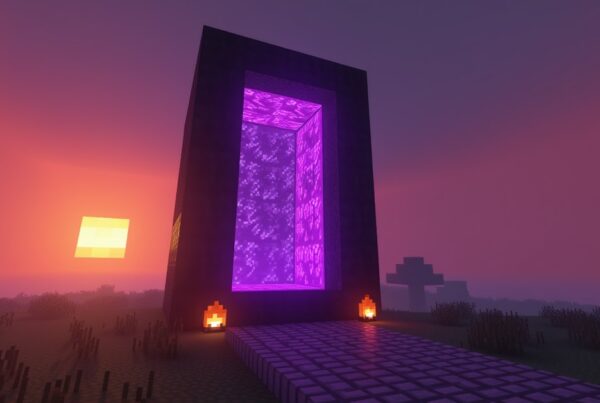
A hot, hostile dimension reached through a nether portal. It generates as a closed space with a solid bedrock roof at Y 128 and a bedrock floor below, packed with lava seas, fungal forests, and bastion remnants. Distances here are compressed: one block traveled in the Nether moves you eight blocks in the Overworld, which makes it useful for fast travel between far-apart bases.
The End
Reached through an end portal hidden in a stronghold. The central island holds the ender dragon and a ring of obsidian pillars. Beyond a stretch of empty void sit thousands of outer islands made of end stone, where you find end cities, shulkers, and elytra. The End generates around that central island in every direction once you cross the gap.
How biomes get placed
Biomes are the regions that give an area its look and rules: a desert, a snowy taiga, a lush cave, a mushroom field. Before the Caves and Cliffs update, biomes were chosen mostly by a flat map of temperature and rainfall. The newer system is fully three-dimensional, so the biome you stand in can change with depth as well as location.
The game blends several noise values to decide what goes where:
Temperatureseparates hot deserts from frozen peaks.Humiditysplits dry savannas from wet jungles and swamps.Continentalnessdecides whether an area is deep ocean, coastline, or far inland.Erosioncontrols how flat or mountainous the land is.Weirdnessadds variety so regions don’t repeat in a predictable grid.Depthlets cave biomes like lush caves and dripstone caves appear underground, independent of the surface above them.
Because terrain shape and biome placement come from separate noise, you get results that feel hand-placed: a mountain range that rises out of a plains, a warm beach that wraps around a cold ocean, or a band of dripstone caves sitting under a forest that has no idea it’s there.
How the terrain itself is shaped
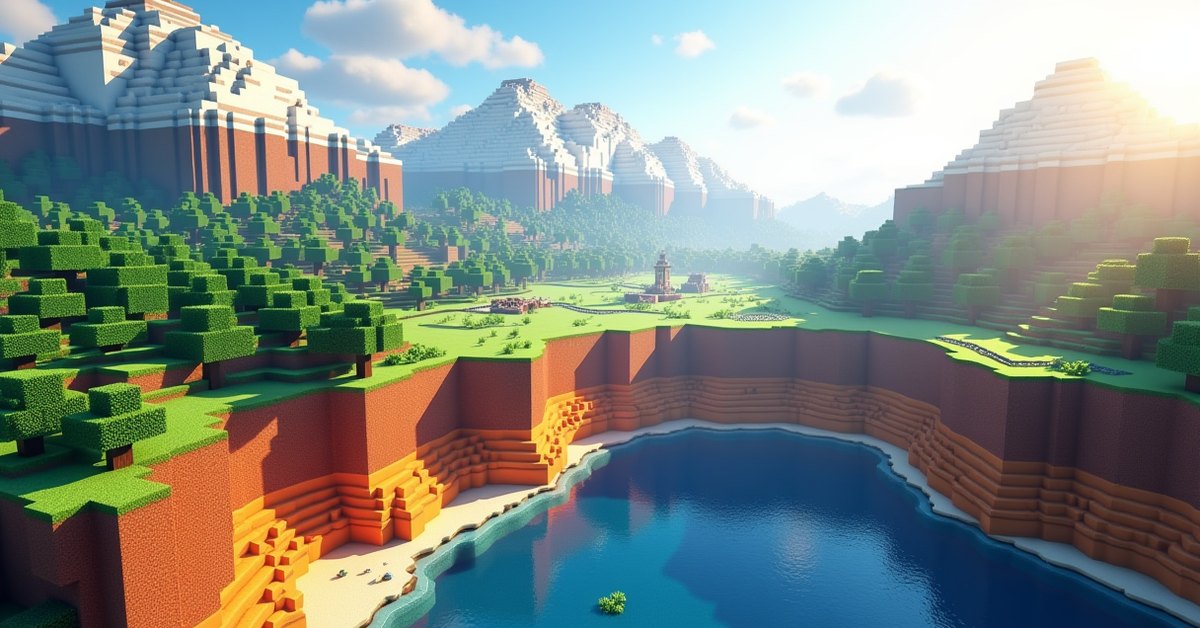
The actual hills, cliffs, and overhangs come from 3D noise. Older versions decided the height of the land per column, which made overhangs and floating terrain rare. The current system asks a different question for every point in space: should this spot be solid or air? That change is what allows the dramatic cliffs, arches, and deep cave openings you see in modern worlds.
Once the solid-or-air shape is set, the game paints the surface. Grass and dirt go on temperate land, sand on deserts and beaches, snow on cold peaks, and so on. Then it carves caves and ravines through the rock, fills low pockets with water or lava, and places ores in bands based on height. Diamonds favor the deep levels near Y -59, iron appears across a wide range with a peak high in mountains, and copper clusters around the middle layers.
Structures dropped into the world
After the land is built, the game places structures. These are pre-designed buildings and formations that the generator fits into the terrain. Common ones include villages, pillager outposts, desert temples, jungle temples, ocean monuments, woodland mansions, ruined portals, shipwrecks, ancient cities, and trail ruins. The Nether adds nether fortresses and bastion remnants, and the End adds end cities.
Most structures only spawn in matching biomes. You won’t find a desert temple in a swamp or an ocean monument on dry land. Strongholds are a special case: a set number generate in rings around the world center regardless of biome, and they hold the only end portals in the game. Throwing an eye of ender points you toward the nearest one.
Structures are spaced out so they don’t overlap or crowd together. The generator picks rough grid regions and places one structure somewhere inside each, with enough randomness that two worlds rarely look alike.
World types and presets
When you create a world you can pick a generation style that changes the rules:
Defaultis the normal terrain most players use.Superflatbuilds a flat plane of layers you can customize, popular for building and testing redstone.Large Biomesstretches every biome to several times its normal size, so a single forest or desert can run for thousands of blocks.Amplifiedexaggerates the terrain into towering mountains and deep chasms. It’s demanding on hardware and meant as a novelty.Single Biomefills the entire Overworld with one biome of your choice.
Java Edition also exposes deeper customization through data packs, letting map makers rewrite noise settings, biome placement, and structure spawning. That’s how custom-terrain maps get their unusual landscapes.
Tips and common questions about generation
A few practical things help once you understand how worlds are built. If you update Minecraft to a new version, fresh chunks generate with the new version’s rules, which can leave a visible seam where old and new terrain meet. Explore a buffer of empty land before a big update if you want to avoid an ugly border near your base.
If you’re hunting a specific biome or structure, the seed matters more than luck. Seed-mapping tools let you scan a seed and find coordinates before you ever load in. And remember that biomes can sit underground, so the lush cave you’re looking for might be directly below a plains with no surface hint at all.
Frequently asked questions
What is a seed in Minecraft?
A seed is the number the game uses to generate your world. The same seed on the same version and edition always produces the same terrain, biomes, and structures, which is why players share seeds to revisit interesting worlds.
Do the same seeds work in Java and Bedrock?
No. The two editions use different generation code, so the same seed builds different worlds. A seed is only reliable within the same edition.
How big can a Minecraft world get?
The world keeps generating as you explore, reaching into the millions of blocks in each direction. Strange physics and movement bugs start near the far edge, roughly 30 million blocks out, but you will almost never travel that far in normal play.
Why does my world have a wall of cut-off terrain?
That seam usually appears when you load older chunks under a newer game version. The new version generates fresh land with different rules, so it doesn’t line up with the terrain you explored before updating.
Can biomes appear underground?
Yes. Since the Caves and Cliffs update, cave biomes like lush caves and dripstone caves generate below the surface based on depth, separate from whatever biome sits on top of them.
What are spawn chunks?
Spawn chunks are the area around your world’s spawn point that stays loaded whenever someone is in the world. Players build farms and redstone clocks there so they keep running even when no one is nearby.
Where to go from here
The fastest way to understand generation is to make two worlds: one on a random seed and one on a seed you found online for a specific feature, then compare what shows up. Once you can read terrain and guess what’s under it, finding diamonds, villages, and rare biomes stops feeling random and starts feeling like a map you already half know.