What coarse dirt is
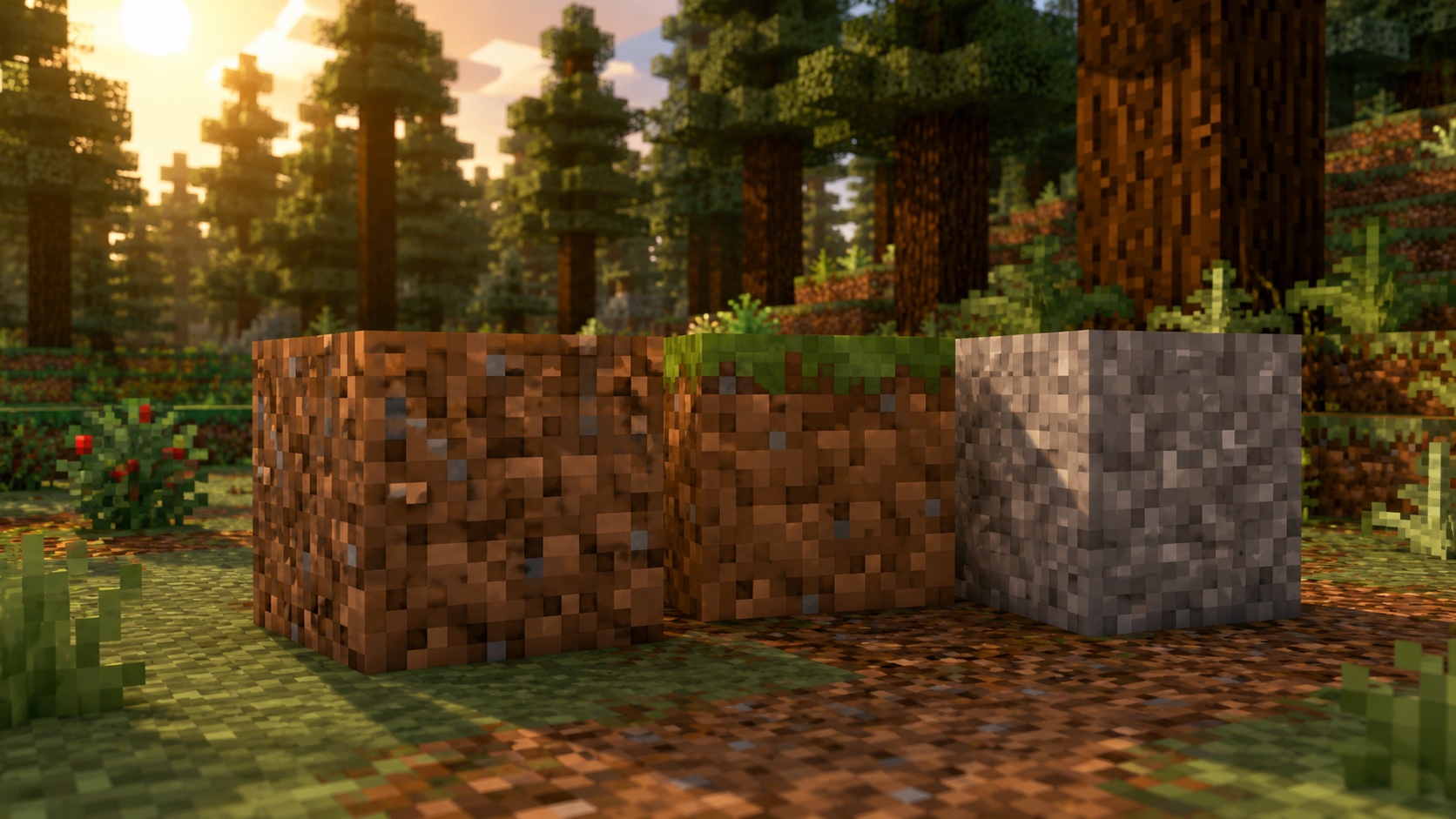
Coarse dirt is a variant of dirt in Minecraft that won’t grow grass. It looks rougher than regular dirt, with darker patches and a gravel-flecked texture. The block exists for one main reason: when you place coarse dirt next to a grass block, the grass never spreads onto it. That makes it the cleanest way to keep paths, farms, and decorative spots looking the way you placed them.
You can craft coarse dirt anywhere with two materials you already have, find it in several biomes, or convert it back to regular dirt with a hoe. It’s a small block, but it solves a problem every builder runs into eventually.
How to get coarse dirt
Crafting recipe
The fastest way to get coarse dirt is to craft it. Place two dirt blocks and two gravel blocks in a 2×2 pattern in any crafting grid. The dirt and gravel sit diagonally from each other. The recipe gives you four coarse dirt blocks per craft, so two stacks of dirt and two stacks of gravel produce enough for a sizable build.
The pattern looks like this in the crafting grid:
- Top left: dirt
- Top right: gravel
- Bottom left: gravel
- Bottom right: dirt
You can also use the inventory crafting grid for the recipe, which is handy when you’re out gathering materials and want to convert dirt and gravel on the spot.
Where coarse dirt spawns naturally
Coarse dirt generates in several biomes, usually mixed with regular dirt and gravel. You’ll find it in:
- Old growth pine taiga and old growth spruce taiga (often around the bases of giant trees)
- Wooded badlands, especially around the upper terraces
- Windswept savanna and savanna plateau slopes
If you live near any of these biomes, you can usually mine enough coarse dirt for a small project without crafting any.
Mining coarse dirt
A shovel mines coarse dirt fastest. A wooden shovel will do the job, and an iron or netherite shovel makes large gathering trips painless. You can also break the block by hand, but it takes longer. Coarse dirt always drops itself when broken, regardless of the tool you use, so you don’t lose anything by mining without a shovel.
What coarse dirt does
It blocks grass spread
The whole reason coarse dirt exists is to stop grass from spreading. Place a regular dirt block next to a grass block and the grass will eventually creep over and turn the dirt into grass. Place coarse dirt next to a grass block and nothing happens. The block stays exactly the way you placed it.
This sounds small, but it changes how you can build. You can run a dirt-colored path through a grassy area without it turning green over time. You can leave a worn patch around a tree without grass swallowing it. You can keep a village square clear without fences or stone borders.
It still supports plants
Coarse dirt isn’t barren. Saplings grow into trees on it, sugar cane grows beside water on it, and most placeable plants behave normally. The only thing that won’t appear on coarse dirt is the grass texture itself.
That makes it useful for tree farms. You can plant rows of saplings on coarse dirt, harvest the trees as they grow, and never have grass crawling between rows getting in your way. Bonemeal works the same way it does on regular dirt: it grows the plant, not the surface.
It can be tilled
Right-click coarse dirt with a hoe and the block converts to regular dirt. From there, a second hoe click turns the dirt into farmland. So if you want crops on what used to be coarse dirt, plan on two hoe clicks: one to undo the coarse texture, one to make the farmland.
This makes coarse dirt easy to repurpose. If you laid a path and later want a garden in the same spot, you don’t need to break and replace blocks. Two clicks per square gets you from path to farmland.
Coarse dirt vs. regular dirt
The two blocks share most properties, but the differences matter when you’re building.
| Property | Coarse dirt | Regular dirt |
|---|---|---|
| Grass spreads onto it | No | Yes |
| Saplings grow | Yes | Yes |
| Mobs can spawn on it | Yes | Yes |
| Tilled by a hoe | Yes (turns to dirt, then farmland) | Yes (turns to farmland) |
| Crafting required | Yes (or mine in biome) | No (mine anywhere) |
| Texture | Rough, gravel-flecked | Smooth brown |
If you don’t care whether grass grows, regular dirt is fine and free. If you want the look or behavior to stay put, coarse dirt is the answer.
Best ways to use coarse dirt
Garden paths and walkways
Coarse dirt makes a clean rustic path. Lay a one or two block wide line through your base or across a yard, and you get a brown trail that stays brown. It pairs well with stone slabs, gravel, and dirt path blocks for variety. Unlike grass-cleared paths from torches and trampling, coarse dirt is a permanent solution.
Tree farms and orchards
If you grow trees for wood, coarse dirt under your saplings stops the surrounding grass from spreading into the planting area. The space stays workable. You can also use it to mark exact sapling positions in a grid, since you’ll see the rough texture even after a tree grows.
Around villages and structures
Place coarse dirt around the base of a building if you want a worn-in look without grass climbing the walls. It’s also useful in deserts and badlands builds where you want a dusty foundation that contrasts with the structure above.
Animal pens
Pens floored with coarse dirt look more like packed earth and stay that way. Animals can still spawn and move around on coarse dirt, so the gameplay doesn’t change. The pen just keeps that lived-in look instead of turning into a green field over time.
Camouflage for traps and hidden builds
Because coarse dirt blends into the surrounding ground in taiga or savanna biomes, it’s good cover for hidden entrances. A trapdoor over coarse dirt reads as ground; a trapdoor over a polished stone block reads as a hatch.
Common mistakes
The most common mistake with coarse dirt is using a hoe on it when you didn’t mean to. The block converts to regular dirt instantly. If your goal is grass-free terrain and you accidentally hoe-click a square, you’ve reset that block. Be careful with tool selection when you’re working in areas that mix coarse dirt and farmland.
Another mistake is assuming coarse dirt prevents all overgrowth. It only blocks grass. Vines, leaves, mushrooms, and other plants ignore the difference. If you have a vine farm or a fungus garden nearby, those plants spread the same way they would on any other surface.
The third common mistake is overproducing it. Two dirt and two gravel make four coarse dirt, which sounds efficient until you craft enough for a building project and realize you’ve burned through a stack of gravel. Plan your needs before mass-crafting, especially if gravel is hard to find near your base.
Java vs. Bedrock differences
Coarse dirt behaves the same in Java and Bedrock for almost every use case. The crafting recipe matches, the texture is the same, and grass spread is blocked in both versions.
Natural generation can vary slightly by version. Some biomes that include coarse dirt patches in Java may have different distribution rules in Bedrock, so the patches you find on one platform may sit in slightly different spots on the other. The biomes themselves still produce the block, so you’ll find it either way.
Frequently asked questions
Can mobs spawn on coarse dirt?
Yes. Coarse dirt counts as a normal solid surface for spawning. Hostile mobs spawn on it at low light levels, and animals like sheep, cows, pigs, and chickens can spawn on it during world generation if the biome supports them.
Can you grow grass on coarse dirt?
No, not naturally. Adjacent grass blocks won’t spread to coarse dirt no matter how long you wait. If you want grass, hoe the coarse dirt to convert it back to regular dirt, then let grass spread normally or use bonemeal on a nearby grass block.
How do you turn coarse dirt back to dirt?
Use a hoe on it. Right-click (or interact, depending on your platform) with any hoe equipped, and the block converts to regular dirt. From there it behaves like any other dirt block, including being able to grow grass.
Can you grow trees on coarse dirt?
Yes. Saplings placed on coarse dirt grow into full trees the same way they do on dirt or grass. Bonemeal speeds it up. The grass-blocking behavior of coarse dirt only affects the surface texture, not what plants do above it.
What biomes have coarse dirt?
You’ll find natural coarse dirt in old growth pine taiga, old growth spruce taiga, wooded badlands, and windswept savanna. The block is mixed in with regular dirt and gravel, so look for the rougher texture or a shovel-friendly speckled brown surface.
Can you till coarse dirt directly into farmland?
Not in one step. A hoe converts coarse dirt to regular dirt first. Hoe the same square again to turn it into farmland. So getting from coarse dirt to a planted crop tile takes two clicks instead of one, but it’s still faster than breaking and replacing the block.
Does coarse dirt burn?
No. Coarse dirt isn’t flammable. Fire on adjacent blocks won’t spread to it, and lava won’t ignite it. That’s another reason it’s useful around builds: it acts as a small firebreak compared to wood or leaves.
Final note
Coarse dirt is a small block with a clear job. If you want grass to stay where it is and not creep into your projects, two dirt and two gravel is all it takes. Once you’ve built one path with it, you’ll start spotting places to use it everywhere.