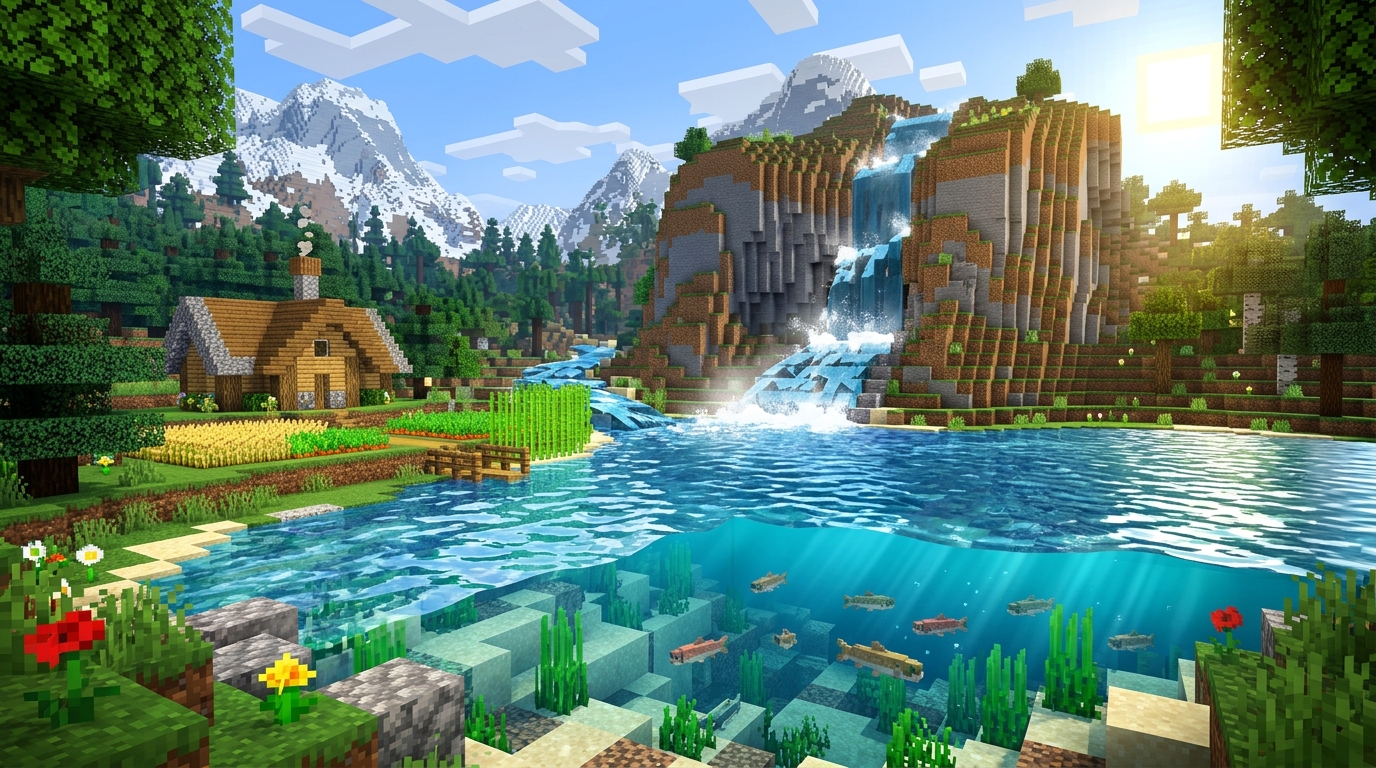
Water is one of the first resources players use in Minecraft, but it is also one of the last systems many players truly master.
At the beginning of a world, water helps you grow crops, survive falls, and deal with lava. Later, it becomes the backbone of transport systems, bubble elevators, underwater bases, automated farms, and advanced building projects. Water is not just scenery or a survival convenience—it is infrastructure.
Once you understand how Minecraft water actually works, you stop placing it randomly and start using it strategically.
This guide covers everything important about water in Minecraft, from basic mechanics to advanced uses that can improve almost any survival world.
What Water Does in Minecraft
Water is a fluid block naturally found across the Overworld in:
- oceans
- rivers
- lakes
- swamps
- underground aquifers
- generated structures
Players can collect water using buckets, store it in cauldrons, and place it almost anywhere in the Overworld.
Water is valuable because it can:
- hydrate farmland
- prevent fall damage
- move mobs, players, and items
- create bubble elevators
- neutralize lava hazards
- support underwater bases
- power many farm and automation systems
- improve movement through terrain
That range of uses is why nearly every strong Minecraft base benefits from nearby water access.
Source Blocks vs Flowing Water
This is the most important mechanic to understand.
Water Source Blocks
A source block is a full water block that can be collected with a bucket.
Flowing Water
Flowing water spreads outward from a source block. It looks similar, but usually cannot be picked up directly.
That means if you try to scoop visible water and the bucket does nothing, you are probably clicking flowing water instead of a source block.
Why This Matters
Many advanced mechanics only work with source blocks:
- infinite water sources
- bubble columns
- some farm systems
- controlled transport streams
- clean decorative builds
A lot of player frustration comes from not realizing that visible water and source water are not always the same thing.
How Far Water Flows
Water spreads outward from a source block across flat surfaces for a limited distance before stopping.
This matters when building:
- crop irrigation lines
- item transport streams
- mob channels
- decorative fountains
- canal systems
If water drops down one block, it can continue flowing again from the new level. Advanced builders use small elevation changes to create long-distance transport systems.
How to Make an Infinite Water Source
One of the best early-game upgrades.
2×2 Infinite Water Source
- Dig a 2×2 hole
- Place water in two opposite corners
The pool becomes renewable, allowing unlimited bucket refills.
1×3 Infinite Water Source
- Dig a 1×3 trench
- Place one water source on each end
This also creates renewable water and is great for compact bases.
Best Places to Build One
Put your first infinite water source near:
- crafting area
- furnace room
- crop farm
- mine entrance
- animal pens
Water gets used often enough that travel time matters.
Water and Farming
Water is essential for efficient farming.
Farmland stays hydrated when water is:
- up to four blocks away horizontally
- including diagonals
- at the same level or one block above
That means one centered water block can hydrate a full 9×9 crop area.
Best Starter Farm Layout
- one water block in center
- crops around it
- fencing outside
- lighting nearby
Advanced Farm Tip
Many players leave exposed water holes everywhere. Better builders hide water under slabs, trapdoors, or stylish centerpieces while keeping full efficiency.
Water mechanics allow farms to look good and perform well.
Best Uses for Water in Minecraft
1. Prevent Fall Damage
A water bucket is one of the strongest survival items in the game.
Use it to:
- survive high drops
- descend ravines
- build towers safely
- travel cliffs faster
Many experienced players carry one constantly.
2. Control Lava Safely
Water can turn lava into:
- obsidian
- cobblestone
- stone (depending on interaction)
That makes it one of the best mining tools for:
- diamond caves
- lava lakes
- obsidian farming
- safer underground exploration
3. Move Items and Mobs
Water streams are core infrastructure for automation.
Used in:
- mob farms
- crop farms
- item sorters
- collection systems
- villager transport
- animal movement
Even simple survival bases benefit from basic water transport.
4. Build Bubble Elevators
Bubble columns are one of the most powerful movement systems in Minecraft.
- Soul Sand pushes upward
- Magma Block pulls downward
They only work through source water blocks.
Why Bubble Elevators Fail
Most broken elevators fail because:
- flowing water exists in shaft
- source blocks are missing
- waterlogged block interrupts column
- wrong base block used
- shaft not fully enclosed
Fastest Reliable Setup
- Build shaft
- Fill with water
- Grow kelp upward
- Kelp converts shaft to source blocks
- Break kelp
- Place soul sand or magma at bottom
That single kelp trick solves most elevator problems.
5. Underwater Building
Water becomes even stronger in late game.
Use it for:
- ocean bases
- aquarium builds
- monument projects
- conduit-powered cities
- underwater tunnels
Bubble columns can restore air, and conduits provide underwater bonuses that make major projects much easier.
Waterlogging Explained
Waterlogging allows certain blocks to share space with water.
Common examples:
Why Waterlogging Matters
It allows:
- cleaner underwater interiors
- decorative aquatic builds
- realistic docks and harbors
- detailed aquarium designs
- submerged pathways
Important Limitation
Bubble columns stop at waterlogged blocks.
That means decorative choices can accidentally break elevators or functional builds.
Water in the Nether
One of the most common questions players ask.
Can You Place Water in the Nether?
Normally, no.
Water evaporates instantly in standard Nether conditions, making buckets far less useful there.
What Still Works
- water in cauldrons
- potions
- fire resistance strategies
- lava control alternatives
This is why smart Nether prep focuses less on water buckets and more on potions and gear.
How to Drain Water Efficiently
Many guides explain placing water, but draining water matters too.
Use Sponges
Sponges absorb nearby water and become wet sponges.
They are excellent for:
- ocean monument clearing
- underwater bases
- draining tunnels
- large construction zones
If you plan major ocean builds, sponges save huge amounts of time.
Advanced Draining Tip
Use sand or gravel walls to divide large flooded areas into smaller sections before sponging.
That speeds up draining dramatically.
Water Through the Stages of a Survival World
Early Game Priorities
- make infinite water source
- hydrate first farm
- carry water bucket
- handle lava safely
- create safe mine entrances
Mid Game Priorities
- better farms
- mob transport systems
- bubble elevators
- villager movement
- crop automation
Late Game Priorities
- industrial item streams
- conduit projects
- underwater megabases
- decorative waterlogging
- technical farms
- large-scale terrain builds
Water scales with player progress better than almost any resource.
Common Minecraft Water Mistakes
Trying to Scoop Flowing Water
Only source blocks refill buckets.
Bubble Elevator Not Working
Usually caused by flowing water somewhere in shaft.
Dry Farmland
Water is too far away or poorly placed.
Ugly Farms
Hydration works even with hidden water designs.
No Water Near Base
Walking long distances for water wastes time early game.
Ignoring Sponges
Large underwater projects become painfully slow without them.
Java vs Bedrock Notes
Most water mechanics are shared, but some details differ.
Potential differences include:
- cauldron interactions
- waterlogging edge cases
- redstone + water mechanics
- mob pathing behaviors
If a build tutorial fails, always check whether it was designed for Java or Bedrock.
FAQ
Can you collect flowing water in Minecraft?
No. Buckets collect source blocks, not flowing water.
How much farmland can one water block hydrate?
Up to a 9×9 crop area when centered.
Why is my bubble elevator not working?
Your shaft likely contains flowing water instead of full source blocks.
Can you use water in the Nether?
Not normally. Water evaporates, though cauldrons still have uses.
What is waterlogging?
A mechanic that lets certain blocks share space with water.
What is the best tool for draining water?
Sponges.
Is a water bucket worth carrying?
Absolutely. It is one of the best survival tools in the game.
Pro Tips Most Players Learn Late
- Carry a water bucket almost everywhere in the Overworld
- Build multiple infinite water sources around your base
- Use kelp anytime bubble columns fail
- Hide water in farms for better aesthetics
- Use water streams before complex redstone transport
- Bring sponges before ocean projects
- Combine conduits + waterlogging for elite underwater builds