What is a grindstone?
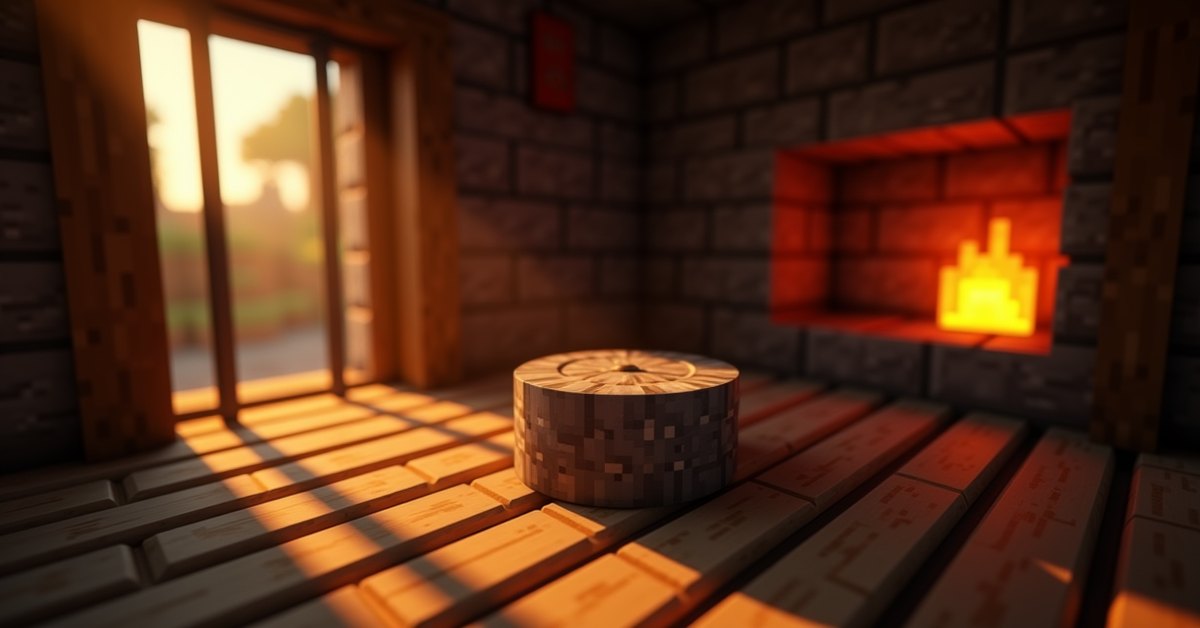
A grindstone is a utility block in Minecraft that does two jobs: it repairs damaged tools and weapons, and it strips most enchantments off gear in exchange for experience points. It looks like a spinning sandstone wheel set into a wooden frame, and you’ll spot one in any village weaponsmith’s house.
If you’ve picked up a half-broken sword from a chest, or want to scrub a wasted enchantment off a pickaxe, the grindstone handles both. It’s cheap to make, easy to find, and it pairs naturally with the rest of the smithing and villager economy in vanilla Minecraft.
How to get a grindstone
You have two ways to add a grindstone to your world: find one or build one.
Finding a grindstone
Grindstones generate naturally in villages, attached to weaponsmith buildings. Every weaponsmith house in every village biome includes one, and that block is what assigns the weaponsmith profession to a nearby villager. Walking through a village and seeing a grindstone already placed means you don’t have to craft your own.
You can mine a placed grindstone with any tool, including your bare hand. A wooden pickaxe or better is fastest, but the block drops either way. If you’re taking one from a village, remember that removing a job site block while a villager has claimed it makes them unemployed again.
Crafting a grindstone
The crafting recipe uses cheap materials you’ll already have:
- 2 sticks
- 1 stone slab
- 2 planks (any wood type)
Place them on a crafting table like this:
| Row | Left | Middle | Right |
|---|---|---|---|
| Top | Stick | Stone slab | Stick |
| Middle | Plank | (empty) | Plank |
| Bottom | (empty) | (empty) | (empty) |
You can mix wood types for the planks. Two oak, two birch, or one of each, the recipe doesn’t care. The slab has to be a plain stone slab, not cobblestone, smooth stone, or any other variant, and it has to be the slab, not a full block. If you only have full stone blocks, run one through a stonecutter or put three in a crafting row to make slabs first. If the recipe isn’t working, the slab type is the usual reason.
How to use a grindstone
To open a grindstone, right-click it on Java Edition or tap it on Bedrock. The interface has two input slots on the left and one output slot on the right. Drop items in, take the result out. That’s the whole thing.
What it actually does depends on what you put in.
Repairing items
Put two of the same item in the input slots, and the grindstone produces a single combined version with stacked durability. Two half-broken iron pickaxes give you one nearly full iron pickaxe. The repair costs no experience at all, which is what makes it worth doing for plain gear.
The math: the grindstone adds the remaining durability of both items together, then gives you a 5% bonus on top, capped at the item’s maximum durability. If both inputs were at 50% durability, you’d end up at 100% with a tiny bit of waste against the cap. If both were at 90%, you’d hit the cap and lose the surplus.
Items have to match exactly. An iron pickaxe can’t be combined with an iron axe, or with a diamond pickaxe. The grindstone accepts most tools, weapons, and armor pieces. Elytra and shields can’t be repaired this way.
Repairing through a grindstone strips off all enchantments, which is the catch. If you have a good enchanted pickaxe at half durability, don’t toss it into a grindstone with a second pickaxe unless you’re fine losing the enchantments. Use an anvil with a second item of the same type and pay the experience cost, or use mending instead.
Removing enchantments
Put a single enchanted item into either input slot, leave the other slot empty, and the output shows the same item with the enchantments stripped. Take it out and you keep the bare tool plus a chunk of experience points refunded back to you. The orbs spawn at the block rather than going straight into your bar, so stand close when you pull the item out or you can miss some of them.
The grindstone removes every normal enchantment on the item at once. There’s no way to keep one and drop the rest, so if a pickaxe has Efficiency IV and Silk Touch and you only want the Silk Touch gone, both come off.
The XP amount scales with the enchantment levels, not with the item itself. A Sharpness V sword refunds more than a Sharpness I sword, and a fully-loaded enchanted book gives back more than a single-enchantment one. It’s never the full cost you paid to enchant the item, and that’s by design: the refund is a slice of value back before you scrap or re-enchant gear, not a level farm. If you’re chasing levels, mob farms and mining are far better sources. It’s still the closest thing Minecraft has to undoing an unwanted enchantment.
One trap: the grindstone does not remove curses. Curse of Binding and Curse of Vanishing stay on the item after a grindstone pass, and you don’t get XP back for them. If you put a cursed item through, you get a stripped item that still has the curse, plus XP for any non-curse enchantments that were on it.
Why remove enchantments at all?
A few reasons come up often. You grabbed a villager-traded or loot-chest item with a bad enchantment combo and want a clean base to re-enchant. You want the XP back before recycling old gear. Or you’re prepping an item for an anvil combine and want it stripped first so the prior-work penalty stays low. Pulling Silk Touch off a pickaxe so you can put Fortune on it is the classic case.
Grindstone vs. anvil
These two blocks get mixed up, so here’s the clean split. The grindstone takes enchantments off and hands you some XP, and it costs no levels to use. The anvil does the opposite kind of work: it adds enchantments from a book, combines two enchanted items, renames items, and repairs while keeping enchantments, all at an experience cost. If your goal is to take enchantments off, use the grindstone. If your goal is to put them on or keep them, use the anvil. Most serious bases have both.
How the grindstone works with villagers
The grindstone is the job site block for the weaponsmith profession. Place one within range of an unemployed adult villager, and as long as they don’t already have a job, they’ll claim it and become a weaponsmith.
That matters if you’re building a trading hall. Weaponsmiths offer some of the most reliable trades in the game, including enchanted iron and diamond swords and axes, and they buy raw materials such as coal and iron for emeralds. To assign a profession deliberately, place the grindstone near the villager you want to convert, wait for them to walk up and accept the job (you’ll see green sparkles), and then you can break and re-place the block to reset their trades. Once you’ve completed a trade with them at least once, the profession locks in and they keep it even if you break the block later.
A grindstone only counts as a job site if there isn’t already a closer claimed one. Villagers pick the nearest unclaimed job block, so spacing your job sites apart matters in a multi-villager setup.
Placement and other quirks
Grindstones can be placed on the floor, on a wall, or on a ceiling. All three orientations are functional and you can interact with them from any of those positions. The model changes to match: a floor grindstone stands on a pair of legs, a wall grindstone bolts onto the side of the block, and a ceiling one hangs down. That makes it an easy fit for a blacksmith corner or a cramped base.
They’re not solid blocks. The visible parts that aren’t the frame let mobs and players walk through, and water flows around them. Light passes through too. They don’t conduct redstone and don’t emit a comparator signal, so they can’t be wired into a circuit.
Grindstones emit no light, don’t burn in lava, and don’t have any wear-and-tear mechanic. A grindstone you placed on day one of a world will still work identically on day five hundred.
Tips and common mistakes
A few things players run into:
- Don’t repair good enchanted gear in a grindstone. You’ll lose every enchantment. Use an anvil with the same item type, or apply mending and let normal gameplay refill the durability bar.
- The grindstone doesn’t cap experience the way an anvil caps levels. There’s no “too expensive” error and no prior-work penalty. It works the same regardless of how many times the item has been worked before.
- Renaming doesn’t carry through. If you grindstone a renamed sword, the new sword comes out with its default name. Same for renamed tools.
- Cursed items still leave with the curse. If you want a cursed helmet off your head and you’re not near a safe place to die, the grindstone won’t help. You’ll need to die or use creative mode commands.
- The output preview updates as soon as both inputs are valid. If you don’t see anything in the output slot, your inputs either don’t match or aren’t a type the grindstone supports.
Java vs. Bedrock differences
The grindstone behaves nearly identically across Java and Bedrock editions. Recipe, function, repair math, and curse handling all match. The only practical difference most players notice is the interaction button: right-click on Java, tap on Bedrock with default touch controls, and a button prompt on console depending on your controller.
The XP refund math has had small adjustments across versions on both editions, so if you’re playing on an older version, expect the numbers to be close but not identical to current behavior.
Frequently asked questions
Does a grindstone remove curses?
No. Curse of Binding and Curse of Vanishing remain on the item after a grindstone pass. You get experience back for any non-curse enchantments, but the curses themselves can’t be stripped this way.
Can a grindstone repair a maxed-out enchanted tool?
It can repair the durability, and the repair itself is free, but it will strip every enchantment in the process. For enchanted gear, use an anvil with two of the same item, or apply mending and let normal gameplay refill the bar.
What’s the crafting recipe again?
Two sticks in the top corners, a stone slab between them, and two planks in the middle row’s outer slots. Any wood type works for the planks, but the slab has to be a plain stone slab.
Does a grindstone work on tridents or elytra?
Tridents can be put into a grindstone and disenchanted normally. Elytra can’t be repaired or disenchanted in a grindstone; for elytra, use phantom membranes on an anvil. Shields also can’t go through a grindstone.
How do I make a villager a weaponsmith?
Place a grindstone within the working radius of an unemployed adult villager and wait. They’ll claim it and switch to the weaponsmith profession. If you want to lock their trades, complete one trade with them before breaking the grindstone.
Does the grindstone give back all the XP I spent on enchantments?
You get a portion back, scaled by the enchantment levels, but not the full amount you originally spent on an enchanting table. Higher-level enchantments refund more XP than lower-level ones.
Can I combine two items of different materials in the grindstone?
No. Both inputs have to be the exact same item, so an iron pickaxe only pairs with another iron pickaxe, not with a diamond or stone version.
When the grindstone is the right tool
Reach for a grindstone when you’ve picked up a chest piece of armor with a useless enchantment and want a clean version to enchant fresh. Reach for it when you’ve got a stack of half-broken iron tools from raiding mineshafts. Skip it when you’re trying to preserve enchantments; an anvil is the right call there. And place one in your village hall any time you want a reliable weaponsmith on the trade roster.