What are hanging roots?
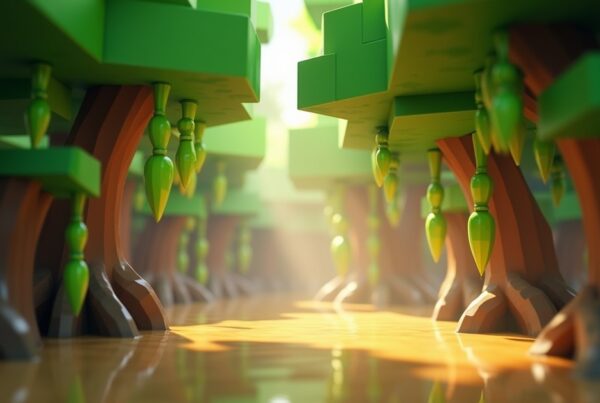
Hanging roots are a plant block added to Minecraft in the Caves & Cliffs update (version 1.17). They look like thin orange-brown tendrils dangling from the underside of rooted dirt, and they’re one of the visual signatures of a lush cave biome.
You will not get crafting recipes, brewing ingredients, or food from hanging roots. Their job is decorative. They mark lush caves the same way vines mark jungles, and builders use them to add organic detail to ceilings, overhangs, and underwater scenes.
This guide covers everything practical: where hanging roots spawn, how to collect them, what their block behavior actually is in survival, and how to use them in builds without getting bogged down in trivia.
Where to find hanging roots
Hanging roots generate inside lush caves. Lush caves are found under azalea trees on the surface, so the fastest way to locate them is to spot an azalea tree and dig down through the rooted dirt directly underneath it. The cave below will usually contain moss, glow berries, dripleaf, and hanging roots already in place.
You can also find rooted dirt without a lush cave under it. For example, the bottom of an azalea tree contains rooted dirt as part of its structure, and any rooted dirt block sitting above an air pocket can have hanging roots beneath it.
Biomes that contain hanging roots
Lush caves are the only biome that generates hanging roots naturally. Lush caves themselves can appear under any surface biome (desert, jungle, plains, snowy taiga, and so on), as long as the surface above has an azalea tree. The azalea tree is the marker the game uses to flag lush cave placement underground.
How deep to dig
Lush caves usually sit between Y=0 and Y=60 in modern world generation. From an azalea tree on the surface, you’ll typically hit the cave roof within 20 to 60 blocks of digging straight down. Bring a water bucket so you don’t fall into open air, and pillar up with cobblestone if you need to climb back out.
How to mine and collect hanging roots
Hanging roots break instantly with any tool, including bare hands. They make no sound and give no XP. The important rule is that they only drop as an item when you mine them with shears. Break them any other way and the block disappears without a drop.
If you want to collect a stack for a build, the fastest method is:
- Bring iron shears, or enchanted shears with Unbreaking and Mending if you have them.
- Find a lush cave with a heavy ceiling of rooted dirt.
- Right-click upward into each cluster of hanging roots from below.
You can also break the rooted dirt above the roots, but you still need shears to pick the roots up as an item.
Common mistakes when collecting
The two errors that cost players the most time on a lush cave trip both come down to the shears rule. The first is bringing only a stone or iron pickaxe, breaking dozens of roots, and walking away empty-handed because none of them dropped. The second is hitting the rooted dirt above with a shovel, watching the dirt and the roots both fall, and then realizing the loose roots disappeared because nothing in your hotbar counted as shears. Carry shears on your hotbar from the moment you enter a lush cave and use them on the roots before you touch the dirt above.
Renewability
Hanging roots come from world generation. They don’t grow back on their own under standard mechanics, and you can’t reliably farm them in a small space. If you need a large stack for a build, plan on visiting several lush caves rather than relying on one location.
Hanging roots behavior
Hitbox and pass-through
Hanging roots have no collision box. You walk through them, mobs walk through them, and projectiles pass straight through. They don’t block line of sight either, so a wall of hanging roots in front of a doorway won’t hide anything from a hostile mob’s targeting.
Light, water, and lava
Hanging roots emit no light. They don’t catch fire from a lit block beside them, but flowing lava that touches them directly will break the block. They are waterloggable in Java Edition, which means you can place water in the same block space and the roots stay visible underwater. That is useful for tropical and coral builds where you want plant detail at the surface or below.
Composting
Hanging roots are valid composter input. They have a 30% chance of raising the compost level by one per item, which is the same rate as most small plants. If you have a leftover stack you don’t need for building, feeding them into a composter is a reasonable way to keep your bone-meal supply topped up.
No spreading, no stacking
Hanging roots are one block tall and attach only to the bottom face of a solid full block above them. You cannot stack two hanging roots on top of each other to make a longer dangle, and they don’t extend or spread over time the way vines do. For longer trailing plants, vines are the right block. For short ceiling detail, hanging roots are.
Placement and building uses
Hanging roots can be placed on the underside of most full solid blocks. Rooted dirt is where they generate naturally, but they will also attach to stone, wood planks, mossy cobblestone, dripstone, deepslate, and most other ceiling blocks. That flexibility is what makes them useful in surface builds far from any actual lush cave.
They will not attach to top-half slabs, stairs, fences, glass panes, or any block that doesn’t present a full bottom face. If you place one and it pops off, the block above isn’t a full block.
Best use cases
- Lush cave recreations on the surface, built into custom rocky overhangs
- Witch huts, druid groves, and ruined temples where an unkempt look fits
- Underwater ruins, since hanging roots are waterloggable and read as kelp-adjacent in Java
- Greenhouse builds, dropped from glass-and-trapdoor rafters
- Swamp and bog builds, where they break up flat ceiling spans
What to combine them with
Hanging roots work best alongside other lush cave blocks. Moss carpet on the floor, small dripleaf on water, glow berry vines coming off rooted dirt, and the occasional spore blossom in the ceiling will sell a lush cave instantly, even on the surface. For a darker, drier scene, pair hanging roots with cobwebs and stripped acacia logs for an abandoned-mineshaft feel.
Java vs. Bedrock differences
Hanging roots behave the same in both editions for most purposes. They generate in lush caves on the underside of rooted dirt, drop with shears, and can be placed on the bottom face of any full solid block. The one practical difference worth noting is waterlogging. In Java Edition, hanging roots accept water in the same block space. In Bedrock, waterlogging behavior on some plant blocks has been inconsistent across updates, so test in a creative world before committing to a survival underwater build.
Frequently asked questions
What do hanging roots do in Minecraft?
They are a decorative block with no gameplay function. They signal a lush cave biome and provide visual detail under rooted dirt or any other solid ceiling block. You can compost them and use them in builds, but they don’t give buffs, drops, or progression items.
How do you get hanging roots in survival?
Find a lush cave (look for an azalea tree on the surface and dig down), then mine the hanging roots with shears. Without shears, the block breaks but drops nothing.
Can you grow hanging roots?
Hanging roots don’t grow on their own, and they don’t stack vertically. The block you place is the block you have. If you want more, you’ll need to find more lush caves or trade for them on a multiplayer server.
Are hanging roots renewable?
Not through any standard, reliable farming method. They come from world generation, so the supply is effectively the number of lush caves you can find and harvest.
Can hanging roots be waterlogged?
Yes in Java Edition. You can place water in the same block space and the roots stay visible. Bedrock behavior on plant waterlogging varies by version, so test in a creative world before relying on it for survival builds.
What block do hanging roots attach to?
The bottom face of any full solid block. That includes rooted dirt (their natural source), stone, planks, dripstone, mossy cobblestone, and most other ceiling blocks. They don’t attach to slabs, stairs, fences, or panes.
Do hanging roots block movement or arrows?
No. They have no collision and don’t stop projectiles or mob pathfinding. They are purely visual.
Worth bringing shears for
Hanging roots are one of those blocks that’s easy to overlook on a first cave dive but ends up being one of the most useful decorative items in the game once you start building above ground. If you’re heading into a lush cave for glow berries or moss anyway, bring an extra pair of shears and grab a stack on the way out. You’ll find a use for them sooner than you expect.