What are leaves in Minecraft?
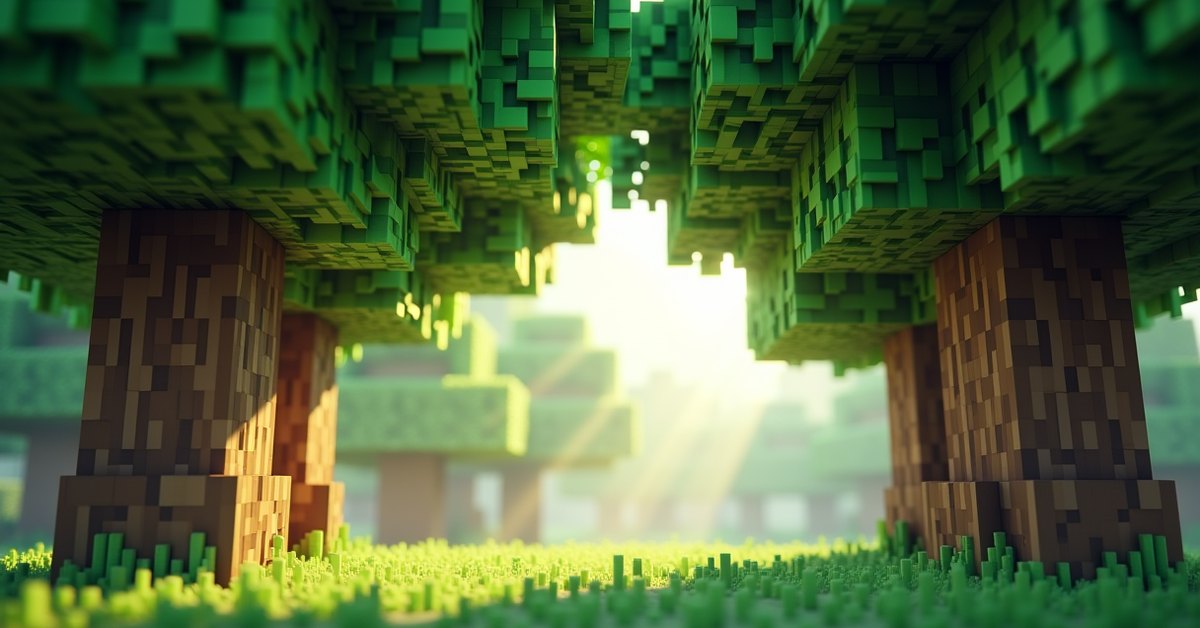
Leaves are the blocky canopies you see on every tree. They sit on top of logs and form the round or pyramid shape that makes oak forests look like oak forests and spruce taigas look like spruce taigas. Mobs and players can walk on them and build with them, but they aren’t fully solid in every sense.
Every wood type in the game has its own leaf block. The current list covers oak, spruce, birch, jungle, acacia, dark oak, mangrove, cherry, azalea, flowering azalea, and (as of the pale garden update) pale oak. Each one drops a different sapling and carries its own color tint.
If you’ve ever wondered why the leaves above your treehouse keep vanishing, why your shears burn out so fast on a leaf-harvesting run, or how to actually get a sapling without smashing twenty blocks, this guide covers it.
Types of leaves and where they come from
Leaves only generate naturally as part of trees. You won’t find them in caves, underground, or in non-forest biomes unless a tree is there. Oak leaves grow on oak trees in plains, forests, and swamps. Spruce leaves grow in taigas and old-growth pine forests. Birch leaves spawn in birch and old-growth birch forests. Jungle leaves cover jungle and bamboo jungle biomes. Acacia is the canopy of savannas and windswept savannas. Dark oak is found only in dark forests. Mangrove leaves appear in mangrove swamps. Cherry leaves are exclusive to cherry groves. Azalea and flowering azalea leaves grow from azalea bushes that mark surface entrances to lush caves. Pale oak leaves only generate in the pale garden biome.
How to harvest leaves
Leaves break with any tool or your bare hands, but the tool you pick decides whether you get a leaf block, a sapling, an apple, or nothing at all.
Shears are the right tool for most jobs. Cutting leaves with shears gives you the leaf block itself, with no random drops, and uses a small amount of shear durability per block. This is the only way (along with Silk Touch) to collect leaves for building.
Hoes are the fastest way to clear a tree if you’re not trying to keep the leaves. Since Java Edition 1.16.2 and the equivalent Bedrock version, hoes mine leaves significantly faster than any other tool, and Efficiency stacks on top. If you’re chopping a forest down for wood, a hoe in your offhand makes leaf cleanup tolerable.
Silk Touch on a pickaxe, axe, or shovel works the same as shears: you get the leaf block. Useful if you don’t want to carry shears, but it costs you an enchantment slot.
Breaking by hand or with any non-shear, non-silk-touch tool destroys the block and rolls for random drops. You might get a sapling, a stick, or (on oak and dark oak) an apple. You will not get the leaf block itself.
What leaves drop
Random drops depend on the leaf type and your tool. Saplings drop about 5% of the time from oak, spruce, birch, acacia, dark oak, cherry, and pale oak leaves. Jungle leaves drop saplings at a lower rate, around 2.5%. Fortune raises these numbers, and Fortune III can roughly triple a sapling drop chance compared to no enchantment.
Sticks drop at a 2% base rate from any leaf type. This is the most reliable way to stockpile sticks if you’re short on wood and don’t have a sapling farm yet.
Apples drop at a 0.5% rate from oak and dark oak leaves only. It’s rare, but stripping a dark forest will net you a stack of apples by the time you’ve cleared a few trees.
Mangrove leaves are the oddball. Instead of saplings, they drop propagules, which work like saplings but can be planted on the ground, on water, or hanging from the bottom of another mangrove leaf. Mangrove leaves also have a higher base propagule drop rate than other leaves’ sapling rates.
Azalea and flowering azalea leaves drop themselves only when sheared. They don’t roll for random saplings or sticks. You can replant azalea bushes from flowering azalea leaves you collected with shears.
For a quick visual reference, here’s how the random drops shake out by leaf type:
| Leaf type | Sapling drop | Stick drop | Apple drop |
|---|---|---|---|
| Oak | ~5% | ~2% | 0.5% |
| Spruce | ~5% | ~2% | None |
| Birch | ~5% | ~2% | None |
| Jungle | ~2.5% | ~2% | None |
| Acacia | ~5% | ~2% | None |
| Dark oak | ~5% | ~2% | 0.5% |
| Cherry | ~5% | ~2% | None |
| Mangrove | ~10% (propagule) | ~2% | None |
| Azalea / flowering azalea | Shears only | None | None |
| Pale oak | ~5% | ~2% | None |
Numbers are approximate and rounded for easy comparison. The game uses a randomized roll each break, so real results vary, especially over small samples.
How leaf decay works
Naturally generated leaves disappear if they’re too far from a log. The game checks the distance from each leaf block to the nearest log along blocks you can pathfind through (other leaves count). If that distance is more than six blocks, the leaf marks itself as decaying and removes itself within a few seconds.
This is why a tree you cut from the bottom up will start dropping its own canopy a few seconds after the last log block goes. It’s also why standalone leaf shapes you place in the sky tend to vanish unless you handle them carefully.
Two things stop a leaf from decaying. The first is a connected log within six blocks of pathfindable distance. Leave a single log somewhere inside the leaf cluster and the cluster stays. The second is the persistent state. When a player places a leaf block, it gets the persistent flag set to true and never decays, no matter where it is. This is what you rely on for floating tree builds, hedge mazes, and decorative roofs.
One gotcha worth knowing: sheared leaves, when re-placed, are persistent. If you let a leaf decay naturally and the decay drops a sapling, that sapling has no persistence to inherit. Only the leaf-block-in-inventory route preserves the persistent state on re-placement.
Leaves and light
Leaves are not fully transparent. They reduce sky light by one level per block of thickness. That’s enough to cast soft shadows on the ground under a forest canopy, but not enough to make leaves a dark-room ceiling on their own. If you want mob-spawnable darkness, you’ll need solid roofing.
In fast graphics mode, leaves render as solid opaque cubes, mostly to save framerate on older hardware. Switching to fancy graphics makes leaves render with transparency, so you can see daylight and other blocks through them. Gameplay behavior is identical between the two modes; only the look changes.
Other uses for leaf blocks
Leaves are a building material a lot of players skip past. They take a biome-driven green tint and pair well with stripped logs and mossy stone for organic builds. In vanilla Java the color is biome-based and can’t be changed in inventory; Bedrock players using a custom resource pack have a bit more flexibility.
Composters accept leaves at a 30% chance to raise the composter level per block. That’s a middling rate, but if you have stacks of leaves from a leaf farm or a forest chop, they’re a viable source of bone meal.
Leaves are flammable. Fire spreads through a canopy quickly because leaves have a high fire-encouragement value, even though their flammability is low. If you’re farming with lava in or near a forest, place stone barriers between the heat source and any trees.
For decoration, leaves work well in hedge walls and in soft-looking roofs that don’t read as wool. Their biome-tinted colors blend smoothly into terrain, which makes them one of the few naturally soft-looking blocks in the vanilla palette.
Java versus Bedrock differences
Decay timing varies slightly between editions. Java’s check runs on a per-leaf-block basis when its distance value updates, and the decay animation takes a few seconds. Bedrock runs decay on a chunk-tick interval, which can make decay look patchy as nearby leaves disappear at slightly different times.
Drop rates are essentially the same on both editions for vanilla survival purposes. There are small percentage differences in places, but for everyday play you can treat them as identical.
Hoes mine leaves fastest on both editions. There’s no version where a sword is the best option, despite what older guides may suggest.
Tips and common mistakes
Use shears when you want the block and a hoe when you don’t. Carrying both is normal for a single chop trip.
If you’re farming saplings, don’t replant from breaks alone. Pair Fortune III with a hoe and break the entire canopy in one swing-friendly pattern. Three Fortune III pulls through a mid-sized oak will typically net more saplings than the tree took to grow.
If you place a single leaf and it disappears a few seconds later, check whether that leaf came from a sheared block or from a sapling-grown tree’s natural drop. Sheared placement is persistent; sapling-grown trees produce leaves with the natural distance check, so isolated bits decay.
Don’t forget the apple gamble in dark forests. Stripping a full dark forest with a hoe is one of the fastest apple sources in the early game, and it doubles as wood collection.
Mangrove leaves are bonemeal-compatible. You can apply bone meal directly to a mangrove leaf to force a propagule drop. This is the fastest way to bootstrap a mangrove sapling supply if you’re starting from nothing in a mangrove swamp.
Frequently asked questions
Why do my leaves keep disappearing?
The leaves vanishing on you are naturally generated, and they’re too far from a log. The decay check runs whenever an adjacent block changes, so removing nearby logs or breaking a chunk of canopy triggers it. If you want the leaves to stay, either keep a connected log within six blocks or harvest with shears and re-place. Player-placed sheared leaves carry the persistent flag and never decay.
Can mobs spawn on leaves?
Yes. Leaves count as a valid surface for spawning, so hostile mobs can spawn on top of them at night just like on grass. If you have a forest near your base, expect zombies and creepers in the canopy.
Do leaves block light?
Leaves reduce sky light by one level per block of thickness. They don’t block light entirely. A single layer above an area still lets enough light through during the day to prevent mob spawning underneath.
What’s the fastest way to harvest leaves?
A hoe with Efficiency. On Java since 1.16.2 and on the equivalent Bedrock update, hoes mine leaves faster than any other tool. A diamond or netherite hoe with Efficiency V can clear a small tree’s canopy in a couple of seconds.
Do mangrove leaves drop saplings?
No. Mangrove leaves drop propagules, which look like dangling roots. Propagules can be planted on the ground, on water, or hanging from the bottom of another mangrove leaf, and they grow into mangrove trees with bone meal or natural growth time.
How rare are apples from leaves?
Roughly one in two hundred breaks on oak or dark oak leaves. Fortune raises that chance significantly. Dark forests are the best place to grind apples because dark oak trees pack dense canopies.
Can you craft anything with leaves?
Not directly. Leaves aren’t a crafting ingredient. They’re a building block, a composter input, and a source of saplings, sticks, propagules, and apples through breaking.
Wrapping up
If you’ve been treating leaves as background noise, try carrying a hoe and a pair of shears next time you cut wood. The hoe makes cleanup quick, the shears let you keep the leaves for builds, and the random drops add up faster than you’d expect. The most underrated thing about leaves is how flexible they are once you stop thinking of them as just “the green stuff on top of trees.”