Lilac is a two-block-tall flower that grows in a couple of vanilla biomes. It’s decorative on its own, but the real reason most players harvest it is the dye. Two magenta dye drop from a single lilac in the crafting grid, which makes it one of the cheapest ways to get magenta in survival.
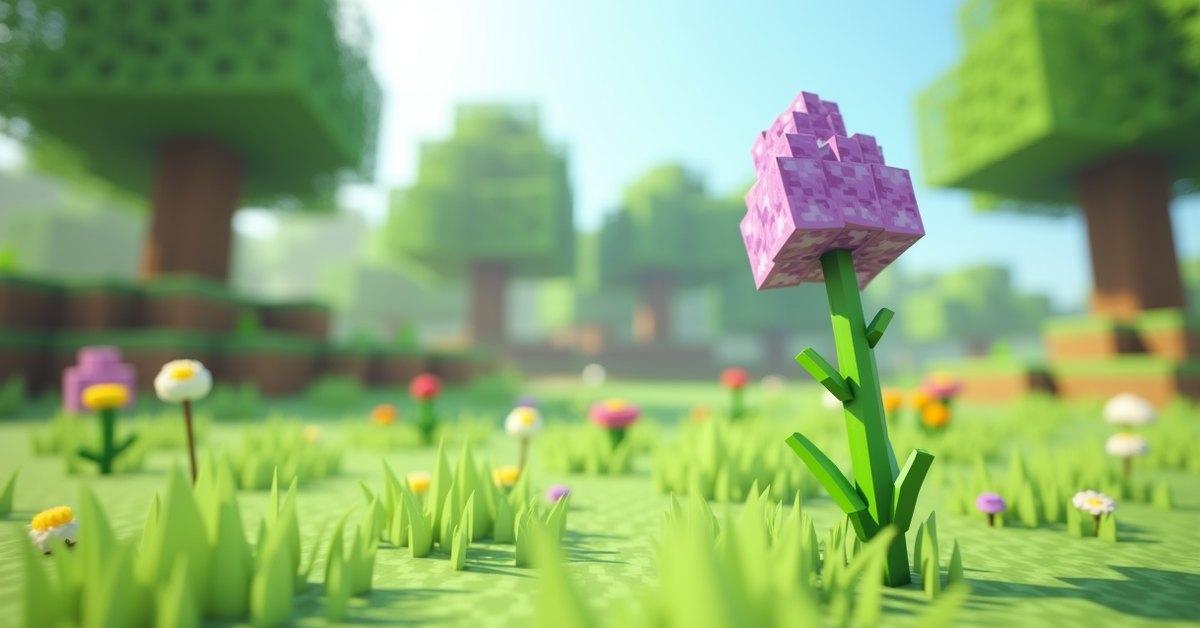
You’ll see lilac most often in flower forests, where it spreads in clumps next to sunflowers, peonies, and rose bushes. The bloom is purple, the stem is green, and it always takes up two blocks vertically, so it won’t fit in a single-block planter.
Players usually want to know three things about lilac: where to find it, how to pick it up without it vanishing, and how to grow more of it. Each of those has a clean answer.
Where lilac grows in Minecraft
Lilac generates naturally in two biomes: the flower forest and the meadow.
The flower forest is a variant of the regular forest. It’s covered in oak and birch trees, and the ground is packed with every short flower in the game plus all four tall flowers (lilac, rose bush, peony, sunflower). Walk in any direction across a flower forest and you’ll find lilac within a minute or two.
Meadows show up in mountain biomes and are mostly tall grass with scattered flowers. Lilac appears there too, but at lower density. If you live in a mountain base, your local meadow is convenient. If you’re hunting specifically for lilac, the flower forest is faster.
Lilac doesn’t spawn in plains, regular forests, swamps, or any other flower-poor biome, so you’ll need to travel to one of those two source biomes at least once to start a collection.
If you can’t find a flower forest near spawn, use the locate command in Java: /locate biome minecraft:flower_forest. The game returns the coordinates of the nearest matching biome, which saves the alternative of wandering until you stumble onto one. Bedrock has the same command with similar syntax. Make sure cheats are enabled on the world if you want to use it.
How to harvest lilac
Lilac drops nothing when broken by hand or with a normal tool. The block disappears and you get no item. This is the single most common reason new players assume lilac is bugged or rare.
To collect lilac, use shears. Break the lilac with a pair of shears and it drops one lilac item. Shears cost two iron ingots to craft and last for 238 uses in Java, so a single pair will gather plenty of flowers before breaking.
Silk Touch on a pickaxe or other tool doesn’t work on lilac. Only shears do. The same rule applies to all tall flowers (lilac, rose bush, peony, sunflower) and to short flowers as well, so it’s worth keeping shears on your hotbar any time you’re exploring a flower-rich biome.
You can break either the top half or the bottom half of the plant. Both halves break together, and the drop behavior is the same: nothing without shears, one lilac with shears.
How to grow more lilac
Lilac is renewable, but it doesn’t grow from a seed. There are two ways to get more once you have at least one in your inventory.
Bone meal on a placed lilac
Place a lilac on grass or dirt, then right-click it with bone meal. The lilac duplicates, dropping one lilac item next to it. The original lilac stays in place. This is the most reliable way to farm them in survival: place one, bone meal it, pick up the drop, repeat.
Bone meal is renewable through skeleton farms and composters, so this loop is sustainable long-term. A simple lilac farm pays for itself almost immediately if you need stacks of magenta dye for a big build.
Bone meal on grass in a flower forest
Right-click bone meal on a grass block inside a flower forest biome and flowers spawn on nearby grass. Some of those flowers will be lilac, alongside sunflowers, peonies, rose bushes, and the short biome-native flowers.
This is slower per use of bone meal than duplicating a placed lilac, but if you’re walking through a flower forest anyway, it’s a casual way to top up.
The trick doesn’t work in other biomes. Bone meal on grass in a plains or regular forest spawns only the short flowers native to that biome, never tall flowers.
How to use lilac
Magenta dye
Place one lilac anywhere in a crafting grid (shapeless recipe) and you get two magenta dye. This is the primary reason most players gather lilac.
Magenta dye is otherwise made from purple dye plus pink dye, or from allium, or from a few other multi-step recipes. Going straight from lilac is cheaper and faster than any of those paths once you’ve found a flower forest, so lilac is the standard magenta source for builders.
Magenta dye colors wool, concrete powder, terracotta, glass, beds, banners, candles, and shulker boxes. It’s a common pick for accent builds and pixel art.
Decoration
Lilac is also useful as a placed block in builds. It’s one of the few two-block-tall plants in the game, so it adds vertical interest to gardens and breaks up flat flower beds. Put a row of lilac behind a row of poppies and the depth reads well from a distance.
Bees
Bees treat lilac the same as any other flower. They pollinate it, fly back to their nest or hive, and produce honey on the next cycle. If you’re setting up a bee farm and want the visual to match the biome, lilac works fine.
Bees don’t have a preference for lilac specifically, so there’s no efficiency reason to use it over a poppy. Pick based on look.
Lilac vs. other tall flowers
The four tall flowers in vanilla Minecraft look similar in inventory icons, so it’s easy to mix them up if you’re new to the biome.
Sunflower is tall and bright yellow, with a head that visibly faces east. Players use it for yellow dye (two per flower) and as a compass, since the head always points the same direction regardless of camera angle.
Rose bush is dark red and looks like a stack of small roses. It crafts into two red dye each. Out of the four, it tends to spawn in the same density as lilac in flower forests.
Peony is pink and has a softer, more layered bloom. One peony crafts into two pink dye.
Lilac sits in the middle of that group visually: tall, leafy, with a purple cluster on top instead of a single concentrated flower head. The two magenta dye it produces is its main differentiator. If you want magenta and you don’t want to combine purple and pink dye yourself, lilac is the shortcut.
Lilac in a composter
Lilac can go into a composter. Each lilac has a 65 percent chance of raising the composter level by one. After enough successful adds, the composter produces one bone meal.
That makes lilac a decent input if you’ve over-harvested and have extras. It isn’t the most efficient composter feed in the game, but it’s better than nothing, and the bone meal output feeds straight back into the duplication loop for more lilac.
Common mistakes with lilac
The most frequent mistake is breaking lilac with a sword, pickaxe, or fist and assuming the flower is too rare to drop. Switch to shears.
The second most frequent: placing lilac in a one-block space. Lilac needs two clear blocks of air above the ground block. If the top block is obstructed, the place attempt fails silently and you’ll keep the lilac in your hotbar wondering why nothing happened.
The third: trying to grow lilac with bone meal on grass outside a flower forest. It won’t work. The biome controls which flowers can spawn from bone meal, and tall flowers only appear in the flower-forest spawn pool.
The fourth: trying to put a lilac in a flower pot. Flower pots only hold single-block plants. Lilac, peony, rose bush, and sunflower are all blocked from pots.
Frequently asked questions
Can you eat lilac?
No. Lilac isn’t a food item and isn’t a valid ingredient for suspicious stew. It crafts into dye, and that’s it.
Does lilac stack?
Yes. Lilac stacks to 64 in the inventory like most other plant items.
What biome has the most lilac?
Flower forest. It’s the densest source of all four tall flowers, and lilac shows up in clumps wherever the biome generates.
Do bees prefer lilac over other flowers?
No. Bees treat all flowers as equal for pollination. Lilac is fine for bee farms, but it doesn’t yield more honey than a dandelion would.
Can lilac grow back if I break it?
Not in the same spot automatically. You’d need to use bone meal on grass nearby (inside a flower forest) or place a lilac yourself and bone meal it for a duplicate.
How many magenta dye do you get from one lilac?
Two. Place a lilac anywhere in the crafting grid and the recipe outputs two magenta dye.
Can you put lilac in a flower pot?
No. Flower pots only accept single-block plants, and lilac is two blocks tall.
Final thought
Lilac earns its place in survival because of the dye, not the decoration. Find a flower forest, bring shears, gather a stack, and you’ve solved magenta for the rest of the world. If you also like the way it looks in a garden, that’s a bonus.