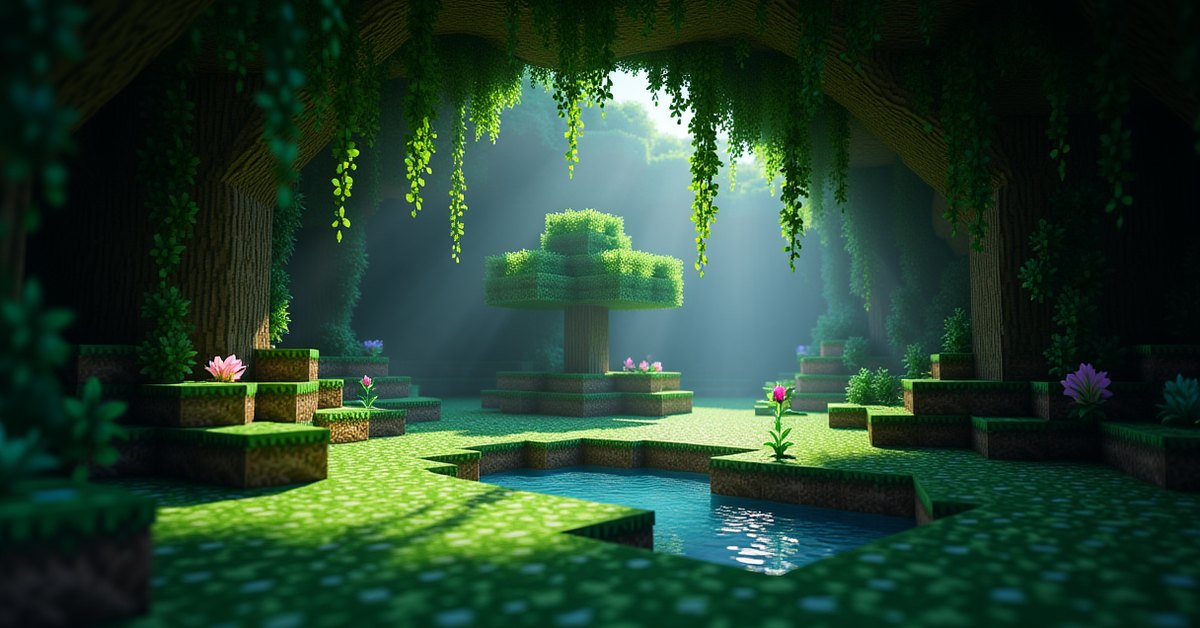
What moss block is
Moss block is a soft green block added in the Caves and Cliffs update (version 1.17). It looks like a clump of mossy growth and is one of the signature blocks of the lush caves biome. The big reason players care about moss block is what bone meal does to it: a single bone meal turns a wide patch of stone, dirt, grass blocks, and several other blocks into more moss, with azaleas, moss carpet, short grass, and the occasional flower spawning on top. That makes it the easiest way to turn a chunk of plain stone into a lush green floor.
It is also the missing piece that makes mossy cobblestone and mossy stone bricks renewable. Before 1.17, mossy variants only came from generated structures or, in some older versions, from a recipe that used vines. Now you can craft them on demand by pairing cobblestone or stone bricks with a moss block in the crafting grid.
How to get moss block
Lush caves
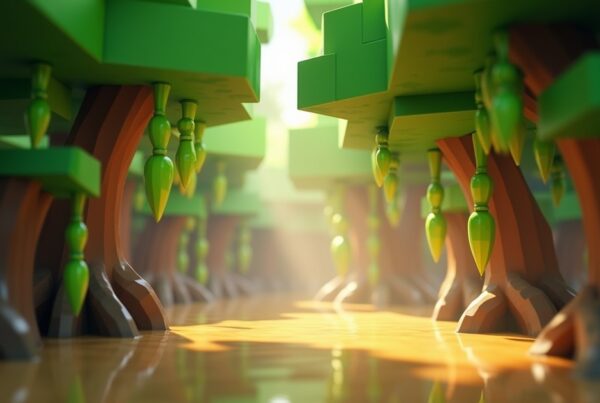
The most reliable source is a lush cave. Lush caves are an underground biome with green flooring, hanging vines, azalea trees, dripleaf, glow berries, and plenty of moss block on the cave floor. To find one from the surface, look for an azalea tree, which is a small bush with white or pink flowers and dark green leaves. Azalea trees grow over lush caves, so digging carefully below one usually leads you in.
Once inside, mine moss off the floor and walls. Any tool works, and bare hands work too. Bring back a stack and you have enough to seed a much larger area at home.
Mineshaft and ancient city loot chests
Abandoned mineshaft chests have a chance of holding a small stack of moss blocks, and ancient city chests can too. The drop rate is low and the chests are scattered, so this is more of a happy accident than a strategy. Still, it is the only way to get moss without first finding a lush cave.
Trading
Wandering traders sometimes sell moss block for emeralds. The trade is not guaranteed and depends on which traders show up, so treat this as a backup if lush caves are far away.
Spreading moss with bone meal
The fastest way to multiply moss is bone meal. Hold bone meal in your hand, aim at a moss block, and right click (Java) or use the use button (Bedrock). The game replaces eligible blocks in a 7 by 7 by 3 area centered on the targeted moss block. Stone, dirt, grass block, podzol, mycelium, rooted dirt, granite, andesite, diorite, and several deepslate and tuff variants inside that zone have a chance to turn into moss.
On top of the new moss, the game spawns decoration: azalea bushes, flowering azalea, short grass, moss carpet, and the occasional flower. The result is a square garden patch with green ground cover and a light sprinkle of plants.
This is the standard build for a moss farm. Lay a flat platform of stone or cobblestone, set moss blocks across it at intervals of roughly six or seven blocks, and bone meal each one. A bone meal farm (skeleton spawner, composter loop, or witch farm) feeds the supply, and the moss blocks produced by the spread can be harvested and fed back in. Over a few cycles, a single moss block grows into hundreds.
One detail worth knowing: the spread only happens when there is open air above the converted block. If you cap your platform with another layer of stone, the bone meal will not work because the decoration plants have nowhere to grow. Leave at least one block of vertical space above every block you want to convert.
Mining and tool choice
Moss block is very soft. Hardness 0.1, it breaks in a fraction of a second with anything in your hand. A hoe is technically the fastest tool, but it really does not matter for a single block. The block always drops itself, so silk touch is not required.
Pistons push moss block freely, which is useful for flying-machine builds and for hidden doors with a green facade. Moss is not on the list of blocks that block piston movement.
Crafting recipes that use moss block
Moss carpet
Place two moss blocks side by side in the crafting grid to get three moss carpets. Moss carpet is one tenth of a block thick and sits on top of any solid surface, the same way wool carpet does. It is the cheapest way to cover a large floor in green without committing a full block of height.
Mossy cobblestone
Place one cobblestone next to one moss block in the crafting grid to get one mossy cobblestone. The arrangement does not matter, and a crafting table is not required because the recipe fits in a 2 by 2 inventory grid. This is the renewable recipe that did not exist before 1.17.
Mossy stone bricks
Place one stone brick next to one moss block in the crafting grid to get one mossy stone brick. Same logic as mossy cobblestone, same renewability story. Useful when you are building a stronghold or ruin theme and want a worn-down look without raiding a structure for blocks.
Build ideas
The obvious use is ground cover. A square of moss block under a tree, a patch in a courtyard, or the floor of an enchanting room reads as lived-in without much work. The bone meal trick lets you cover huge areas quickly and adds a bit of plant variety for free.
Moss block also reads well as the outer skin of an overgrown ruin. Mix it with mossy cobblestone, mossy stone bricks, vines, and azalea bushes for a temple-eaten-by-jungle look. The texture sits between wool and a leaf block visually, so it adds a soft contrast against harder stone-based walls.
For interior builds, moss carpet is often the better choice because it preserves headroom and works on top of any solid block. A common pattern is stone bricks for the floor, moss carpet on top, with a few full moss blocks scattered around as raised planter beds.
Moss block also looks at home next to water. A path of moss block around the edge of a pond, with azalea bushes on the moss and lily pads on the water, gives a small biome feel without needing to actually be in a lush cave. The block does not need any specific light level to stay looking green, so it works in deep caves and underground bases just as well as in surface gardens.
Java and Bedrock differences
The recipes and the bone meal behavior are the same on both editions. The main thing that varies is the exact list of blocks the bone meal spread can convert. Both editions hit stone, dirt, grass block, and the common stone variants. Bedrock has, in some past versions, included a slightly different set of converted blocks. If a particular block in your build does not turn to moss when you would expect it to, that is usually a version or edition quirk and not a bug.
Frequently asked questions
What is moss block used for?
Moss block has three main uses. It crafts moss carpet, mossy cobblestone, and mossy stone bricks. It spreads with bone meal to cover large areas in green. And it works as a decorative ground block for builds and biomes that need a soft, lush look.
Can you make mossy cobblestone with moss block?
Yes. One cobblestone plus one moss block anywhere in the crafting grid gives you one mossy cobblestone. This is the renewable recipe added in 1.17. The same pattern with a stone brick gives mossy stone brick.
How big is the bone meal spread?
Bone meal on a moss block converts eligible blocks in a 7 by 7 area around the moss block, one block above it and one block below it, so a 7 by 7 by 3 volume in total. Each eligible block has a chance, not a guarantee, of being converted, so a fully tiled patch may need a second pass.
Does bone meal on moss block grow plants?
Yes. Along with replacing blocks with moss, bone meal spawns short grass, moss carpet, azalea bushes, flowering azaleas, and occasional flowers on top of the new moss. That is part of why moss block is so popular for natural-looking floors.
Can you find moss block in a regular cave?
Only inside a lush caves biome. A regular cave will not have moss naturally. The aboveground signal that a lush cave is below is an azalea tree, so look for those when exploring.
Is moss block flammable?
Moss block does not catch fire from nearby flames or lava, so you can use it next to fireplaces or campfires safely. Moss carpet behaves the same way.
Do sheep eat moss block?
No. Sheep only eat grass blocks to regrow their wool. Moss block looks similar but is treated as a different block by the game.
One quick tip
If you are building a moss farm, plan the largest unbroken square of convertible blocks you can manage before you start bone-mealing. Bone meal works in a fixed area, so one application on a 7 by 7 stone slab produces far more moss than seven separate applications on scattered single blocks. Lay out the platform, place one moss block every six or seven squares, and bone meal each one in a grid pattern for the most coverage per use.