What mud is in Minecraft
Mud is a soft, waterlogged dirt block added in the 1.19 Wild Update. It generates naturally in mangrove swamp biomes, alongside mangrove trees, frogs, and tadpoles. The block looks darker and shinier than regular dirt, almost wet to the touch.
Mud has its own physics (you sink slightly when standing on it), its own crafting chain (packed mud and the mud brick family), and one of the best uses in the game for pointed dripstone: a slow but reliable way to make clay without diving for it.
Where to find mud
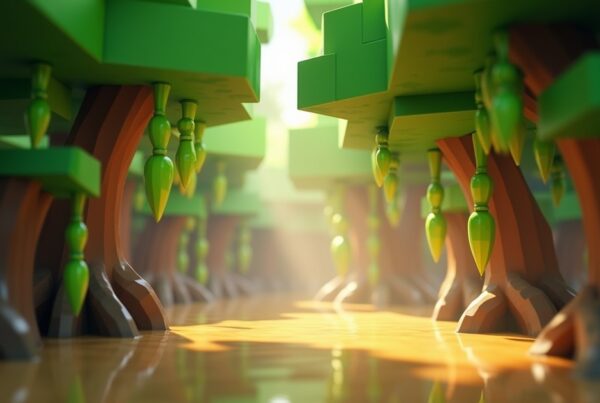
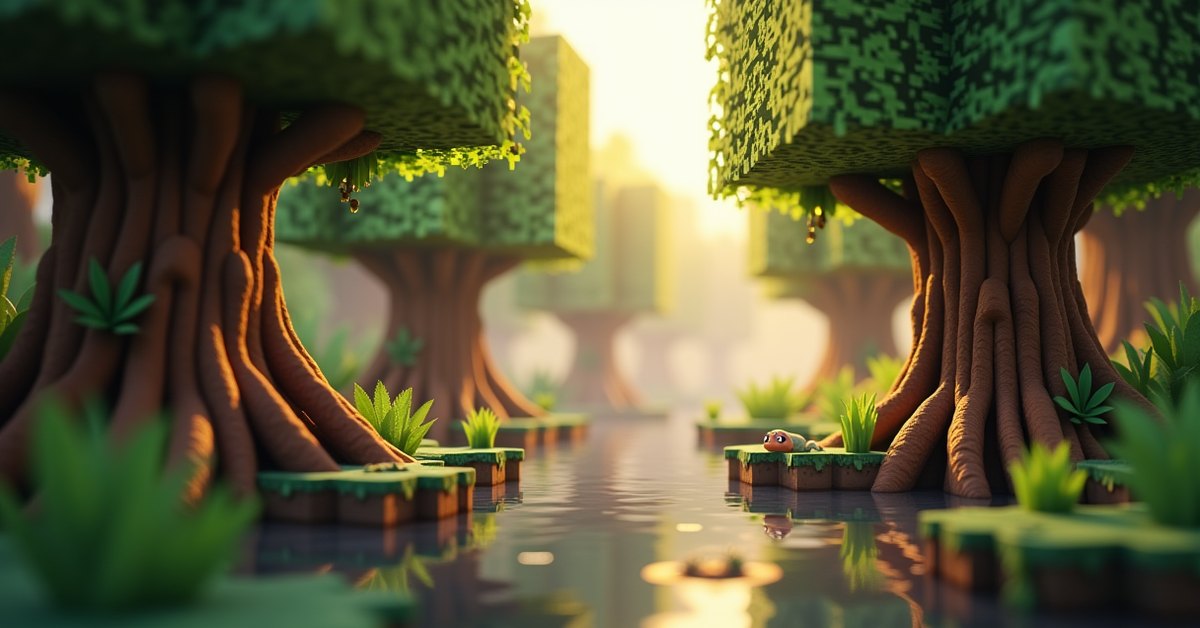
Mud generates in mangrove swamps. These are easy to spot from a distance: shallow water, mangrove trees on tall, twisted roots, hanging vines, and patches of mud under and around the trees. Frogs are usually hopping nearby.
Mangrove swamps tend to generate near other warm biomes, so if you’ve been exploring jungles, deserts, or savannas for a while, you’ve probably passed one. They aren’t common, but they aren’t rare either; in any reasonably sized world you’ll usually find one within a few thousand blocks of spawn.
You’ll know you’ve hit a mangrove swamp before you see any text confirmation. The biome music is distinct, the trees are immediately taller and more tangled than the trees in a regular swamp, and the ground transitions from grass and dirt to a wet, dark patchwork of mud and shallow water.
If you’re stuck without one nearby, biome hunting works the same as for any uncommon biome. Boat along coastlines for visibility, climb hills, or in a creative world use /locate biome minecraft:mangrove_swamp to skip the search.
Mud is mined with any tool, but a shovel is fastest. It always drops itself, so a few minutes of digging gives you a full stack to take home.
How to make mud yourself
You don’t have to travel to a swamp every time. Any of these blocks turns into mud when you use a water bottle on it:
- Dirt
- Coarse dirt
- Rooted dirt
Fill a glass bottle at a water source, aim at the dirt block, and right-click (interact on Bedrock). The block becomes mud, and your bottle returns empty. One bottle gives one block of mud, so for larger builds it’s worth keeping a stack of bottles and an infinite water source nearby.
For builders who need mud in bulk, a small mud factory is a handful of blocks: an infinite water source, a strip of dirt you flood, and a chest of empty glass bottles to refill. It scales as far as your patience for right-clicking does.
Mud doesn’t appear as the result of any crafting recipe. The water-bottle conversion and the mangrove swamp are your only sources.
Mud mechanics and behavior
Walking on mud
When you stand on a mud block, your character sinks about an eighth of a block into the surface. It looks squishy and feels a little slower to cross than dirt, but you don’t lose movement speed in any meaningful way. Mobs sink the same amount.
Mud has a full collision box, so you don’t fall through it. Items dropped on top sit on the surface. You can place torches, run rails, or set redstone on mud the same as any solid block.
If you set a boat or a minecart on mud, it sits flat. The sinking effect is purely a visual offset into the block, not a slow effect like soul sand.
Light and gravity
Mud is one of the few solid blocks that lets light pass through it. If you put a torch under a mud floor, the light bleeds up to the surface. Builders use this trick for hidden lighting in dirt-themed paths and farms, where a glowstone block would break the look.
Mud isn’t affected by gravity, so it won’t fall like sand or gravel. You also can’t till it into farmland with a hoe; mud is its own block type, not a variant of dirt for that purpose. To farm on the spot where mud sits, replace it with a dirt block first.
Turning mud into clay
This is the feature most players come looking for. Mud slowly converts into clay if you set it directly above a pointed dripstone with the tip pointing down, and leave open air below the dripstone. From top to bottom, the stack is:
- Mud block.
- Pointed dripstone directly underneath, tip facing down.
- Open air below the dripstone tip.
The dripstone slowly draws water out of the mud above it. After a few minutes of real time per block, the mud becomes a clay block. There’s no need for a water source or a cauldron for the conversion itself, though placing a cauldron under the dripstone tip lets you collect the dripped water as a side bonus.
This is a much better clay supply than diving in lakes, especially if you want a lot of it for terracotta production. The most space-efficient farm is a row of mud at head height with pointed dripstones hanging below each block, and (optionally) cauldrons under the dripstones to catch water. Mine each clay block as it converts and replace it with a fresh mud block, and the row keeps producing.
Packed mud and mud bricks
Combine mud with wheat in the crafting grid and you get packed mud, the dried, compacted version of the block. Packed mud looks like dry, cracked tan earth. It has no sinking effect, no light leak, and acts like a normal solid block in every way.
Packed mud is the start of the mud brick line:
- Four packed mud in a 2×2 grid gives you four mud bricks.
- Mud bricks craft into mud brick stairs, slabs, and walls using the same patterns as stone or nether bricks.
The whole family shares a warm sandy color that fits desert, savanna, and adobe-style builds. They’re also one of the cheaper “brick” looks in the game; the only real cost is wheat and dirt, both of which a small farm produces in surplus.
One detail worth knowing: the wheat in the packed-mud recipe acts as a binder, so you only need one wheat per block of mud. For high-volume builds, wheat is the bottleneck more than the mud itself. If you plan to use mud bricks at scale, pair the mud farm with a small wheat field.
Mud bricks also play nicely with other earthy materials. Combined with terracotta, brown concrete, stripped jungle logs, or rooted dirt, they round out a desert outpost or a savanna village without needing stone or wood plank textures.
Common uses for mud
A short tour of what mud is good for in practice:
- Passive clay farming with a row of dripstones, as covered above.
- Mud brick architecture: walls, stairs, and slabs in a warm earth tone.
- Decorative paths in survival builds, where the sinking effect adds a worn, lived-in feel.
- Frog habitats and small mangrove swamp replicas near your base.
- Hidden lighting through a mud floor with torches underneath, for ambient glow without visible light sources.
Mistakes to avoid
A few things that catch new players out:
- Trying to till mud with a hoe. It doesn’t become farmland; you have to swap to dirt first.
- Placing the dripstone tip up under mud. The tip has to face down, with air below it, for clay conversion to work.
- Expecting mud to slow mobs noticeably. The sinking is mostly cosmetic; mud doesn’t function like soul sand or honey for crowd control.
- Stockpiling mud and forgetting wheat. Packed mud needs wheat, so harvest a stack before you start crafting bricks.
- Filling a glass bottle from a cauldron and expecting it to convert dirt. The water has to come from a water source block in the world.
Java vs. Bedrock
Mud, packed mud, mud bricks, and the dripstone-to-clay conversion all work the same way in Java and Bedrock. The water-bottle-on-dirt recipe is the same. The only practical difference is the input: right-click on Java, the interact button on Bedrock.
Frequently asked questions
Can you turn mud back into dirt?
No direct recipe exists. Once mud is mud, it stays mud unless you convert it into clay through dripstone, into packed mud through wheat, or you mine it and replace the spot with a dirt block.
Does mud slow you down?
Slightly, in a visual sense. Your hitbox sinks into the block, which feels a hair slower because the camera drops a bit. There’s no real walk-speed penalty like soul sand. You can walk, run, and sprint across mud normally.
How long does mud take to turn into clay?
A few minutes of real time per block, with the dripstone setup. The rate isn’t fixed, and the chunk has to be loaded for the conversion to tick, so it runs faster while you’re near your farm than while you’re across the world.
Can you grow crops on mud?
No. Mud isn’t farmland, and a hoe won’t till it. If you want crops on a mud-themed build, swap the mud out for dirt where the plants sit and till that.
Do villagers walk over mud?
Yes. Villagers, mobs, and players all sink the same small amount but otherwise treat mud like any solid block. Pathfinding works on it normally.
What’s the fastest way to mine mud?
A shovel. Diamond or netherite if you have one, but even a wood shovel pulls mud out fast enough. Enchanting the shovel with Efficiency cuts mining time further if you’re harvesting a large area.
Does mud burn or melt?
No. Mud isn’t flammable and doesn’t react to lava or fire any differently from regular dirt. Lava on a mud floor will eat the block as it would dirt, but the block itself doesn’t catch fire.
Why mud is worth the trip
Mud is one of those blocks that looks like flavor but pulls real weight when you dig into it. A row of mud over dripstone gives you a steady clay supply. Packed mud opens a whole brick family for builds. Frogs come bundled with the biome. Skip the swamp and you skip easy wins on both the decorating and farming sides of the game.