What are potatoes in Minecraft?
Potatoes are a food crop you can grow, cook, and eat. A raw potato barely dents your hunger bar, but bake one in a furnace and it becomes one of the most reliable early-game food sources in Minecraft.
You plant potatoes the same way you plant carrots or wheat: on tilled farmland, in decent light, with water nearby. A mature crop gives back more potatoes than you planted, so a small plot quickly turns into a steady food supply that feeds itself.
Potatoes come in three forms in the game: the raw potato you plant and eat, the baked potato you get by cooking it, and the poisonous potato that occasionally drops while harvesting. The raw and baked versions are the ones you will use constantly.
Where to find potatoes
You cannot craft a potato, so you need to find your first one before you can start a farm. There are two dependable sources.
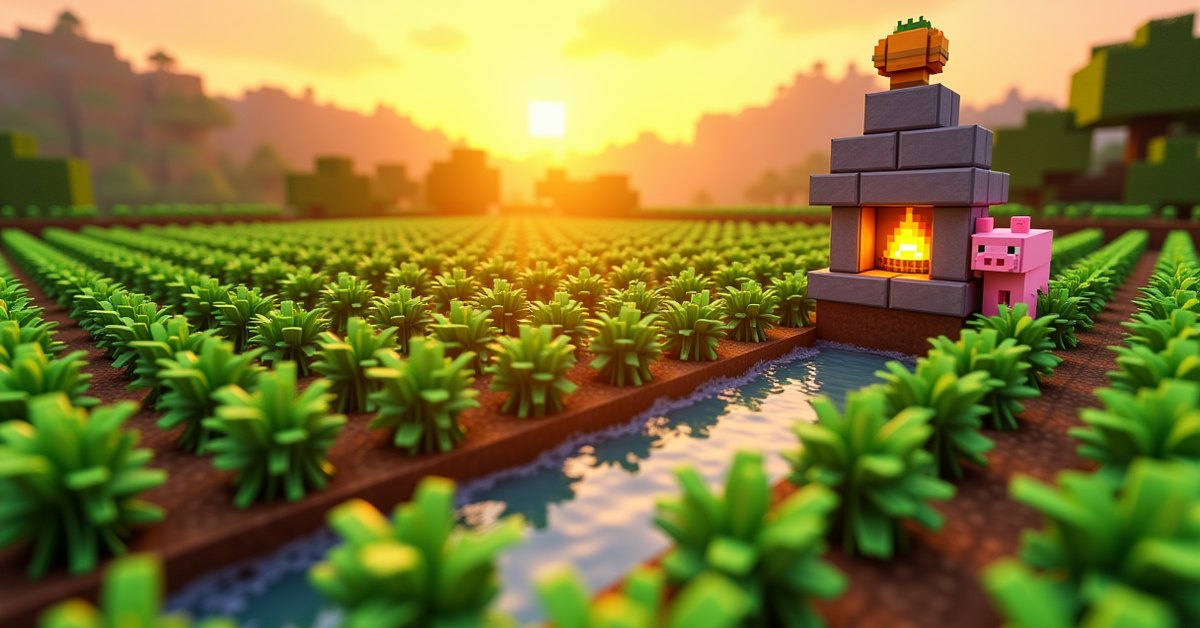
The most common is a village. Most villages have farm plots, and potatoes are one of the crops that grow there alongside wheat, carrots, and beetroot. A mature potato crop in a village farm looks like a low, leafy green plant. Break it and you collect potatoes you can carry home and replant at your own base.
Zombies are the second source. When a zombie dies, it has a small chance to drop a potato, a carrot, or an iron ingot. The odds are low, so it is not worth hunting zombies just for potatoes, but if you are fighting them at night anyway you may pick one up. Once you have a single potato, you never need another source again.
How to grow potatoes
Growing potatoes takes farmland, light, and a little patience.
Start by turning dirt or grass blocks into farmland with a hoe. Right-click the ground with any hoe and the block changes to tilled soil. Farmland stays hydrated, and crops grow faster, when water sits within four blocks of it, so dig a small channel or place a water source in the middle of your plot.
With farmland ready, hold a potato and right-click the tilled soil to plant it. The crop starts small and goes through eight growth stages before it is ready to harvest. A fully grown potato plant is bushy and green, sometimes with potatoes poking out near the base.
Potato crops need a light level of 9 or higher to grow. Sunlight covers this during the day, but an indoor or underground farm needs torches, lanterns, or another light source. If the light drops too low, the crop stops growing and can even pop off the farmland.
To speed things up, use bone meal. Right-click a growing potato crop with bone meal and it jumps forward several growth stages. A few uses will take a freshly planted potato to full size.
When the crop is mature, break it to harvest. Each fully grown plant drops 2 to 5 potatoes, so you always come out ahead of what you planted. Replant one or two and eat or cook the rest. Harvesting with a hoe enchanted with Fortune raises the number of potatoes you get per plant.
Avoiding trampled crops
Farmland turns back into dirt if a player or mob jumps on it, and that destroys whatever was planted. To protect a farm, fence it off, light it well so mobs do not spawn inside, and avoid jumping across the plot yourself. Walking on farmland is fine; it is jumping and falling onto it that does the damage.
How to make baked potatoes
A raw potato restores only half a drumstick on your hunger bar, which is barely worth eating. Cooking changes that completely.
Put a raw potato in the top slot of a furnace, a smoker, or on a lit campfire. Add fuel if you are using a furnace or smoker, then wait. The result is a baked potato. A smoker cooks it in half the time of a regular furnace, so it is worth building one if you cook a lot of food.
A baked potato restores five hunger points (two and a half drumsticks) and a good chunk of saturation, the hidden stat that decides how long you stay full. That makes it as filling as bread and a strong early-game food. Because potatoes farm quickly and replant themselves at a profit, a baked potato farm is one of the easiest ways to stop worrying about food.
Poisonous potatoes
Every time you harvest a mature potato crop, there is a 2% chance it also drops a poisonous potato. It looks like a normal potato with a green tint.
You can eat a poisonous potato, but you probably should not. It restores a small amount of hunger and has a 60% chance of giving you the Poison effect for a few seconds. Poison drains your health, though it cannot kill you on its own; it stops at half a heart. For almost no food value, that is a poor trade.
A poisonous potato cannot be planted and cannot be cooked into anything useful. Most players throw them away or drop them in a composter. If you run a large potato farm, expect a small pile of poisonous ones to build up over time, and treat them as junk rather than food.
Other uses for potatoes
Food is the main job, but potatoes do a few other things.
They breed pigs. Hold a potato near two pigs and they enter love mode and produce a piglet. A carrot or a beetroot works the same way, and any of the three will make a pig follow you, which is handy for moving one into a pen.
Potatoes also work in a composter. Drop them in and there is a good chance each one raises the compost level. Fill the composter and it produces bone meal. Since a potato farm tends to overproduce, composting the extras is a clean way to turn surplus food back into bone meal for more farming.
Farmer villagers will buy potatoes for emeralds, so a large farm can double as an emerald income. Farmer villagers also harvest and replant nearby crops on their own, which means a village potato farm can keep itself running with very little input from you.
Tips and common mistakes
A few things trip up new farmers.
Do not eat raw potatoes if you have any other option. The half-drumstick they restore is almost nothing. Always cook them first.
Do not forget to light your farm. A dark farm stops growing, and unlit farmland is also a spawn surface for mobs that will trample your crops.
Keep water in the plot. Dry farmland still grows crops, but much slower, and it reverts to dirt faster if left alone. One water source block hydrates the soil in a 9×9 area around it.
Plant in straight rows of the same crop. Potato plants grow faster when the crops in front of and behind them are also potatoes, so tidy rows beat a checkerboard mix of different crops.
Hang on to a few potatoes when you harvest. It is easy to bake the whole stack and forget to replant, which leaves you with an empty farm and a full belly.
Frequently asked questions
Can you eat raw potatoes in Minecraft?
Yes, but it is barely worth it. A raw potato restores only half a drumstick of hunger. Cook it into a baked potato first and it restores five times as much.
How do you make a baked potato in Minecraft?
Cook a raw potato in a furnace, a smoker, or on a campfire. Any of the three works, and a smoker is fastest. The potato comes out as a baked potato, which is far better food than the raw version.
What does a poisonous potato do?
A poisonous potato can be eaten, but it has a 60% chance of poisoning you for a few seconds. It drops rarely while you harvest potato crops. It cannot be planted or cooked, so most players simply discard it.
Do potatoes stack in Minecraft?
Yes. Raw potatoes, baked potatoes, and poisonous potatoes all stack up to 64 per slot, so a full farm’s harvest does not take much inventory space.
Can you plant a baked potato?
No. Only raw potatoes can be planted. A baked potato is food and nothing else, so set a few raw potatoes aside for replanting before you cook the rest.
What animals eat potatoes in Minecraft?
Pigs. You can breed pigs with a potato, a carrot, or a beetroot, and the same items will lead a pig around. No other animal is interested in potatoes.
A quick word before you start farming
The fastest path to a stable food supply in a new world is usually a potato farm. One potato from a village turns into a plot that feeds you, replants itself, breeds your pigs, and fills a composter, all without a single crafting recipe. Grab a potato early and you have solved food for the rest of the playthrough.