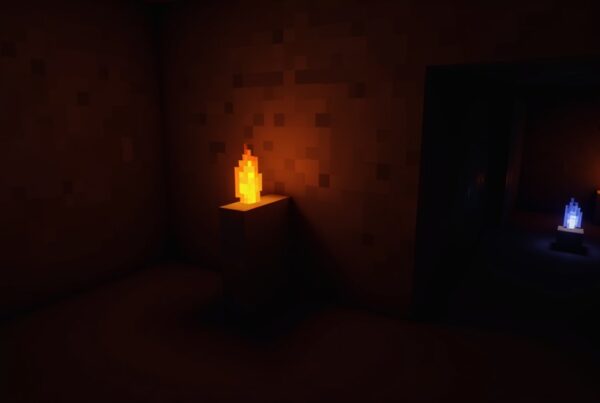
The sculk catalyst is a block that turns mob deaths into spreading sculk. When a creature dies close to one, the catalyst absorbs the experience that mob would have dropped and uses it to coat the surrounding floor, walls, and ceiling in dark sculk.
You will run into it in the deep dark, the pitch-black biome far below the surface. The block gives off a faint blue glow and blooms whenever something dies near it.
It also has a practical use. The sculk it leaves behind drops experience when you mine it, so players build farms around a catalyst to collect XP in bulk.
What is the sculk catalyst?
The sculk catalyst is part of the sculk family, a group of blocks added in the 1.19 update along with the deep dark biome and the Warden. The family includes plain sculk, sculk veins, the sculk sensor, the sculk shrieker, and the catalyst itself.
The catalyst is the block that makes sculk grow. On its own it just sits there and gives off a small amount of light. Its job starts the moment a mob dies within range. The top of the block blooms with a burst of blue soul particles, and sculk begins to creep outward from wherever the mob fell.
It is a full solid block, so you can stand on it, build with it, and place other blocks against it like any normal cube. The dark texture with glowing blue veins makes it a popular decoration block once players bring it up out of the deep dark.
Where to find a sculk catalyst
Sculk catalysts only generate naturally in the deep dark biome. The deep dark forms deep underground, usually below Y level 0, in places where the land overhead is fairly flat and low. You will not see it anywhere near the surface.
Inside the deep dark, catalysts sit scattered through the patches of sculk that cover the floor and walls. Ancient cities, the large structures that generate in this biome, are wrapped in heavy sculk growth, and catalysts are common in and around them.
There is no crafting recipe for the sculk catalyst. You cannot build one from other materials. The only way to get the block in survival is to find one in the deep dark and mine it, which takes the specific approach covered below.
One warning before you go: the deep dark is home to the Warden, a blind but very dangerous mob that hunts by sound and vibration. Sculk sensors and sculk shriekers in the biome detect your movement and can summon it. Move carefully, crouch to quiet your footsteps, and be ready to leave if a shrieker starts to activate.
How the sculk catalyst spreads sculk
The spreading is the core mechanic, so it is worth walking through step by step.
When a mob dies within about 8 blocks of a sculk catalyst, the catalyst reacts. Instead of the mob dropping experience orbs for you to collect, that experience is handed straight to the catalyst. The block blooms, and the experience is converted into sculk charges.
Each charge is a small, invisible packet that travels along nearby surfaces and converts one block into sculk. The more experience the mob carried, the more charges the catalyst produces, and the more sculk you get. A zombie, worth 5 experience, produces a modest patch. A mob carrying more experience spreads sculk further.
Charges turn the tops of solid blocks like stone, dirt, and deepslate into sculk. When a charge reaches a surface it cannot convert into a full sculk block, such as the side of a wall or the underside of a ceiling, it places a sculk vein instead. Sculk veins are thin growths that coat a surface without filling the whole block.
Here is the part that catches new players out: the catalyst spreads sculk from the spot where the mob died, not from the catalyst itself. If a mob dies six blocks away, the sculk appears around that distant spot, and the catalyst simply blooms to show it reacted.
The catalyst only produces plain sculk and sculk veins. It does not create new sculk sensors or sculk shriekers. Those two blocks generate only when the world is first built, so you cannot grow more of them with a catalyst.
How to mine and collect a sculk catalyst
Any tool will break a sculk catalyst, but a hoe is by far the fastest. The sculk blocks are all tuned so the hoe is the correct tool, the same way a pickaxe is correct for stone. Breaking one with your fist or another tool works, but it wastes time.
What you get from the block depends on a single enchantment. Mine a sculk catalyst normally and it will not drop as an item. Instead it gives a small amount of experience, around 5 points, and the block is gone. To collect the catalyst itself, you need a tool enchanted with Silk Touch. With Silk Touch, the block drops as an item you can carry home and place wherever you like.
So the practical rule is short: bring a hoe with Silk Touch into the deep dark if you want to take catalysts back to base. Without it, you will only ever get the experience.
Once you have a catalyst in hand, you can place it like any other block. It behaves the same wherever you put it. A catalyst set up in your base reacts to mob deaths exactly as one in the deep dark would.
Using a sculk catalyst for XP
The catalyst’s most popular use is experience collection, and it works in two stages. First, mobs die near the catalyst and their experience becomes sculk. Second, you mine that sculk to get experience back, because plain sculk blocks each drop 1 experience when broken without Silk Touch.
This turns the catalyst into a way to bank experience. Normally, experience orbs from a kill despawn after a few minutes if you do not pick them up. Sculk does not despawn. The catalyst lets a mob farm convert kills into sculk that sits on the ground until you are ready, and then you mine the whole batch at once with a hoe.
A basic setup funnels mobs from a spawner or a dark spawning room to a single point next to a catalyst, drops them to their death, and lets the sculk build up below. Many players add a wide stone floor underneath so the sculk has room to spread.
Keep your expectations realistic. The catalyst does not multiply experience. A mob worth 5 experience gives you roughly that much back when you mine its sculk, and some charges become veins, which drop nothing on their own. The real benefit is convenience and storage, not free levels.
Tips and common mistakes
A few things trip players up with the sculk catalyst:
- Expecting experience orbs from kills near a catalyst. You will not see them. The catalyst takes the experience to make sculk, and you only get it back by mining that sculk later.
- Forgetting Silk Touch. If you mine a catalyst in the deep dark with a plain hoe, the block is gone and you walk away with nothing but a little experience.
- Using the wrong tool on sculk. Sculk and sculk veins break slowly with a pickaxe or shovel, but a hoe clears them quickly.
- Underestimating the Warden. The deep dark punishes noise. The catalyst itself is safe to stand near, but the sculk shriekers around it are not. Stay crouched and watch for the warning that appears on screen.
- Assuming the catalyst works on its own. With no mob deaths nearby, a catalyst does nothing. It needs a steady supply of dying mobs to keep producing sculk.
Frequently asked questions
Can you craft a sculk catalyst?
No. There is no crafting recipe. The only way to get one in survival is to mine it from the deep dark with a Silk Touch tool.
What tool do you need to mine a sculk catalyst?
Any tool breaks it, but a hoe is the fastest. To keep the block as an item, the tool needs Silk Touch. Without Silk Touch you get about 5 experience and nothing else.
Does a sculk catalyst summon the Warden?
No. The Warden is summoned by sculk shriekers after they are set off several times. The catalyst only spreads sculk and reacts to deaths, with no part in calling the Warden.
Do you get XP from kills next to a catalyst?
Not directly. The catalyst absorbs the experience to spread sculk. You recover it by mining the plain sculk blocks afterward, since each one drops 1 experience.
How far does a sculk catalyst reach?
It reacts to mob deaths within roughly 8 blocks. A mob that dies outside that range has no effect, and the sculk grows from the death spot rather than from the catalyst.
Can a sculk catalyst create sculk sensors or shriekers?
No. It only produces plain sculk and sculk veins. Sculk sensors and sculk shriekers generate when the deep dark is first created and cannot be grown afterward.
Does sculk spread forever?
Only while mobs keep dying near the catalyst. Each death feeds it a set amount of experience that becomes a fixed patch of sculk. Stop the deaths and the spreading stops.
Final thoughts
The sculk catalyst rewards players who understand the trade it offers: it takes your kill experience now and hands it back as sculk you mine later. If you are heading into the deep dark anyway, pack a Silk Touch hoe and bring a catalyst or two home. A single one wired into a mob farm quietly stores experience for whenever you need a fast batch of levels.