What stone bricks are
Stone bricks are a building block made from regular stone. Once you craft them, they look like neatly cut gray blocks with thick mortar lines, the kind of stonework you would see in a castle wall. Each block has a hardness of 1.5 and a blast resistance of 6, the same numbers as plain stone.
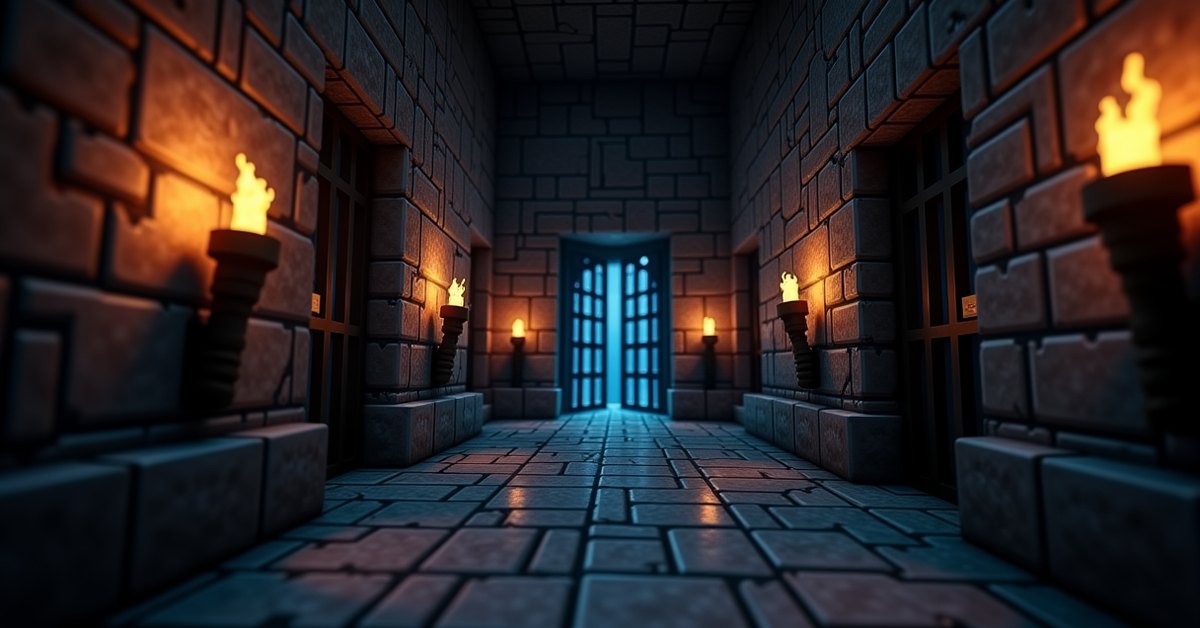
Most players first see stone bricks inside a stronghold, where the entire structure is built out of them. They are also one of the most common building blocks in survival because the recipe is simple and the texture fits almost any base, fortress, or temple build.
This guide covers how to craft stone bricks, where to find them, the four variants in the family, and a couple of warnings about silverfish that catch new players off guard.
How to craft stone bricks
The recipe is four stone in a 2×2 grid on a crafting table. The output is four stone bricks. The catch is the word “stone.” Plain cobblestone will not work. You have to smelt the cobblestone into stone first.
That gives you two steps:
- Mine cobblestone with any pickaxe.
- Smelt the cobblestone in a furnace to turn it into stone.
- Place four stone in a 2×2 grid on a crafting table to get four stone bricks.
Only a regular furnace will do this. A blast furnace handles ores and metals, not cobblestone, and a smoker only smelts food. If your stone keeps coming out as cobblestone, you grabbed the wrong machine.
You can also use a stonecutter. One stone in a stonecutter outputs one stone brick. That ratio is worse than the crafting table (one input per output instead of four for four), but it is handy when you only need a few and do not want to set up the full 2×2 grid.
What tool you need to mine them
Stone bricks need a pickaxe to drop. A wooden pickaxe is enough. If you break them with anything else (your fist, a shovel, an axe), the block still breaks but nothing drops. That rule applies to the natural stone bricks inside strongholds too, so always carry a pickaxe before going underground.
Higher-tier pickaxes mine stone bricks faster but do not change the drop. Silk Touch is not required either, since stone bricks already drop themselves.
The four stone brick variants
The stone brick family has four members. All of them share the same hardness, blast resistance, and inventory slot, but each one has a different texture and a different way to get it.
Plain stone bricks are the base block, crafted from four stone or pulled out of a stonecutter. Mossy stone bricks come from placing a vine or a moss block next to a stone brick in the crafting grid in a 1-to-1 recipe, or from natural generation in jungle temples and certain woodland mansion rooms. Cracked stone bricks come from smelting a stone brick in a furnace, one in and one out, and they also appear inside igloo basements and stronghold floors. Chiseled stone bricks come from stacking two stone brick slabs in a crafting grid, or from running a stone brick through a stonecutter. The chiseled face has a small carved emblem on it, and strongholds use them as decorative pillars.
Where stone bricks generate naturally
Stone bricks show up in several Overworld structures. The main places to look are:
- Strongholds: the entire corridor, room, and library complex is built from a mix of plain, mossy, cracked, and chiseled stone bricks.
- Igloo basements: the rare basement that spawns under some igloos uses stone bricks (some cracked) for walls and floors.
- Ocean ruins: mossy stone bricks make up part of the cold-variant ocean ruins.
- Jungle temples: mossy stone bricks form the floor, the trap corridor, and parts of the puzzle wall.
- Woodland mansions: certain rooms use plain and mossy stone bricks as flooring or wall accents.
- Trail ruins: scattered through the buried debris as part of the decoration.
Strongholds are by far the biggest source. If you find one early, you can mine yourself several stacks of stone bricks without ever touching a furnace. Just watch where you swing, which brings us to the next section.
Watch out for silverfish in strongholds
Strongholds hide a nasty surprise called the infested block. From the outside, an infested stone brick looks identical to a normal one. Break it and a silverfish pops out of the block instead of the block dropping into your inventory.
Silverfish are weak on their own, but the bigger problem is that breaking one infested block alerts every silverfish in any other infested blocks nearby. One bad swing can turn a quiet corridor into a swarm in seconds. Two ways to handle it:
- Watch the break speed. Infested blocks break faster than normal stone bricks. If a block crumbles much quicker than its neighbors, stop swinging and back off.
- Carry a sword in your hotbar before going into a stronghold. Silverfish only have 8 HP and any sword kills them in one or two hits. The swarm is the danger, not any single bug.
Infested blocks only generate in strongholds, so this is a stronghold-specific warning, not something to worry about in builds made from your own stone bricks.
What you can craft with stone bricks
Stone bricks slot into the standard building-block recipe family. From one stack you can make:
- Stone brick stairs (a stair pattern gives 4 stairs from 6 stone bricks).
- Stone brick slabs (3 stone bricks in a row gives 6 slabs).
- Stone brick walls (a wall pattern gives 6 walls from 6 stone bricks).
- Chiseled stone bricks (2 stone brick slabs stacked vertically).
- Mossy stone bricks (1 stone brick plus 1 vine or 1 moss block).
- Cracked stone bricks (1 stone brick smelted in a furnace).
The stonecutter does most of those too, usually at a 1-for-1 rate. The crafting table gives more output per input for slabs, stairs, and walls, so use the stonecutter when you only need a handful and the crafting table when you are batching for a build.
Tips for building with stone bricks
Stone bricks read as the default “old stronghold” texture, so any build that leans on them will feel medieval, dungeon, or temple unless you push it somewhere else. A few small tweaks help break out of that default:
Mix in a small amount of mossy and cracked stone bricks (roughly one in every ten or fifteen blocks) to age a wall and break up the flat texture. A pure plain-stone-brick wall in a 2,000-block build looks computer-generated. A 90/10 split with a few weathered blocks scattered in feels handmade.
Use stone brick walls instead of full blocks for fences, balustrades, and window mullions. They connect to neighbors and pair well with iron bars.
Use chiseled stone bricks sparingly. One above a doorway as a keystone, or one at the top of a column, is plenty. Stacking them along an entire wall flattens the visual hierarchy.
For damp or ruined areas (caves, sunken cellars, swamp temples), lean the ratio toward mossy and cracked instead of plain. The combination reads as “abandoned for a long time” without any extra effort.
Java vs. Bedrock differences
Stone bricks behave the same on Java Edition and Bedrock Edition. The recipes, the drops, the mining requirements, and the structure generation all match. The only edition-specific quirk worth knowing is that connected-texture mods only exist on Java, so stone brick walls on a heavily modded Java server can look smoother than vanilla Bedrock.
Frequently asked questions
Can you craft stone bricks directly from cobblestone?
No. You have to smelt the cobblestone into stone first, then craft four stone into four stone bricks. A common new-player mistake is putting cobblestone in the crafting grid and seeing nothing happen.
What is the fastest way to get a lot of stone bricks?
Find a stronghold and mine it. A single stronghold has more stone bricks than most survival builds will use in a month. Bring a stack of torches, an iron or diamond pickaxe, and a sword for silverfish.
Why do the stone bricks in strongholds look broken?
Strongholds generate with a mix of plain, mossy, and cracked stone bricks built into the structure on purpose. The cracked and mossy variants are full-health blocks that just look weathered, and they mine and drop normally.
Can stone bricks be smelted into anything?
Yes. Smelting a regular stone brick in a furnace gives you a cracked stone brick. The ratio is one input per output, which is slow if you want a lot of them, but it is the only way to make cracked stone bricks in survival.
Do stone bricks count as “stone” for villager job sites or piglin bartering?
No. Stone bricks have their own block ID. A stonemason villager bonds to a stonecutter, not to a stone brick floor, and piglins ignore stone bricks completely.
Can silverfish hide inside stone bricks I place myself?
No. Infested blocks only generate in strongholds during world generation. If you mine stone bricks in a stronghold and re-place them somewhere else, the placed block is a normal stone brick. There is no way for a silverfish to infest a block after the fact.
What is the blast resistance of stone bricks?
It is 6.0, the same as plain stone, cobblestone, and most stone-family blocks. A creeper next to a stone brick wall will still leave a hole. For blast resistance, you want obsidian or reinforced deepslate, not stone bricks.
The bottom line
Stone bricks are the workhorse decorative block of the Overworld. Easy to craft once you remember the smelt-first step, four solid variants for visual variety, and a built-in supply hidden inside every stronghold. Worth keeping a few stacks in your inventory for any build that needs to look older than fresh planks and cobblestone.